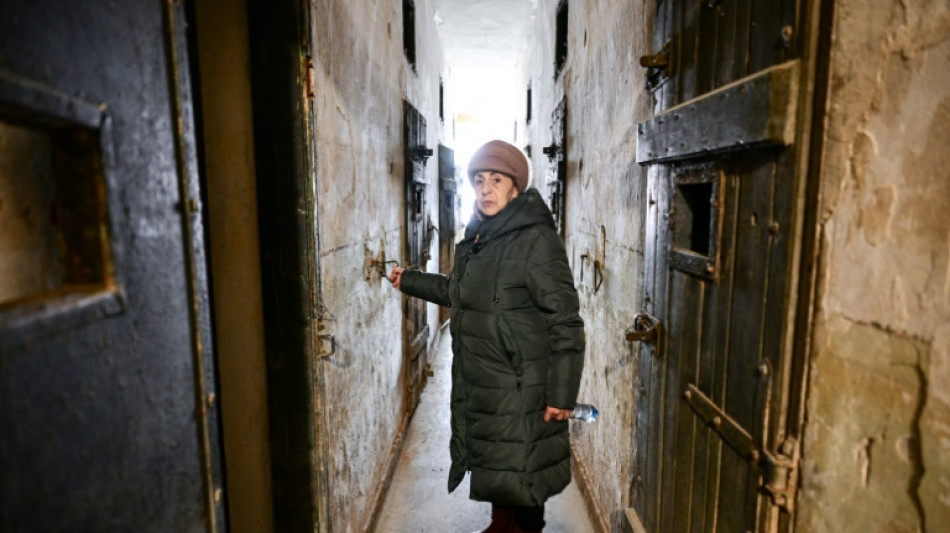
Romanian ex-prisoners fight to save memory of former Communist jails / Photo: © AFP

 New York City pension fund asks Anthropic to delay IPO

 Venezuela's Maduro denies US torture charges as 'false accusations'

 Somalia sets May presidential election despite insecurity

 Chelsea's Caicedo eager to be more of a leader

 Rahm reaches separation deal with LIV in bankruptcy court

 UN chief urges nations to end 'war on nature'

 Newcastle boss Jaissle says Fernandez-Pardo just needs a goal

 Infantino offers apology but 'no answers' at FIFA meeting over World Cup plan

 Don't exclude Turkey from 'Made in Europe' plan: minister to AFP

 French duo Justice to score 'GTA VI': game maker

 El Nino a 'terrifying' threat to coral reefs: UN biodiversity expert

 Barcola must get used to Liverpool highs and lows, says Iraola

 Versus Trade Wins Best ECN/STP Broker APAC 2026, Marking Third UF Awards Recognition

 Three dead as Istanbul sees heaviest rainfall in 80 years

 US producer prices see biggest jump since 2022 in added challenge to Trump

 Swiatek avoids seed exodus to breeze into Wuhan last eight
 PM condemns 'chaos' as violent protests grip Albania

 'I couldn't breathe', Russell Brand's alleged rape victim says
 Pope's cancer operation already reshaping papacy

 Zverev cruises past De Minaur to reach Shanghai semi-finals

 Ukraine's Zelensky defies Trump with Russian refinery strikes

 Holders Australia edge New Zealand 24-22 to open Rugby league World Cup

 'Ocarina of Time': Nintendo gives Zelda classic a modern makeover

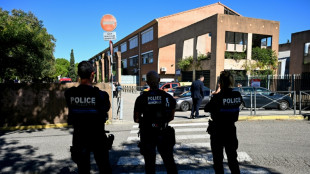 France charges teen shooter citing revenge for bullying in school
 Martinez blames 'anger' for dig at Man Utd hierarchy

Niculina Moica felt the weight of history as she pushed open the rusty iron gate to the former Communist prison of Jilava, where she was detained as a teenager.
Jilava is one of 44 prisons and 72 forced labour camps set up under Romania's Communist regime (1945-1989) to incarcerate more than 150,000 political prisoners, according to the Institute for the Investigation of Communist Crimes.
While some still function as prisons, many of the buildings have been closed and demolished or left derelict.
"It's a pity, because (Jilava) is a place where you can show the truth about the Communist period. The way prisoners were tortured, kept in such wretched conditions, the food, the cold," Moica, now 80, told AFP.
For years she has been fighting to have Jilava turned into a museum before the site further deteriorates, at risk of fading into oblivion.
"In every country you go to, such places can be visited. We let them fall apart," said Moica, who heads the Romanian Association of Former Political Prisoners.
After years of dragging its feet, the Romanian government has recently revived plans to have five former Communist prisons enlisted as UNESCO World Heritage sites.
- 'Entering a hole' -
Originally built as a defence fortress around the capital Bucharest in the late 19th century, Jilava was later transformed into a prison and became one of the most notoriously crowded detention centres for political prisoners between 1948 and 1964.
Detainees were kept in dark and damp cells as deep as 10 metres (33 feet) underground.
"It felt like entering a hole," Moica said, recalling the Christmas Eve when, aged 16, she arrived at Jilava in drizzling rain. "I thought those guys were going to shoot me."
Convicted in 1959 for joining an anti-communist organisation, Moica spent five years behind bars, including several months at Jilava, about 10 kilometres (six miles) outside Bucharest.
So far only two former Communist prisons in Romania have been converted into museums with the help of private funds.
One of them is Pitesti, a two-hour drive from Bucharest and one of the five proposed UNESCO sites.
If they become UNESCO heritage sites, "no one can dispute the importance of these places", said Maria Axinte, 34, who initiated the Pitesti prison museum in 2014.
Hundreds of photos hanging from the ceiling are an enduring testament to the torture of more than 600 students at Pitesti prison. Some of them were later forced to become torturers themselves.
Since last year, Pitesti has been designated a historic monument and receives around 10,000 visitors every year.
Excited that the government has finally reinvigorated its plans to submit a UNESCO bid, Axinte nevertheless criticised the state for a "lack of interest (and) understanding" of what was at stake.
- Nostalgia for Communism -
Interviewed by AFP, Romania's Culture Minister Raluca Turcan blamed her predecessors for neglecting the past for too long, promising she would submit the country's UNESCO proposal by the end of the year.
She said the country had "a moral duty" and an "obligation" to make future generations aware of the painful aspects of Romania's recent history so that mistakes from the past would not be repeated.
Nostalgia for Communism has been on the rise in Romania amid a persistent cost-of-living-crisis.
In a recent poll of 1,100 Romanians, almost half (48.1 percent) answered that the Communist regime was "good for the country", an increase of three percentage points from 10 years ago.
Dozens of Romanians also continue to celebrate the birthday of the country's late Communist dictator Nicolae Ceausescu.
During her occasional talks about Communism at local high schools, Moica says, students sometimes tell her: "Mom used to say that life was better under Communism."
"Go ask your grandpa," Moica replies, telling them about the "damned cell" in Jilava she still looks for during every visit.
To this day she feels the urge to shower after leaving the former prison.
G.Frei--VB