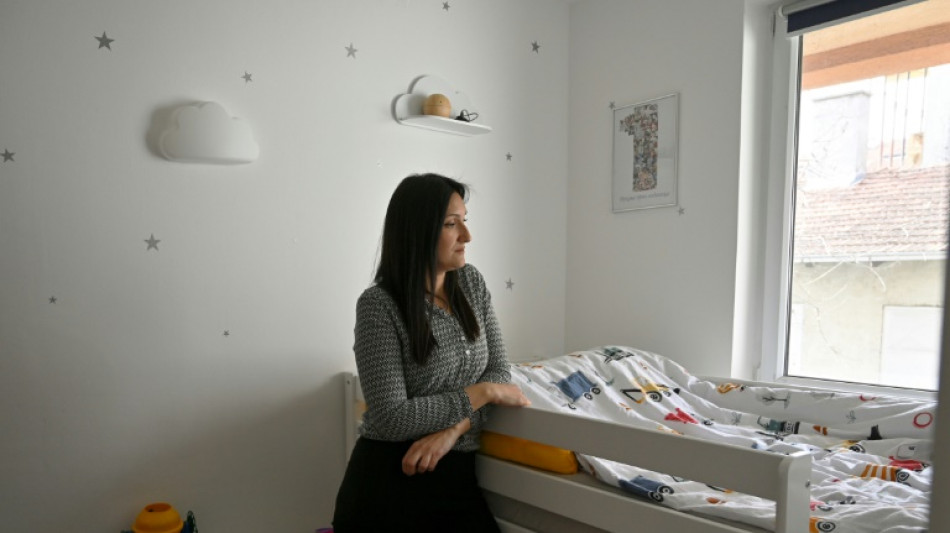
'Tied to the bed': Horrors of giving birth in Serbia / Photo: © AFP

 Zelensky, US envoys to hold Oslo talks as Ukraine claims US missile holdup

 On Israeli election eve, settler violence becomes Netanyahu liability
 Tech firms bear brunt of selling as stocks drop
 France to impose new curfews where necessary: PM

 Threats of political violence soar in Australia's 'online echo chamber'

 Alberta separatists lose vote on leaving Canada

 US bans use of China's DeepSeek by govt agencies

 Middle East fuel crunch drives solar push in tiny Fiji

 Indian rappers use music to sound climate alarm

 Japan probe on its way to Mars moon

 Lula or Bolsonaro's son? Brazil makes a final choice
 EU unveils strategy to boost Arctic presence

 How recent controversies have rocked the US death penalty debate

 Adams facing long injury layoff as Rams' problems deepen

 US judge orders Saudi engineer held in OpenAI case

 Maddison sparkles as Spurs end Premier League winless run

 Maddison sparkles on Spurs return as win drought ends

 Trump says ready to meet with Putin and Xi in China

 The young lawmaker making Brazil's Lula 'king of the selfie'

 Christiane Amanpour to leave CNN after 43 years

 Ronaldo handed 30-day suspension after walking out on Portugal

 Netanyahu basks in Trump endorsement week before election

 Saudi airport closure disrupts life in kingdom's capital

 Ramaphosa tells South Africa to prepare for loss of US-Africa trade deal

 France presses resale platforms to remove 'stolen' goods after unrest

Biljana Cicic-Stanic still bristles when she remembers the pain, violence, and humiliation she endured while giving birth to her son in Serbia, an experience many women say is normal in the Balkan country's hospitals.
Cicic-Stanic said medical staff tied her to the bed with restraints and nurses used their elbows to press against her stomach.
"Everything was so violent," Cicic-Stanic told AFP, saying doctors and nurses screamed insults at her.
"They put you in a bed and require you to lie motionless, while someone violently opens your cervix, pierces your membrane and tells you to be quiet," she added.
The story is a familiar one for many in Serbia, where violence against women in labour and those getting gynaecological treatment remains common, according to experts.
As elsewhere in the Balkans, a combination of patriarchal values and a weak legal system has allowed for medical violence against women to often go unchecked.
"Here the idea persists that if you complain about any aspect of motherhood, you are not a good enough mother nor are you a good enough woman," said Jelena Riznic, an activist with the Serbia-based Female Solidarity collective.
The issue again hit the headlines after Marica Mihajlovic -- an ethnic Roma woman -- accused her gynaecologist of "jumping on her stomach" and racially abusing her while she was in labour earlier this year.
Her newborn later died, with Mihajlovic telling local media that an autopsy report said the death was caused by "violent childbirth".
The story sparked a torrent of outrage online and protests on the streets, as women shared similar stories of their treatment.
Serbia's Minister of Health Danica Grujicic largely dismissed the accounts, saying "everyone has different tolerance for pain".
- 'Stop being hysterical' -
Women in Serbia are regularly subjected to various forms of violence at maternity clinics and hospitals, a 2022 report by leading lawyers found, including having their stomach pushed during labour and being given invasive procedures without consent.
Women testified that they were subjected to insults, shouting, and shaming from the medical staff, including at the capital's main Gynaecology and Obstetrics Clinic in downtown Belgrade.
"In many cases health workers conduct procedures against patients' will," said the report.
"Patients are restrained with belts in case they complain about pain, and after the labour they are exposed to stitching without anaesthesia," it added.
The investigation also highlighted the treatment of patients with miscarriages, saying they were "left alone, without medical supervision, and forced to undergo the procedure" in front of women in labour or those who had just given birth.
For Biljana Brankovic, 37, the testimonies ring especially true.
In 2021, Brankovic went to a Belgrade clinic to terminate a pregnancy after a test result confirmed the foetus had serious birth defects.
Brankovic said medical staff largely ignored her ahead of the procedure, as they watched a popular reality TV show, and told her to "stop being hysterical" when she called for help as the foetus emerged.
"After ten minutes I recognised the feeling and I gave birth. Alone, with nobody around, no nurse, no doctor," she said.
"I screamed for 10 minutes that it's over," Brankovic added. "It was irrelevant because my baby was dead."
Medical staff later removed her placenta and performed a post-abortion scrapping procedure without anaesthesia, which Brankovic said left her infertile, according to three separate doctors.
- 'Afraid to go to hospital' -
A gynaecologist who spoke to AFP on the condition of anonymity acknowledged the issues outlined in the report, but argued that most doctors in Serbia "do their job properly".
"Hospitals need to document those cases [of abuse]. The responsibility for that kind of work lies with those who run those institutions and don't sanction errors made during childbirth," the Belgrade-based doctor told AFP.
But with no reforms in the works and denial by some in the government, women in Serbia are left to face the already stressful prospect of delivering a child with another layer of added fear.
Having been abused during an earlier birth, Sladjana Spasojevic is now only weeks from her due date.
"I'm afraid of going to the hospital and ending up with the same [doctor] again."
H.Weber--VB