The many chilling myths of Prague's 'lunatic graveyard' / Photo: © AFP

 An unhappy republic: France's troubles extend beyond the street

 努莎・奧貝爾:未見嶄新開局,卻見領導失能——波茨坦市長能否勝任其職?

 Zelensky, US envoys to hold Oslo talks as Ukraine claims US missile holdup

 On Israeli election eve, settler violence becomes Netanyahu liability
 Tech firms bear brunt of selling as stocks drop
 France to impose new curfews where necessary: PM

 Threats of political violence soar in Australia's 'online echo chamber'
 Alberta separatists lose vote on leaving Canada
 US bans use of China's DeepSeek by govt agencies

 Middle East fuel crunch drives solar push in tiny Fiji
 Indian rappers use music to sound climate alarm

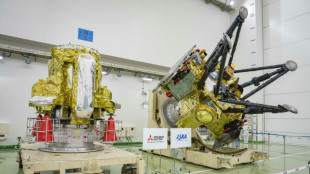
 Japan probe on its way to Mars moon
 Lula or Bolsonaro's son? Brazil makes a final choice
 EU unveils strategy to boost Arctic presence

 How recent controversies have rocked the US death penalty debate
 Adams facing long injury layoff as Rams' problems deepen
 US judge orders Saudi engineer held in OpenAI case
 Maddison sparkles as Spurs end Premier League winless run

 Maddison sparkles on Spurs return as win drought ends
 Trump says ready to meet with Putin and Xi in China
 The young lawmaker making Brazil's Lula 'king of the selfie'
 Christiane Amanpour to leave CNN after 43 years

 Ronaldo handed 30-day suspension after walking out on Portugal

 Netanyahu basks in Trump endorsement week before election
 Saudi airport closure disrupts life in kingdom's capital

It was the setting of the chilling graveyard scene in "Amadeus", may have held the bones of Gavrilo Princip -- the man who started World War I -- and Margaret Thatcher paid a mysterious visit there when she was British prime minister.
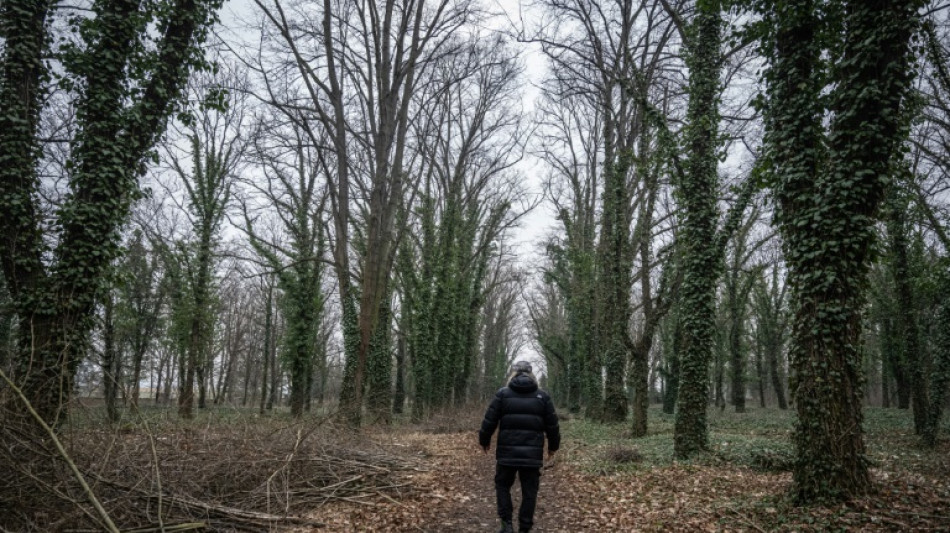
An overgrown "lunatic graveyard" on the outskirts of Prague has become the Czech capital's strangest attraction, drawing ghost hunters, scandal seekers and Satanists and other less than welcome visitors lured by the supposedly strange energy of "Europe's scariest cemetery".
Around 4,200 people were laid to rest in the graveyard of the immense Bohnice psychiatric hospital, many without headstones.
"It's a different kind of cemetery," said Jiri Vitek, a former firefighter and deputy mayor of the local area who had become its de facto caretaker.
"The graveyard served standard psychiatric patients -- schizophrenics, alcoholics, addicts, but also people you would not want to meet -- arsonists, paedophiles, murderers," he told AFP.
Vitek said Gavrilo Princip, the Bosnian-Serb student who shot Archduke Franz Ferdinand and his wife in Sarajevo in 1914, triggering the Great War, may have been interred there before a shrine was created for him in his homeland.
Princip was the only prisoner in the Theresienstadt fortress north of Prague. A secret funeral took place in the cemetery supervised by prison guards three days after his death.
Vitek said the remote graveyard was the perfect place for Princip: "Where else would Austria bury its worst criminal?"
- Mozart burial -
The first person to be buried in Bohnice was an 11-year-old boy who died of tuberculosis in September 1909.
At that time, the hospital was the largest of its kind in the sprawling Austro-Hungarian empire -- a veritable village with a church, laundry and a bakery.
"The patients worked in the fields, grew vegetables and worked in workshops," hospital spokeswoman Alzbeta Remrova told AFP.
When World War I hit, the burials included Austrian soldiers hospitalised with mental illnesses and psychiatric patients from Italy, evacuated to Prague.
Most died during a typhoid epidemic between 1916 and 1918, said Vitek.
The graveyard closed in 1951 and was left to looters and neglect for six decades, with its chapel bowing to time and ivy.
But its haunting atmosphere drew director Milos Forman there to film the heartbreaking burial scene in his Oscar-winning 1984 movie "Amadeus", with the great composer Mozart thrown into a pauper's grave, his body covered in quicklime.
- Thatcher's pilot -
Vitek said that British Prime Minister Margaret Thatcher paid a mysterious visit to the graveyard in 1990 to reportedly bring home the remains of a British pilot shot down at the end of World War II.
Nobody knew where the grave was, Vitek said, until a local vagrant identified it in exchange for a crate of rum.
Over the years the graveyard has become a focus of dark fantasy -- a place where local youths tried to scare each other and test their courage -- especially its southwestern corner, which was reserved for criminals.
Some say it feels colder there than in the rest of the graveyard, blaming all that negative energy. But Vitek laughs this off.
"Non-believers were not buried in coffins, but in bags sanitised with lime. It's the hardened lime that generates the cold," he said.
In the 1980s, police busted a Satanic ritual in the cemetery.
More down-to-earth locals used it as a rubbish dump, and this is how Jiri Vitek found it in 2011 as he walked his dog.
"It was full of old fridges, washing machines, sofas and debris. So I started to clean it up," Vitek said.
He has gradually started to organise guided tours of the cemetery, has been working on a book and plans a revamp of the local chapel and memorial.
"As a firefighter I saved the living for 15 years. Now for the past 12 years, I've been saving the dead."
W.Huber--VB