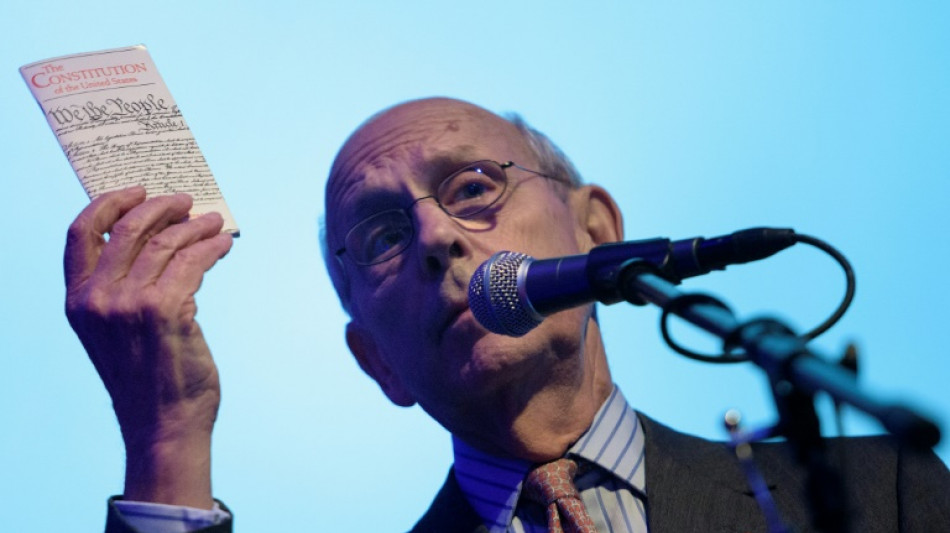
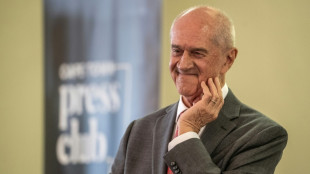
Stephen Breyer: pragmatic pillar of US Supreme Court / Photo: ©

 Lula win rattles Brazil markets over spending spree fears

 De la Fuente wins men's Ballon d'Or coach of year

 Trump slams 'rigged' Brazil election after ally loses to leftist Lula

 Nadal returns for Vegas hardcourt event

 Fainga'anuku named as loose forward for All Blacks northern tour

 Anthropic points to AI dangers, soaring sales in IPO filing

 Sinner to play rescheduled Saudi Six Kings in December

 Brazilian lawmaker Andre Janones, Lula's social media 'general'

 Swiss Ebola patient repatriated from Nigeria

 Nations far from a deal as UN nature talks enter final stretch

 Brazil markets battered, tech in focus elsewhere

 French court adjourns trial over 2020 death of delivery driver
 Serbian student movement eyes power after election triumph

 Machado ready to meet Venezuela leader after shock return

 Lula celebrates election win as Brazil markets tumble

 France's Macron accuses social media of sowing discord ahead of election

 Anthropic unveils IPO filing showing soaring sales and AI risks

 US singer Chris Brown avoids jail over London nightclub brawl

 US singer Chris Brown avoids jail over UK nightclub brawl

 Man Utd crisis deepens as Carrick faces axe

 Serbian student movement eyes power after resounding snap poll victory
 Eala breezes past world number 411 in Tokyo opener

 Swedish Centre Party leader says government coalition talks failed

 Barca's big-game defeats pose familiar questions

 Russia says open to mini Ukraine ceasefires, but no let up in war
Stephen Breyer, the oldest justice on the US Supreme Court and the senior member of the bench's liberal-leaning wing, boasts a record of pragmatism in the hundreds of opinions he has authored in his long career.
The bespectacled California native, aged 83, was nominated to the nation's highest court by Democratic former president Bill Clinton, and US media reported Wednesday that he plans to retire at the end of the current term in June.
He has spent more than 25 years on the nine-member bench, which towards the end of his tenure has firmly leaned to the right of the political spectrum.
But being in the minority has not dimmed his jovial nature or passion for the work of the court. Breyer has insisted in his rulings on assessing real-world implications when deciding cases, rejecting the strict reading of the Constitution favored by some of his peers.
Breyer -- who carries an annotated copy of the Constitution with him in his jacket pocket -- is a fierce opponent of the death penalty, and has ruled in favor of abortion rights, same-sex marriage and environmental protection.
He has bristled at the notion of partisanship on the court.
"My experience of more than 30 years as a judge has shown me that, once men and women take the judicial oath, they take the oath to heart," he said in a 2021 lecture at Harvard Law School, his alma mater.
"They are loyal to the rule of law, not to the political party that helped to secure their appointment."
- From Harvard to high court -
Born on August 15, 1938 in San Francisco, Breyer was educated at Stanford, Oxford and Harvard -- a prestigious academic career that challenged his keen intellect.
He began his legal career in 1964 as a clerk to then-Supreme Court justice Arthur Goldberg and then spent time working in the Justice Department on antitrust matters, before serving as an assistant special prosecutor on Watergate in 1973.
He taught at Harvard University until 1980, when he got the nod from then-president Jimmy Carter to serve on the federal court of appeals in Boston, where he remained for more than a decade, eventually becoming its chief judge.
Breyer was initially considered for a Supreme Court spot in 1993, but his candidacy was marred by a revelation that he had failed to pay taxes for a part-time housekeeper.
A year later, he became Clinton's second nominee to the high court, after Ruth Bader Ginsburg. The pair would end up shoring up the liberal-progressive wing of the court for more than two decades.
- 'Not my job' -
Upon Joe Biden's arrival in the Oval Office, Breyer found himself drawn into a perennial discussion when the White House changes hands -- should older justices retire when a president of their own political persuasion takes office?
Biden's predecessor Donald Trump had appointed three justices to the Supreme Court, sealing a 6-3 right-leaning majority.
But Breyer has repeatedly decried injecting politics into the court, and did not answer the call from liberals to leave his lifetime appointment to ensure a like-minded replacement.
"If the public sees judges as politicians in robes, its confidence in the courts, and in the rule of law itself, can only diminish, diminishing the court's power," he said in 2021.
In an interview with AFP in 2016, Breyer -- who is a Francophile and speaks fluent French -- refused even to say what qualities an ideal candidate for the court would possess.
"I can't suggest who the president should appoint. It's not my job," Breyer said.
"Asking me a question about who should be appointed or how that process works is like asking for the recipe for chicken a la king from the point of view of the chicken," he quipped.
Breyer is married to psychologist Joanna Hare, a member of the British aristocracy. They have three children.
K.Thomson--BTB