Ancient Antioch turns into container city year after quake / Photo: © AFP

 Albert Zahn’s carved birds find a lasting home in Wisconsin museums

 NPS Vatsalya offers three choices when a child turns 18

 China's Communist Party elite gather for governance talks
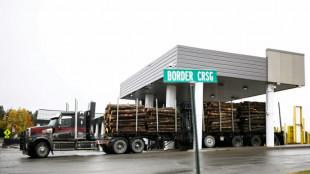 Maine logging, cross-border ties whipsawed by US-Canada tariff war

 From Carnegie to Claude: AI wealth could reshape philanthropy

 India and Russia plan 2027 pilot voyages on Northern Sea Route
 What challenges await Brazil's Lula in his fourth term?

 Brazil's Lula defies odds to clinch poll victory against Flavio Bolsonaro

 Falcons hand 49ers first defeat of NFL season, Vikings remain unbeaten

 Readers debate YES Bank bonds, climate commitments and candidate disclosure
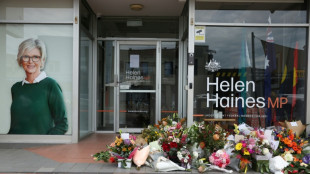 Australian politicians pay tribute to wounded lawmaker

 Modi opens RBI data centre and cybersecurity training institute

 Nifty heads toward weakest Samvat of Modi era after 13% fall

 Disappointed Verstappen admits to wrong tyre strategy at US Grand Prix

 India trims weekly wheat auction volume despite strong miller demand

 Brazil braces for result of knife-edge election after voting chaos

 Bleems adds UFFF toys and collectibles through Kuwait partnership

 Real Madrid beat Barcelona in La Liga Clasico

 Antonelli wins US Grand Prix to close on world title

 Israel plans West Bank crossing shutdown for election day

 Falcons hand 49ers first defeat of NFL season

 Kuwait regulators broaden beneficial-owner data cooperation
 Succession pressures put Gulf family companies at a crossroads

 IMF sees regional economy shrinking 1.3% in 2026 amid Iran war

 Brazil votes in tight election as Lula slams polling obstacles

Mevlude Aydin cannot bring herself to visit the graves of her daughter and husband or the dozen other relatives she lost in Turkey's catastrophic earthquake one year ago.
The trauma of seeing her ancient home city of Antakya turned into unrecognisable ruins is too much for the 41-year-old to bear.
"Our Hatay is gone. Completely gone," Aydin said at one of the depressingly cramped container homes the government has built for survivors across the devastated Hatay province of which Antakya is the capital.
"I want to go to the cemetery to visit our children but I simply can't. I just don't want to see the city in that state. I get physically sick. My sugar levels spike."
The February 6, 2023, disaster killed more than 50,000 people and erased swathes of entire cities across Turkey's southeast in the middle of the night.
No place was affected more than Antakya -- a mountain-rimmed cradle of Muslim and Christian civilisations known throughout history as Antioch.
Ninety percent of its buildings were lost and more than 20,000 people died in the city and its surrounding province.
Antakya's survivors have been left to deal with the shock in fenced-off camps comprised of hundreds of identical homes that look like shipping containers.
Families have access to running water and power that the government offers for free.
But grim-faced police guarding their entrances give these miniature metal cities the air of prison camps.
- 'No purpose' -
Cagla Ezer sits on the opposite end of the flattened city in a similar container and mourns the life she has lost.
"There is never any excitement any more. No purpose," the 31-year-old mother of two said.
"The goal is to get through another day, to survive the day unharmed."
Local leaders estimate that Hatay's population has shrunk to 250,000 from 1.7 million since the quake. Nearly 190,000 had been housed in containers by November.
Most of those who remained in the province had no relatives to stay with in other parts of Turkey or were simply too attached to their land.
But that land bears little resemblance to what stood before the first 7.8-magnitude quake struck.
Antakya has been transformed from a bustling city with a pulsating nightlife and ancient architecture into a patchwork of vast empty spaces and skeletal remains of buildings.
Standing all alone in the centre of one such debris-strewn field is the green metal container of Fevzi Sislioglu.
The 65-year-old throat cancer survivor set it up with the help of some kind-hearted neighbours at the spot where his hardware store once stood.
"I am selling whatever wasn't looted from my original store," Sislioglu said in a barely audible voice.
"I have no electricity here, no water and very few customers. But I have to keep going. I have to take care of my wife and two children."
- 'Morale boost' -
The remaining vendors of Antakya's Uzun Carsi bazaar -- a partially covered network of 1,500 shops that was once an important stop on the ancient Silk Road -- looked equally glum.
Officials intend to start bulldozing its remaining buildings as a safety precaution by May.
The plan is for a new and safer bazaar to emerge in its place.
"Hopefully we will see better days and have an even more beautiful market," shop association president Mehmet Hancer Gunduz said over a glass of turnip juice.
"I believe in that."
The glow coming from the Umut Et restaurant (meaning either "Umut's Meat" or "Keep the Hope") offers Resim Devir and his family a rare reason to smile.
The original eatery was destroyed and a new one built using only wood and steel.
Many survivors still fear entering cement buildings because so many of them crumbled and trapped initial survivors under tonnes of debris.
"It's one of the few places where you can escape the stress," Devir said over a multi-course meal.
"We need a morale boost to survive these days."
- Children's games -
Umut Et owner Mustafa Kassab thinks it will take at least one or two generations for Antakya to start resembling its former self -- and for normal business to return.
"People have still not been able to overcome the psychological effects of the earthquake," Kassab said. "And financially, they are strapped."
Yazgin Danisma can see the pain reflected in the games her three children play in the paved and soulless alleys between rows of containers in her fenced off camp.
"I can hear the children talk among themselves about running away. But I still want to live in Antakya," the 31-year-old said.
"The children have developed a fear. Whenever they play, the game always ends in a pretend earthquake," she said.
H.Weber--VB