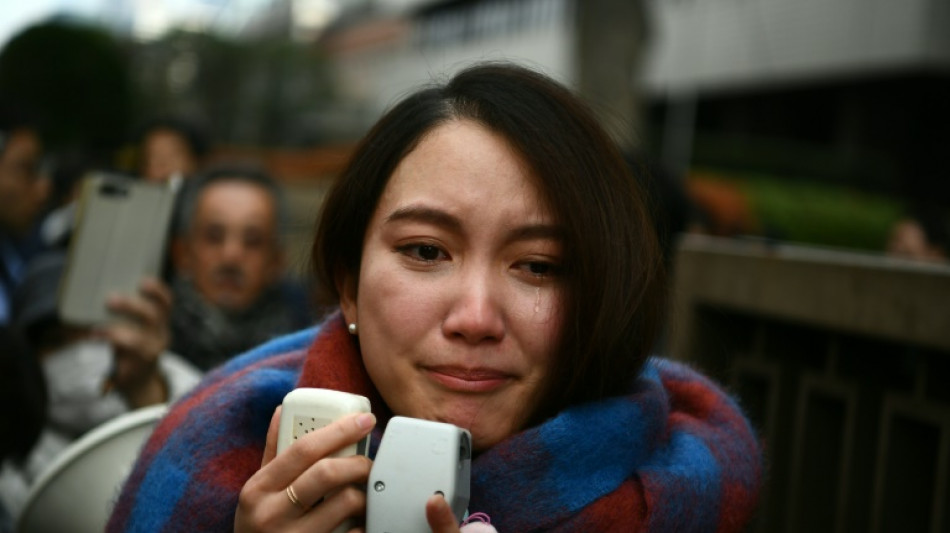
Japanese journalist brings lonely #MeToo battle to Sundance / Photo: © AFP

 Pakistan's last antique restorers give old treasures new life
 India braces for Cyclone Arnab with evacuations

 Steel Strips Wheels gains 36% in two sessions on growth outlook

 Cavs edge T'Wolves in overtime despite superb Edwards

 Prescott fires Cowboys to 38-21 win over plummeting Eagles

 Kuwait padel chief hails national showing at Premier Padel Major

 Britain prepares constrained budget as debt and defence pressures mount

 Valkyries beat Dream to reach brink of WNBA title

 Benjamin Netanyahu: Israel's longest-serving PM fighting for survival

 Kuwait receives invitation to 2026 UN Water Conference in Abu Dhabi

 Arab World Institute president outlines plans for stronger Kuwait-France cultural links

 Bolsonaro's party says it recognizes Lula's election win in Brazil

 Meghan on TV menu for 'Junior MasterChef Australia'
 South Korea's chip boom fuels forecast-beating third-quarter growth

 US-brokered truce begins in Ukraine city occupied by Russia

 Qatar launches Fashion and Crafts Council to connect talent with global markets

 Jordan strikes militant groups in Syria after church attack

 FIA chief praises Middle East motorsport volunteers and officials

 Australia warns of 'unprecedented' AI threat

 Qatar Amir arrives in Moscow for eighth GECF summit

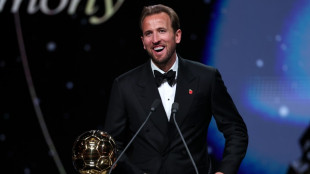
 Kane beats Yamal and Mbappe to taste Ballon d'Or glory
 Ballon d'Or crowns Putellas's return to top of women's game

 Godts stars as PSG beat Lyon to go top of Ligue 1

 NBA inks deal with Kalshi and Polymarket, citing safeguards

 US rapper Macklemore launches 'Free Palestine Tour' after Ed Sheeran fallout

When Japanese journalist Shiori Ito accused a prominent TV reporter of rape, becoming a rare high-profile #MeToo voice in her homeland, she was initially ignored by police, prosecutors and even much of the media.
Defying taboos, she investigated her own case, secretly recording phone calls and meetings, and compiling enough evidence to eventually win $30,000 in damages in a civil case that made headlines around the world.
That remarkable victory, which was followed last year by a toughening in Japan's antiquated rape laws, is the subject of "Black Box Diaries," a new film premiering at the Sundance festival, directed by Ito herself.
"It's never the point of view of the victims and survivors when we see a TV program or a documentary or cinema," she told AFP ahead of Saturday's premiere.
"So I just purely wanted to tell from the point (of view) of the survivor. What it really was. I didn't want anyone else to tell my story."
Ito alleged that Noriyuki Yamaguchi, a former TV journalist with close links to then-prime minister Shinzo Abe, raped her after inviting her to dinner to discuss a job opportunity in 2015.
Having initially told Ito there was insufficient evidence, police then told her they were going to arrest Yamaguchi -- before suddenly backing off.
In the film, Ito records one cooperative police investigator telling her the order came from "higher-ups," and that he had been taken off the case.
"At the very start, the reason why I started to document the conversations with police was just to protect myself," said Ito.
She explained: "If the system were working perfectly, I wouldn't have to do this. I was happy if they just investigated, but it didn't go like that. So I kept questioning."
- 'Hated' -
The film also tackles the backlash Ito faced after speaking out.
It is rare for rape victims to report the crime to police in Japan -- according to a 2017 government survey, only four percent of women come forward.
Ito received death threats and had to temporarily leave the country, while she said even her family "hated what I did" by speaking out.
"I decided to make a film right after I went public with my story, and I saw the reaction, how negative it was in Japan," she said.
No criminal charges were ever brought, while Yamaguchi denied any wrongdoing and filed a countersuit against Ito.
But in 2022, Japan's Supreme Court upheld the lower court's ruling that Yamaguchi had sexually assaulted Ito.
And last year, after nationwide rallies over a string of acquittals in rape cases, a bill was passed removing the need for prosecutors to prove victims were incapacitated by violence.
Japan's age of consent was also raised from 13, among the world's lowest, to 16 years old.
Even so, Ito -- for whom the rape laws reform was "a big step" but "wasn't enough" -- is preparing to leave Japan again once the film emerges there.
"Maybe this time it won't happen. Things are changing," she said.
"But whenever we speak up against sexual violence or for gender equality, especially in Japan -- everywhere in the world, I guess -- there's a great amount of threats."
- #MeToo -
Ito first spoke out publicly in 2017, shortly before the #MeToo movement spread around the world as US movie producer Harvey Weinstein's crimes were exposed.
While she says the movement "really helped me," in Japan it failed to make much headway, and even highlighted how alone she was.
"I just wish that it could have happened a bit earlier. Because I always felt very isolated. I was called out as 'that #MeToo person,'" she reflected.
"I knew other voices were out there, but it wasn't really talked about. I feel like I became a bad example of what happens if you speak out."
Today, more women are demanding justice, and in December three Japanese ex-soldiers were found guilty of sexually assaulting their female colleague Rina Gonoi.
The case reminded Ito of her own in many ways -- including the burden on women to speak out, despite the inevitable backlash.
"Rina contacted me before she went public... if she didn't go public, this case was already closed, nothing would have happened," said Ito.
There are even signs of the #MeToo movement finally reaching Japan's entertainment industry.
Japan's biggest boy band agency last year admitted its late founder Johnny Kitagawa had sexually abused aspiring young stars.
And prominent Japanese comedian Hitoshi Matsumoto was recently accused of sexual assault by two women. He denies the allegations.
"This is a continuous challenge and battle. We can never stop," said Ito.
"It's going forward. But we cannot let it go back."
K.Sutter--VB