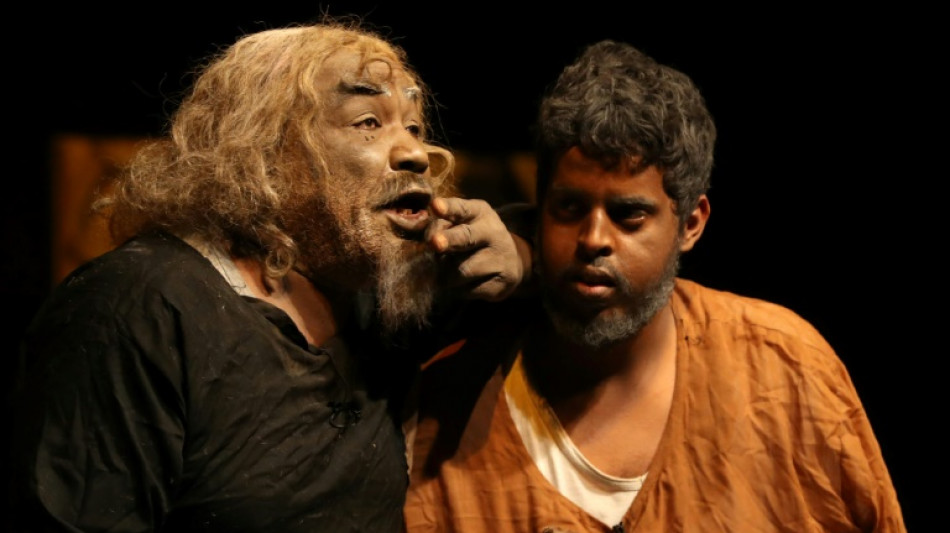
Libya's theatre stages comeback after country's years of turmoil / Photo: © AFP

 Campbell back from four years in Wallabies wilderness to face Ireland
 Migrants pick up pieces back home after fleeing South Africa
 Farrell names Leinster-heavy Ireland side to face Wallabies
 Fearing Russian strike, Kyiv's Holodomor museum evacuates exhibits
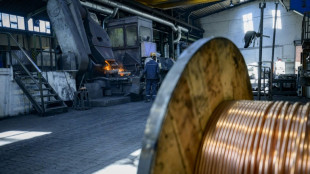 Germany's energy-hungry small firms struggle with green shift
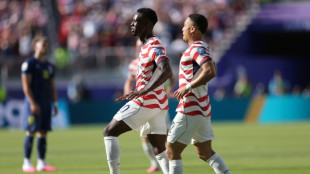
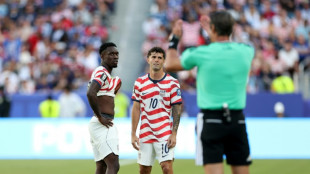 Pochettino says Balogun foul 'never' a red card as suspension looms
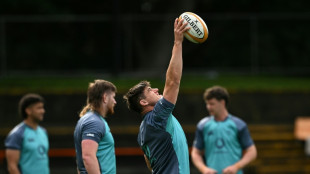
 Campbell back after four years in Wallabies team to face Ireland

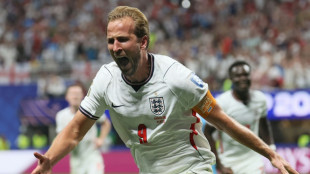
 Kane saves England as USA, Belgium reach last 16
 Budding chefs cook up new career at China's BBQ academy
 One stitch at a time: Artist's mission to recreate the Bayeux Tapestry

 Deadly Russian barrage pounds Ukraine capital

 Belgium coach salutes Tielemans after World Cup rescue act
 Cracking open a can of cannabis -- America's new pastime (for now)

 Russia strikes Ukraine capital with missiles and drones, wounds five
 Belgium late show floors Senegal at World Cup

 Harry Kane: England's World Cup saviour

 US actor Danny Glover says he has Alzheimer's

 Trump sees progress as US, Iran hold Qatar talks
 Djokovic, Sinner into Wimbledon third round, Andreeva stunned
 Spurs agree club record £100 mn move for Newcastle's Tonali - reports
 Rain has final say in 1st England-India T20 as Sooryavanshi still awaits debut
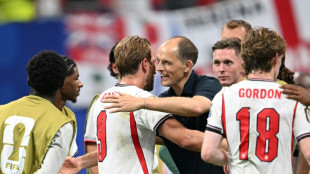 England refused to accept defeat in 'beautiful' DR Congo win, says Tuchel
 'Let the dogs in': Sabalenka wants Wimbledon to lift ban
 Oppressive heat broils US during World Cup, July Fourth
 Can anyone stop France at the World Cup?
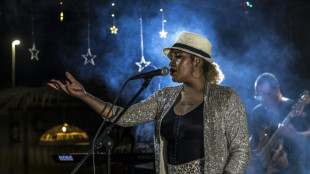
Dressed all in white, a man pretends to aim a slingshot towards another who, running away, tries to dodge the imaginary rock flung towards him.
"Hassituha" (You Felt It), a mostly silent play from eastern Libya, symbolises both the country's divisions between west and east, and the rebirth of Libya's National Theatre Festival, which staged a comeback this week in Tripoli after a 15-year hiatus.
When it last took place in 2008, the festival was to be held again in four years.
Before that could happen, a NATO-backed uprising led to the overthrow and killing of longtime dictator Moamer Kadhafi in 2011. With a myriad of militias subsequently vying for power, more than a decade of stop-start conflict followed before a period of relative stability.
Taking to stages in the capital Tripoli and Misrata, about 190 kilometres (120 miles) to the east, performers came from 11 cities around Libya -- a country split between a United Nations-supported government in the west and a rival administration backed by military strongman Khalifa Haftar in the east.
"Hassituha", performed at Tripoli's Scouts Theatre by a group who travelled from Marj in eastern Libya, was well received by an audience of more than 1,000 people.
"Some of them burst into tears" over the actors' performances, Muhammad al-Khaitouni, a spectator, said after seeing the play. He said the actors "mostly used gestures and other non-verbal expressions, but they quickly conveyed the meaning to us".
Accompanying his father and two brothers, Khaled al-Muwadhaf, 14, said the actors demonstrated the suffering brought by the chaos, poverty, and political corruption that has gripped the North African nation despite its oil wealth.
Ali al-Qadiri, who directed the play, said he believed the show was a success because it touched on the circumstances of ordinary Libyans, including a "lack of opportunities, and the economic stagnation that most cities in Libya suffer from".
- 'Uniting Libyans' -
Anwar Alteer, director of this year's festival, told AFP, "we want to rekindle the flame and celebrate great artistic figures that the public must not be deprived of".
More than 60 playwrights and performers took part in the festival, alongside dozens of directors and authors.
Like "Hassituha", other performances touched on the painful aftermath of Kadhafi's fall and the chaos that ensued.
Salwa al-Maqsabi, a Libyan actress who came from the eastern city of Benghazi to perform in Tripoli, said arts and theatre were a means of overcoming divisions among Libyans.
"I am happy to be present in this sweet gathering," she said. "Theatre unites and does not divide, and it will succeed where politicians have failed."
"Ajyal" (Generations), a theatrical group from Derna, said they were optimistic about reviving the country's theatre despite the many challenges Libyans face.
On September 10-11 a flash flood in Derna swept entire neighbourhoods into the sea, leaving thousands dead or missing and more than 40,000 displaced.
On top of the country's other challenges Derna still faces the task of rebuilding after the disaster. But Milad al-Hasadi, head of Derna's National Theatre, expressed hope for Libya's future.
"Today we are here burdened, it is true, with wounds, pain and loss, but we are optimistic for our country and its artists who succeeded in reviving the national theatre", said Hasadi.
"The conflict in Libya has isolated theatre from artists, and today we need to encourage and support every Libyan theatre, because their role is great in rejecting division, uniting Libyans, and sowing smiles and hope in our lives," Hasadi added.
The Tripoli-based government funded the festival's return, and members attended the opening.
Abdel Basset Buganda, undersecretary of the Libyan culture ministry, told AFP that Libya's theatre had gained lasting momentum.
"The Libyan artist has always sought to communicate with the public, but the interruption was caused by the neglect and political strife that harmed the arts, especially theatre," said Buganda.
"Today, we are united with all Libyan artists to overcome this strife."
M.Vogt--VB