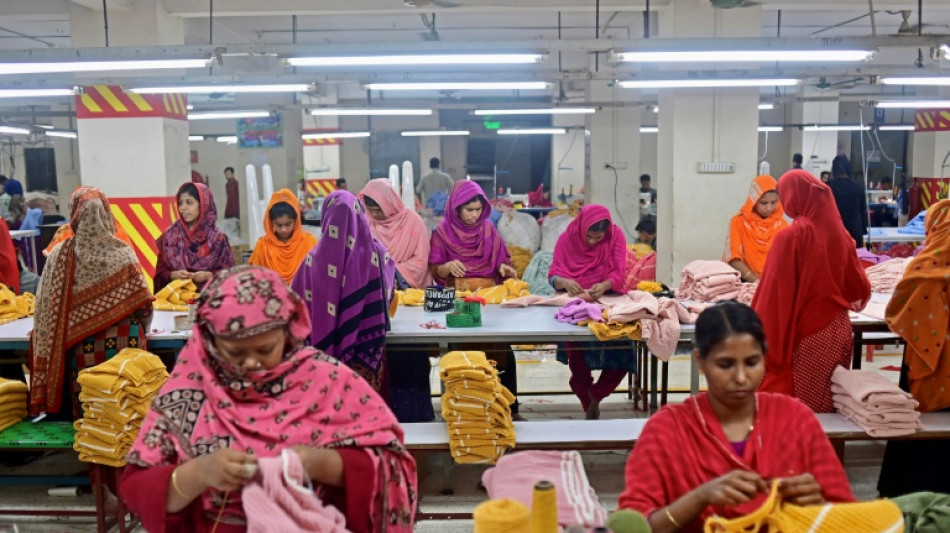
Bangladesh factory disaster survivors plead for justice 10 years on / Photo: © AFP

 UK police arrest Palestine Action supporters ahead of Supreme Court hearing
 Harmer and Rabada wrap up South Africa series win over Australia

 Senegal kicks off Youth Games, Africa's first ever Olympics
 Russia says responding to US report of planned attack on Moscow

 Carrick expects Man Utd stay despite Chelsea defeat

 China state TV does not air first La Liga games since Mbappe furore

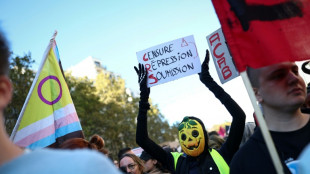 Thousands turn up for France protests amid tight security
 Our part of Mbappe, China issue over: Real Madrid's Mourinho

 Evacuees from Russian-occupied Oleshky arrive in Ukraine

 Kamindu hits maiden ODI ton as Sri Lanka set Pakistan 326 in final
 Aston Villa to take legal action against pundit Carragher

 West Indies crush Bangladesh by eight wickets in first Test

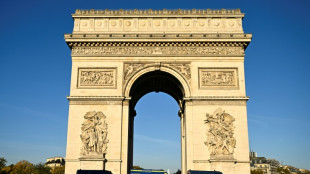 France on alert as Halloween protests raise risk of violence

 Abhishek Sharma: Indian cricket's 'new-generation superstar'

 Marquez stretches MotoGP championship lead after Martin pulls out
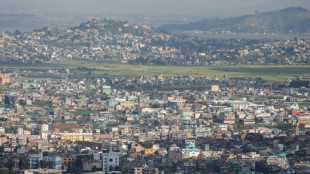
 In-form Fernandez reaches Tokyo final

 James, Maxey fuel 76ers over Knicks in NBA Cup thriller

 High-speed, high-risk Route du Rhum yacht race sets off Sunday

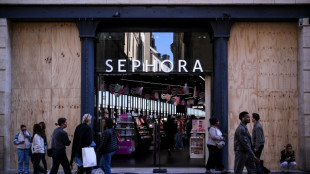 Fears of violence as France braces for Halloween protests

 OKC's Holmgren to miss at least eight weeks as Thunder injury woes deepen
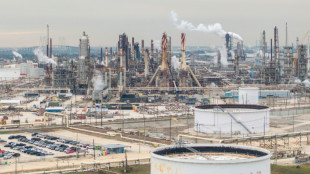
 'Not very smart' - Verstappen slams Red Bull stable-mate after clash

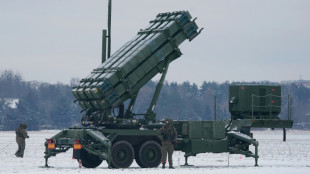 Trump admin approves potential Patriot missiles sale to Ukraine
 Sun Goddess wins at Breeders' Cup, O'Brien leads Baffert
 Nations agree push to get nature goals on track
 Leclerc shows practice pace as Antonelli prowls in Mexico
Bangladeshi garment worker Sumi Akhter feared for her safety, but was told to start her shift or risk forfeiting her wages. An hour later she was pinned down under rubble and clinging to life.
Akhter was 18 when she began working at Rana Plaza, a sprawling seven-storey factory complex near the capital Dhaka, now remembered as the site of one of the world's worst industrial disasters.
More than 1,130 people died in the building's collapse, a toll compounded by management demands that employees keep working despite glaring signs of an imminent disaster.
"All I want is justice," Akhter, whose mother also worked in the complex and died while trapped under the debris, told AFP.
Both women had been reluctant to return to work after the building was evacuated the day before its collapse following the appearance of cracks in the structure.
"They could have said, 'Don't enter the building'," she said. "It could have saved the lives of so many people."
Monday marks the 10th anniversary of a catastrophe that spotlighted the global fashion industry's reliance on developing world labour working in dangerous and sometimes deadly conditions.
Bangladeshi factory owners have proudly touted their efforts to overhaul the sector, and deadly accidents have declined sharply in the decade since.
For many of the more than 2,000 survivors of the collapse, however, their ordeal never ended.
More than half are unemployed and many suffer from deep psychological trauma, according to a survey by Action Aid.
Weeks after the collapse, while still mourning her mother's death, Akhter was told that her leg would have to be amputated.
The procedure has left her unable to return to work and requiring ongoing treatment with costs exceeding what she received in compensation.
"We are alive, but we are dying day by day," she said.
- 'Man-made disaster' -
A Bangladesh court indicted 38 people for murder over their roles in the collapse, including Sohel Rana, an influential former ruling party politician who owned the factory.
The trial has been bogged down in delays and prosecutor Bimal Samadder said he was doubtful that a verdict would be reached in the next few years.
He told AFP that witness accounts made it clear that many had died in the disaster because they had been "forced" to work in the building, despite signs it was structurally unsound.
"Managers, factory owners and (the) building owner threatened that they won't pay them any salaries if they did not work," he said.
Journalist Najmul Huda, who shot footage of cracks in the structure that presaged the disaster, said he was frustrated that he was yet to be called to give his account at court.
Huda was detained by police in 2016 for reporting on wage protests in garment factories and spent months in jail, which he believes was retribution for showing Rana Plaza was at risk of collapse.
"If I did not have footage of the crack, the factory owners and Sohel Rana would have claimed that the building was structurally okay," he said.
"The footage proved it was a man-made disaster."
- 'Nobody talks about it' -
The Rana Plaza collapse prompted foreign brands, unions and manufacturers to jointly create watchdogs that have seen considerable success in improving safety standards.
Industrial accidents remain common in Bangladesh, but the garment sector has seen far fewer major incidents.
The disaster helped create the impetus to clean up a poorly regulated industry, textile factory owner Nafis Ud Doula told AFP.
"Afterwards, all of us realised that the way we were running our factories, we should not run that way," said Doula, also a member of a watchdog working to improve safety standards.
Some labour rights groups, however, warn that the new safety audit system has limits.
Laura Bourgeois at advocacy organisation Sherpa warned of factory managers' potential to influence worker interviews, and even of "rigged audits with factories that have been set up from scratch".
The safety overhaul cost manufacturers more than two billion dollars, said Doula, but they have also seen phenomenal growth in export orders from foreign brands as a result.
Garment exports from Bangladesh have doubled to $45 billion in the past decade, while average wages have tripled, drawing millions of women from rural areas into the formal workforce.
Among them is Laxmi Soren, waiting in line alongside a dozen other women who were seeking work at a factory, hoping to send money back to her remote village to support her two children.
A stone's throw away was the empty plot where Rana Plaza once stood, bare except for patches of wild grass and a monument to the dead workers, erected by labour unions.
"Rana Plaza is no longer in people's thoughts. Nobody talks about it anymore," Soren told AFP.
"But then when I go past the ruins, my heart aches."
R.Adler--BTB