
Spain begins centuries-old Easter processions / Photo: © AFP

 UK PM 'open' to slavery apology but not reparations
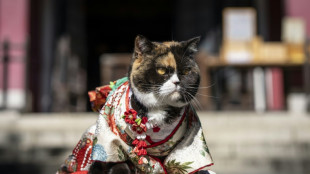 Kimono-clad pets blessed at Japan festival lacking enough kids
 Hakimi bags hat-trick as PSG rip Le Havre to pieces
 In-form Fernandez sets up Tokyo final against Russia's Shnaider
 Scam centres relocated from Cambodia operate in Madagascar

 Marc Marquez on front row at Malaysian MotoGP as Martin ruled out

 Injured Martin out of Malaysian MotoGP in big title blow

 US, S.Korea, Japan vow 'complete' N.Korea denuclearization
 Nations commit to get nature goals back on track

 US oil companies aim to squeeze more out of refineries

 Leclerc quickest in Mexico GP practice
 Polish riot police deployed as deposed court chief sets off crisis
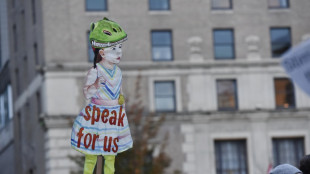 Young Canadians focus on mental health at key climate trial

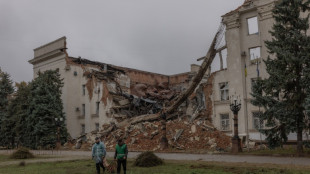 'Breath of fresh air' truce brings hope to Ukraine's ravaged Kherson
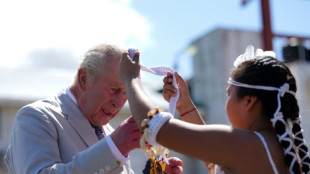 British king reflects on colonial atrocities in Guyana

 Nations agree crucial texts in overtime at UN nature summit

 NBA Trail Blazers lose guard Morant for four weeks
 UN nature summit in extra time as nations grapple for deal

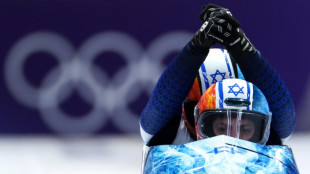 Complaints upheld against Swiss TV commentary on Israeli bobsleigher

 Tielemans glad Man Utd sticking with Carrick
 Scottish police probe Andrew, Epstein stay at royal castle: UK media

 Medvedev into Vienna semis and books ATP Finals place
 UN nature talks in extra time as nations struggle to reach deal

 Meta settles, leaving Snap sole defendant in new social media trial
 Chelsea manager Alonso dismisses talk of Estevao loan deal

Spain's colourful Holy Week celebrations begin on Sunday, featuring centuries-old processions of the faithful carrying flower-covered floats topped with statues of Christ or the Virgin Mary that draw huge crowds.
Organised by various religious brotherhoods, the parades are held across the country in the week leading up to Easter Sunday, which this year in the Christian Church falls on April 9.
Depicting scenes from the story of the Passion of Christ, the floats are carried on the shoulders of members of the brotherhoods called "costaleros", often accompanied by solemn music from a brass band.
Other members of the brotherhoods accompany the floats wearing long robes with tall, pointed hoods that leave only two small holes for the eyes.
The processions first appeared in the 15th and 16th centuries in Spain, which already had a tradition of biblical theatre depicting the Passion.
"Originally people went out on the streets with a cross," University of Navarra professor of church history Fermin Labarga told AFP.
They were accompanied by other members of religious brotherhoods who "performed acts of penitence" such as whipping their bare backs, he added.
These self-flagellations disappeared in the 18th century due to growing criticism that they "were not done out of devotion but for ostentation", Labarga said.
- Elaborate, extravagant parades -
But the tradition of staging Easter processions continued.
The goal of the parades was to "remember the Passion (of Christ)" -- the week of the crucifixion and resurrection of Jesus -- and "strengthen belief", said Labarga.
While Spain, like most European nations, has grown increasingly secular in recent decades, the parades continue to draw huge crowds of all levels of devotion and all walks of life.
Many of the more famous processions are broadcast live on TV.
Labarga called them a "complete performance".
Spaniards love the processions "because they are aesthetically beautiful and they incorporate festive elements which make them very attractive, with music, images and movement", he added.
The most elaborate and extravagant parades are held in the southern region of Andalusia, particularly in its capital, Seville, and in the northern city of Valladolid.
The Passion Procession held in Valladolid on Good Friday has more than 1,000 participants and dozens of floats.
- Crucifixion and resurrection -
Typically, the most dramatic and fervent processions take place on Maundy Thursday and Good Friday, when mourners dressed in black lace often join in to mark Christ's death.
On Easter Sunday, when Christ's miraculous resurrection is celebrated, the parades become more jubilant, with more lively music.
During the 16th and 17th centuries, Spain exported its Easter parade tradition to its overseas possessions, mainly in Latin America.
Processions are especially popular in Guatemala, Mexico, Peru and Venezuela.
Guatemala's Holy Week -- a vibrant celebration that mixes Mayan rituals with Catholic religious fervour -- was last year given UNESCO heritage status.
Spain also introduced these processions to the parts of southern Italy which it ruled until the 18th century.
The legacy can also be found in the Philippines, which Spain ruled until 1898.
R.Adler--BTB