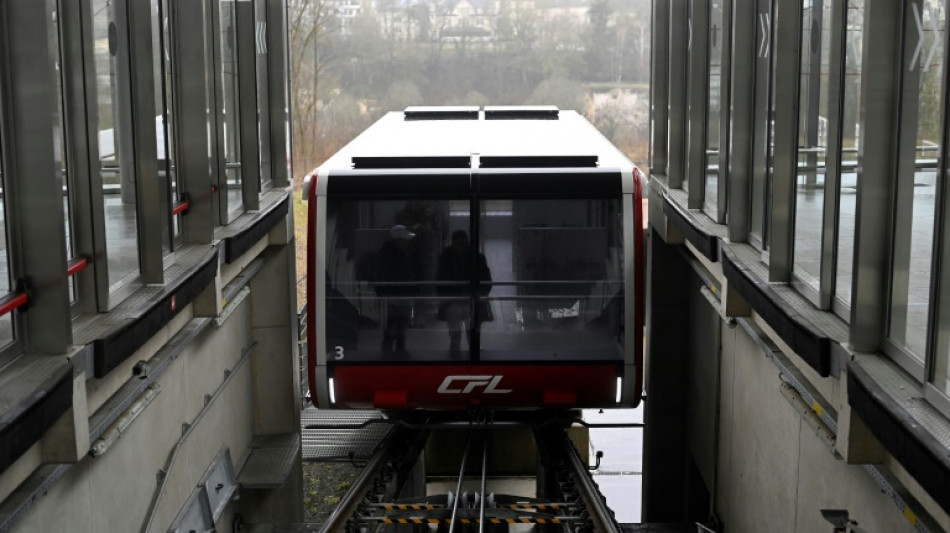
Even free transport can't shake Luxembourg's love of the car / Photo: © AFP

 In-form Fernandez sets up Tokyo final against Russia's Shnaider
 Scam centres relocated from Cambodia operate in Madagascar

 Marc Marquez on front row at Malaysian MotoGP as Martin ruled out

 Injured Martin out of Malaysian MotoGP in big title blow
 US, S.Korea, Japan vow 'complete' N.Korea denuclearization
 Nations commit to get nature goals back on track

 US oil companies aim to squeeze more out of refineries
 Leclerc quickest in Mexico GP practice
 Polish riot police deployed as deposed court chief sets off crisis

 Young Canadians focus on mental health at key climate trial

 'Breath of fresh air' truce brings hope to Ukraine's ravaged Kherson
 British king reflects on colonial atrocities in Guyana

 Nations agree crucial texts in overtime at UN nature summit
 NBA Trail Blazers lose guard Morant for four weeks
 UN nature summit in extra time as nations grapple for deal
 Complaints upheld against Swiss TV commentary on Israeli bobsleigher

 Tielemans glad Man Utd sticking with Carrick
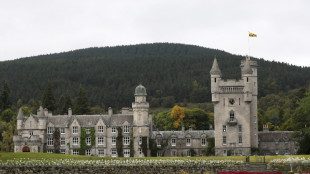 Scottish police probe Andrew, Epstein stay at royal castle: UK media
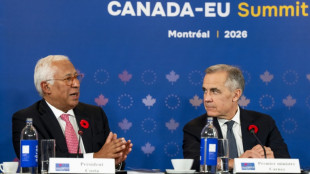
 Medvedev into Vienna semis and books ATP Finals place
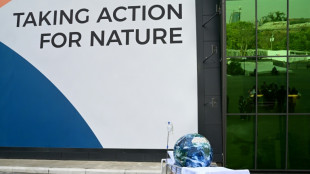 UN nature talks in extra time as nations struggle to reach deal

 Meta settles, leaving Snap sole defendant in new social media trial
 Chelsea manager Alonso dismisses talk of Estevao loan deal

 Thousands of students, workers hold peaceful protests in Italy

 Iraola glad to raise Liverpool fans' hopes but says hard work ahead
 Pope Leo makes history with US midterm vote
Three years after Luxembourg declared all public transport free in a bid to clear its roads of jams and cut pollution, the car is still king of the congested Grand Duchy.
Traffic permitting, it is barely an hour's drive from Weiswampach in the far north of Luxembourg near the German and Belgian borders to Dudelange in the south, next door to France.
So the wealthy country of just 650,000 people appeared the perfect place for a bold experiment -- making public transport on trains, trams and buses free nationwide.
But Luxembourg, despite its lack of long-distance highways, has one of the highest rates of car ownership in Europe, with only Poland exceeding its rate of 681 vehicles per 1,000 residents.
Cross-border workers bring in tens of thousands more vehicles every day as commuters head to jobs in Luxembourg, and long-distance drivers often pass by to fill their tanks in a country with low fuel taxes.
"I often say that Germans build cars and Luxembourgers buy them," joked Deputy Prime Minister Francois Bausch, who is in charge of mobility and public works.
So, three years after ticket offices closed, there's no sign that Luxembourg has ditched the automobile for the tram, even if Bausch sees a thinning of traffic in the capital.
- Car culture -
"Car culture is truly dominant and it remains pretty tricky to attract motorists onboard public transport," mobility expert Merlin Gillard, of the LISER research institute, told AFP.
Luxembourg, along with the rest of the European Union, is attempting to transform itself into a carbon neutral economy by adopting green technologies in transport, energy, factories and farms.
Prime Minister Xavier Bettel's government is a coalition of liberals, socialists and greens, and it boasts of investing 800 million euros a year ($872 million) in public transport.
The duchy has Europe's highest-funded tram network per capita, costing 500 euros per person each year.
"It is the country that invests the most in Europe," Gillard acknowledged, "but Luxembourg is coming from far behind. We're making up for investment that has been very weak for years."
In Luxembourg city, a modern financial services centre built around an historic old town nestling in tight loops of the Alzette river, passengers appreciate the changes.
The central station is undergoing a thorough renovation, an ultra-modern funicular links the upper town to the riverside, and road lanes have been set aside for buses and trams.
Most of all, though, and uniquely in Europe: the network is free.
This, said Edgar Bisenius, owner of a financial services business, is the prime consideration when choosing between a car and the bus. "And it's very positive for the environment," he told AFP.
French teacher Ben Dratwicki travels around the capital by bicycle on personal business, but takes the funicular and the train to get to his school 20 kilometres (12 miles) north of the city.
"Transport is a basic right for residents," he argued. "If we have the right to work, we should also have the right to be taken to work, without paying over the odds."
But Dratwicki seems to be in a minority across the country, where traffic jams of private cars still block major arteries during rush hour.
Part of the explanation may be the 220,000 cross-border workers, vital to Luxembourg's economy, who arrive every day from neighbouring countries to enjoy higher wages... but a longer commute.
- Cross-border park and ride? -
The trains and buses they could board in France, Belgium or Germany are not free until they cross into Luxembourg, and many daily workers remain wedded to their cars.
Bausch, a Green, has a plan to help some of the French workers, who after all pay their income taxes in Luxembourg.
He aims to finance car parks on the French side of the border, and has promised that from 2027 or 2028 there will be a train from the French town of Thionville to Luxembourg every seven minutes.
Experts like Gillard, however, are sceptical, saying the problem is embedded in the underlying structure of the Luxembourg economy.
French workers can't afford rents or property prices in Luxembourg, but much of the cash they save by living at home is wasted on the busy and polluting commute to work.
J.Horn--BTB