Banned from school, Afghan girls turn to madrassas / Photo: © AFP

 In-form Fernandez reaches Tokyo final

 James, Maxey fuel 76ers over Knicks in NBA Cup thriller

 High-speed, high-risk Route du Rhum yacht race sets off Sunday

 Fears of violence as France braces for Halloween protests

 OKC's Holmgren to miss at least eight weeks as Thunder injury woes deepen

 'Not very smart' - Verstappen slams Red Bull stable-mate after clash

 Trump admin approves potential Patriot missiles sale to Ukraine
 Sun Goddess wins at Breeders' Cup, O'Brien leads Baffert
 Nations agree push to get nature goals on track
 Leclerc shows practice pace as Antonelli prowls in Mexico
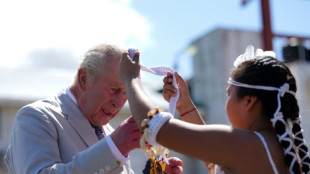
 Trump, Milei under pressure to explain Bolsonaro flight from Brazil

 Hakimi bags hat-trick as Paris Saint-Germain rip Le Havre to pieces

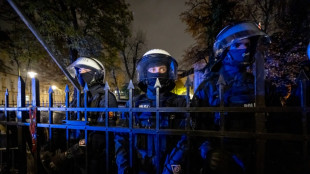 Polish riot police deployed after court chief suspended

 Emery's focus fully on Fulham despite Barcelona tie

 Reigning champs chase history in New York Marathon

 Monaco taken off global money-laundering 'grey list'

 Canada, EU launch new alliance with deals on Ukraine, minerals, AI

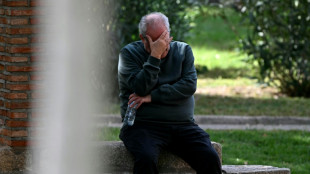 Tears, fear, anger: relatives of Spain train crash dead await fate

 Spurs get Maddison boost ahead of Palace clash

 French authorities fear new street violence at Halloween protests

 Rickelton, Mulder centuries lift South Africa's chances in Test decider

 Maresca adamant Donnarumma can be dropped but first name selected

 EU and Canada to 'withstand shocks together' with new alliance

 Flick praises Yamal 'mentality' after missing out on Ballon d'Or

 Binance heist: How were cryptocurrency billions stolen?

In a madrassa in the Afghan capital, rows of teenage girls rock back and forth reciting verses of the Koran under the watchful eye of a religious scholar.
The number of Islamic schools has grown across Afghanistan since the Taliban returned to power in August 2021, with teenage girls increasingly attending classes after they were banned from secondary schools.
"We were depressed because we were denied an education," said 16-year-old Farah, a veil covering her face and hair.
"It's then that my family decided I should at least come here. The only open place for us now is a madrassa."
Instead of maths and literature, the girls focus on rote-learning the Koran in Arabic -- a language most of them don't understand.
Those who want to learn the meaning of the verses study separately, where a teacher translates and explains the text in their local language.
AFP visited three madrassas in Kabul and in the southern city of Kandahar, where scholars said the numbers of girl students have doubled since last year.
For Farah, her ambition of becoming a lawyer was dashed when Taliban authorities blocked girls from secondary school -- and months later banned women from attending university.
"Everyone's dreams are lost," she said.
Still, Farah -- whose real name has been changed to protect her identity like other students AFP interviewed for this story -- counts herself lucky in that her parents allowed her to attend classes at all.
- Education deadlock -
The Taliban government adheres to an austere interpretation of Islam.
Rulings are passed down by the reclusive supreme leader Hibatullah Akhundzada and his inner circle of religious advisers, who are against education for girls and women, some officials say.
Akhundzada has ordered hundreds of new madrassas to be built as he establishes his Islamic Emirate based on sharia.
Authorities in Kabul have given several excuses for the closure of girls' schools -- including the need for segregated classrooms and Islamic uniforms, which were largely already in place.
The government insists schools will eventually reopen.
Education is the main sticking point behind a deadlock with the international community, which has condemned the stripping away of freedoms for women and girls.
No country has recognised the Taliban government, which is battling to keep afloat an economy where more than half the population face starvation, according to aid agencies.
Hosna, a former university student studying medicine, now teaches at a madrassa in Kandahar, reading verses of the Koran to a class of more than 30 girls who repeat the words back to her.
"Studying in universities helps to build a future, makes us aware of our rights," she said.
"But there is no future in madrassas. They are studying here because they are helpless."
The madrassa, located in an old building, has small classrooms with no electricity.
Despite the financial constraints faced by the management of the school, dozens of students attend classes for free.
- Friendship and distraction -
The educational value of madrassas is subject to fierce debate, with experts saying they do not provide the necessary skills for gainful employment as adults.
"Given the present conditions, the need for modern education is a priority," said Abdul Bari Madani, a scholar who frequently appears on local TV to discuss religious affairs.
"Efforts need to be taken so that the Islamic world is not left behind... letting go of modern education is like betraying the nation."
Around the world, some madrassas have been associated with militancy.
Many of the Taliban's leaders were educated at the Darul Uloom Haqqania madrassa in Pakistan, which earned the nickname "University of Jihad".
Niamatullah Ulfat, head of Islamic Studies at Kandahar province's education department, said the government is "thinking day and night on how to increase madrassas".
"The idea is that we can bring the new generation of this country into the world with good training, good teachings and good ethics," he told AFP.
Yalda, whose father is an engineer and mother was a teacher under the ousted US-backed regime, was top of her class at her old school, but still shines at the madrassa and has memorised the Koran within 15 months.
"A madrassa cannot help me in becoming a doctor... But it's still good. It's good for expanding our religious knowledge," the 16-year-old said.
The madrassa, on the outskirts of Kabul, is divided into two blocks -- one for girls and the other for boys.
Still, classes are held at different times to ensure there is no interaction at all between the two sexes.
Several girls told AFP that attending a madrassa does provide some stimulation -- and the chance to be with friends.
"I tell myself that some day the schools might open and my education will resume," said Sara.
If not, she is determined to learn one way or the other.
"Now that there are smartphones and the internet... schools are not the only way to get an education," she added.
M.Ouellet--BTB