Quake-prone Istanbul not at heightened risk: expert / Photo: © AFP

 Reflective Ronaldo takes on critics 'trying to kill me for 23 years'

 Verstappen claims Red Bull car 'dangerous' after crash

 Trump thanks FIFA for suspending USA's Balogun World Cup ban

 Mooney stars as Australia hammer England in women's T20 World Cup final

 Russell concedes Ferrari are threat to Mercedes

 Leclerc snaps winless run to reignite title race

 Infernos devastate forests as Europe's temperatures rise again

 'Tough' Leclerc delivers Ferrari's 250th win with victory in British GP
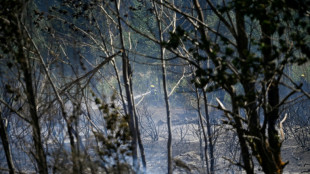 Tour de France stage 3rd stage to go ahead despite forest fires: official

 Spain's Rodri warns Portugal best yet to come at World Cup

 Djokovic makes Wimbledon history to reach quarter-finals

 Del Toro wins Tour de France stage, Pogacar up to 2nd

 Euphoric homecoming for Cape Verde after heroic World Cup defeat

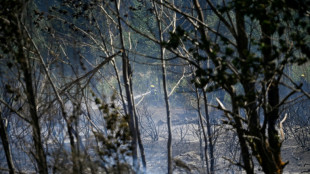 Tour de France stage under threat due to forest fires: official

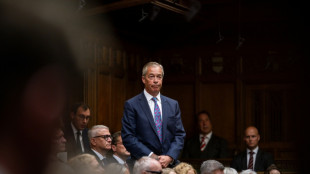 UK hard-right leader Farage faces new allegations over gifts

 OPEC+ raises quotas again as Middle East calms

 Azam to captain Pakistan on West Indies and England Test tours
 Revival hopes grow for long-closed Greek Orthodox seminary off Istanbul

 Trump hails US, blasts 'communists' in 250th anniversary speech

 Taiwanese film hunters rescue ageing reels from bygone era

 Trump arrives for US 250th birthday speech after storm delay
 All Blacks wing Fineanganofo's debut began 'in the toilet, spewing'

 Xhaka -- Switzerland's World Cup rock born to be skipper

 Trump pushes ahead with US 250th birthday speech after storm delay

 Australia's Schmidt rues missed opportunities as Wilson defends Donaldson

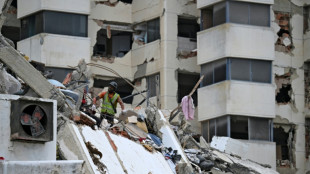
Fears of another major earthquake have been rekindled in Istanbul since the February 6 disaster that hit Turkey and Syria, but a prominent Turkish seismologist has reassured the risk "hasn't increased".
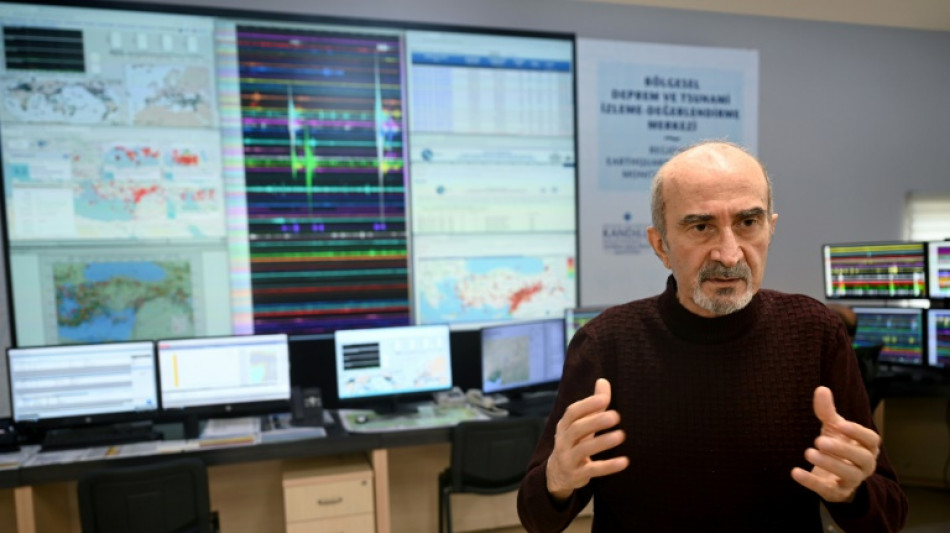
"The risk hasn't increased because we are talking about completely different systems," Dogan Kalafat, the director of the Kandilli Observatory's Earthquake-Tsunami Monitoring Center in Istanbul, told AFP.
Turkey's most populated city is situated near the North Anatolian Fault while the recent 7.8-magnitude quake that killed 43,500 people occurred along another fault in the country's southeast, Kalafat explained.
Still, the 16 million residents of Istanbul, a city that spreads over two continents and has seen skyscrapers mushroom in recent years, are wondering if they're ready for the "Big One".
"I'd like to say it, but sadly, it's a very big city with too many poorly constructed buildings," said Kalafat, who has denounced using low-quality cement and building on "soft soils".
While waiting for a large-scale quake, "we must make good use of the time. We must build earthquake-proof houses on solid soil. It's the most important precaution to take," the seismologist stressed.
At the observatory, seismologists take turns every eight hours watching a series of computer screens monitoring potential tremors.
In front of them, on a wall at least five metres (16 feet) tall, a giant screen provides real-time readings from 260 seismic stations across the country.
"Nine thousand aftershocks have taken place in Turkey since February 6," which is more than "seven or eight times normal", Kalafat said.
- Early warning -
On one of the desks, a laminated map shows the North Anatolian Fault, which crosses the Sea of Marmara, only "15 to 17 kilometres" from the southern shores of Istanbul, Kalafat said.
In 2001, two years after a 7.4-magnitude quake left 17,000 people dead in northwest Turkey, Kalafat calculated a 65 percent probability that a quake with a magnitude above 7 would occur before 2030 in the same region -- which includes Istanbul.
The risk climbed to 75 percent in 50 years and 95 percent in 90 years.
"These statistics are still relevant," said Kalafat, adding: "even with the technology of today, it is impossible to predict an earthquake."
"We can indicate, with a certain margin of error, where an earthquake can occur and what magnitude it can be, but we can't know when it will occur," he said.
The Kandilli Observatory has developed an early warning system "but Istanbul is too close to the fault line" for a system to be effective, Kalafat said.
On one of the desks, sitting between two screens, is a black telephone with two red labels with the public disaster management agency's acronym, allowing scientists to send an alert for a major earthquake.
The early warning could win "a maximum of seven or eight seconds" -- not enough time to allow inhabitants to get to safety.
In comparison, the telephonic warning system in Japan's Tohoku region, which was struck by a devastating earthquake and tsunami in March 2011, buys the public 45 seconds.
"There, you can send a message warning citizens, but we don't have this possibility here," he said.
C.Kovalenko--BTB