Vast cemetery in Iraq echoes 14 centuries of life and death / Photo: © AFP

 Reflective Ronaldo takes on critics 'trying to kill me for 23 years'
 Verstappen claims Red Bull car 'dangerous' after crash
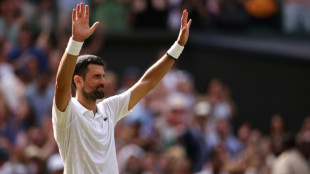
 Trump thanks FIFA for suspending USA's Balogun World Cup ban

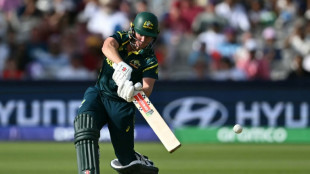 Mooney stars as Australia hammer England in women's T20 World Cup final
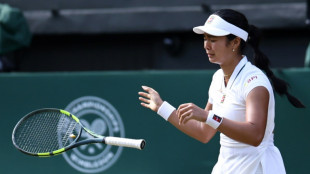
 Russell concedes Ferrari are threat to Mercedes

 Leclerc snaps winless run to reignite title race

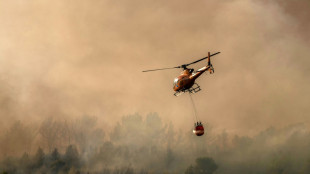 Infernos devastate forests as Europe's temperatures rise again
 'Tough' Leclerc delivers Ferrari's 250th win with victory in British GP
 Tour de France stage 3rd stage to go ahead despite forest fires: official

 Spain's Rodri warns Portugal best yet to come at World Cup
 Djokovic makes Wimbledon history to reach quarter-finals

 Del Toro wins Tour de France stage, Pogacar up to 2nd
 Euphoric homecoming for Cape Verde after heroic World Cup defeat
 Tour de France stage under threat due to forest fires: official

 UK hard-right leader Farage faces new allegations over gifts

 OPEC+ raises quotas again as Middle East calms
 Azam to captain Pakistan on West Indies and England Test tours

 Revival hopes grow for long-closed Greek Orthodox seminary off Istanbul
 Trump hails US, blasts 'communists' in 250th anniversary speech
 Taiwanese film hunters rescue ageing reels from bygone era

 Trump arrives for US 250th birthday speech after storm delay
 All Blacks wing Fineanganofo's debut began 'in the toilet, spewing'
 Xhaka -- Switzerland's World Cup rock born to be skipper

 Trump pushes ahead with US 250th birthday speech after storm delay

 Australia's Schmidt rues missed opportunities as Wilson defends Donaldson
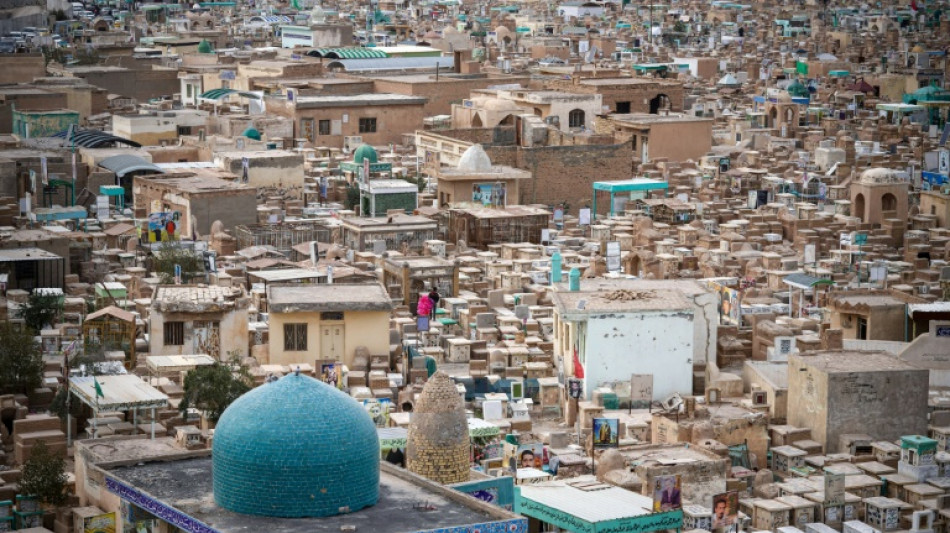
Tombstones stretch as far as the eye can see across Iraq's Wadi-al-Salam cemetery, often described as the world's biggest, which bears silent witness to life and death over 14 centuries.
Flowers, photographs and religious banners honour many of the millions buried in the ochre desert sands of the "Valley of Peace" -- victims of war and disease, accidents and old age.
"Oh my father!" laments one mourner, Jamil Abdelhassan, prostrating on a grave at the vast necropolis located in the Shiite holy shrine city of Najaf in central Iraq.
Tears and prayers are the currency of daily life at this sombre expanse of crypts, vaults and catacombs near the mausoleum of the revered Imam Ali, the founding figure of Shiite Islam.
"I'm sad, of course," says Abdelhassan, who travelled the 180 kilometres (110 miles) from the capital Baghdad to pray at the grave of his father, who died in 2014.
"But I'm also happy. I know that when Judgment Day comes, my father will be with Imam Ali."
For Shiites, who make up the religious majority in Iraq, "being buried near Imam Ali is very important," said the Najaf city historian Hassan Issa al-Hakim.
Sultans and soldiers, priests and prophets lie buried here, along with untold numbers of ordinary citizens.
Since Ali died in 661 and was laid to rest nearby, "people have stopped burying their dead in another cemetery in Najaf, Al-Thawiya, to put them to rest in Wadi al-Salam," he said.
"They believe Ali will play the role of intercessor for those around him during the Last Judgment."
- 'World's biggest cemetery' -
Many Iraqi Shiites chose the cemetery to lay to rest their loved ones.
"Digging a grave costs 150,000 dinars (about $100) and the tombstones cost 250,000 to 300,000 dinars ($170 to $200)," said Najah Marza Hamza, manager of a funeral company.
Some historians estimate that more than six million souls rest at the cemetery, mostly Iraqi but also Iranian and Pakistani Shiites.
"No, it's many more! But it's impossible to quantify," argued Hakim, a former president of the nearby Kufa University.
Iraq in a submission to UNESCO estimated its area at 917 hectares (2,265 acres) -- the equivalent of more than 1,700 football fields -- and called it "the oldest and biggest cemetery in the world".
There are no maps to guide visitors through the confusing labyrinth, which is also listed as the world's largest burial ground by the Guinness Book of World Records.
Mourners who drive here sometimes cause traffic jams on the avenues that cut through the huge graveyard.
At a recent ceremony, Ahmed Ali Hamed, 54, and some 20 relatives came from southern Iraq to bury his aunt Fatima, who he said had died "at about 80 years of age".
The funeral party consisted entirely of men "because the women don't come for the burial," Hamed said.
"They wash the body and go home. It's the tradition. The women will come, but on another day."
The elderly woman's body, wrapped in a shroud, was lowered into the grave dug from the ochre earth, facing the holy city of Mecca.
- 'Martyred' in Iraq's wars -
Many of those buried at Wadi al-Salam fell victim to the violence that has plagued Iraq, including in the recent decades marred by dictatorship, warfare and sectarian bloodshed.
One grave bears the photo of a smiling young man in an Iraqi army uniform, named in the inscription as "the martyr Ahmed Nasser al-Mamouri. Date of death: April 7, 2016".
His passing falls into the era when the Iraqi army, supported by an international coalition, beat back the jihadists of the Islamic State group from the country's north.
Others buried here died during Iraq's previous stretches of sorrow and tragedy -- the two Iraq wars and, before that, the 1980-1988 war with Iran under Saddam Hussein.
Another fighter, named in the inscription on a marble tomb as Hassan Karim, died a "martyr" in 1987, toward the end of the grinding conflict with the Islamic republic.
The cemetery is also the final resting place of Abu Mehdi al-Mouhandis, the Iraqi lieutenant to the powerful Iranian general Qassem Soleimani, both of whom were killed in a US drone strike in January 2020.
More recently, the Covid pandemic caused excess mortality, said grave digger Thamer Moussa Hreina, 43.
"During the coronavirus pandemic, we had 5,000 to 6,000 more bodies over a year," he said, his gaze sweeping across the expanse of graves.
Hakim, the historian, said the Covid death toll reflected Iraq's darkest days.
"During wars and crises, there are more deaths," he said. "We would bury up to 200 people a day."
R.Adler--BTB