
'Crackland' clown seeks to bring hope to Brazil addicts / Photo: © AFP

 Young Canadians focus on mental health at key climate trial

 'Breath of fresh air' truce brings hope to Ukraine's ravaged Kherson

 British king reflects on colonial atrocities in Guyana
 Nations agree crucial texts in overtime at UN nature summit

 NBA Trail Blazers lose guard Morant for four weeks
 UN nature summit in extra time as nations grapple for deal
 Complaints upheld against Swiss TV commentary on Israeli bobsleigher

 Tielemans glad Man Utd sticking with Carrick

 Scottish police probe Andrew, Epstein stay at royal castle: UK media

 Medvedev into Vienna semis and books ATP Finals place
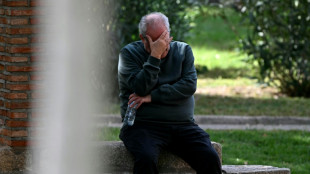
 UN nature talks in extra time as nations struggle to reach deal

 Meta settles, leaving Snap sole defendant in new social media trial
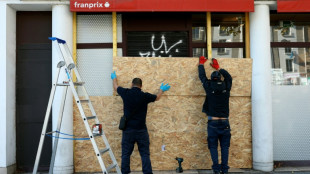
 Chelsea manager Alonso dismisses talk of Estevao loan deal

 Thousands of students, workers hold peaceful protests in Italy

 Iraola glad to raise Liverpool fans' hopes but says hard work ahead

 Pope Leo makes history with US midterm vote

 Arsenal boss Arteta fires 'Disneyland' warning at Dowman after Fleetwood red card

 Russia's ice hockey stars come in from the cold after CAS ruling
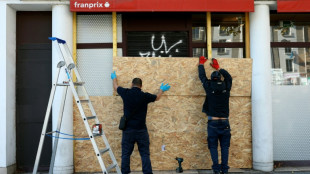
 Wall Street tech rout deepens on doubts over AI spending
 'Life in the old dog': German economy grows more than expected
 England great Anderson asks what's 'wrong with me?' after Lancashire exit

 Markets lashed by tech rout as earnings fan AI fears
 Germans to join Europe's youth protest wave

 Novaya Gazeta closure part of Russia's 'giant military campaign': Muratov to AFP

 US oil giants report profit surge again on Iran war

Every Thursday, Brazilian psychiatrist Flavio Falcone trades his white lab coat for a red clown nose and heads to a decidedly unfunny place: a squalid Sao Paulo neighborhood known as "Crackland."
Wearing a baggy red-and-black outfit with a floppy hat and make-up to match, the 43-year-old doctor dances a goofy routine through the sordid streets of the downtown neighborhood, which is known as Brazil's biggest open-air narcotics market.
"Good morning, Crackland!" he shouts to the strung-out addicts meandering through the trash and decaying buildings that line the district's streets, where authorities have tried in vain for years to restore law and order.
"Crackland is where people who have failed in the capitalist system seek refuge," says Falcone.
"And clowns represent hope in the face of failure: we laugh when they stumble, and people here can relate to that."
Falcone's goal is to build a relationship of trust with addicts, many of whom fear being forced into treatment facilities by the authorities.
It is a first step, he says, in helping them get off the street.
There are around 800 to 1,700 addicts in Crackland, 39 percent of whom have lived in or frequented the neighborhood for more than a decade, according to a study by the Federal University of Sao Paulo published last year.
The number was previously as high as 4,000, before a series of police operations dispersed the addict population.
But the operations also had the side-effect of dispersing Crackland, which went from a clearly delimited district to a hazier area covering much of the city center in this sprawling economic capital of 12 million people.
- Funky beats -
Falcone arrives in the neighborhood jamming to the beats of Brazilian funk music pouring from a sound system wheeled in by his volunteer assistants.
At first, most of the addicts ignore him.
But then a few curious onlookers gather and Falcone talks them into participating in a singing contest.
The first to take the mic is Peterson P.P. -- his stage name -- a 29-year-old homeless man who has been living in Crackland for three years.
He says his dream is to become a funk singer.
"It's almost like being on stage," he beams.
As he sings, another man lights a metal pipe and smokes a crack rock, for an intense but fleeting high that costs around 20 reais ($3.85).
The idea of the singing contest, says Falcone, is to "reawaken a life force" in participants, in order to start steering them toward a treatment program.
It is a three-step process, he says.
"First, we help them get housing. After that, jobs" -- often as cleaners, garment workers or in municipal work-placement programs.
"Then and only then, we help them get treatment for their addictions," he says.
The project, which he started around 10 years ago, has helped dozens of people overcome addiction, Falcone says.
He started the project with government funding, but now relies on corporate donations to keep it going.
One beneficiary, Vanilson Santos Conceicao, says the program helped him find a roof over his head and begin rebuilding his life.
"I suffered a lot on the street. I took a lot of drugs. But I've been clean for three years now," says Conceicao, 35, who now helps prepare free meals for addicts.
- 'Pulling in different directions' -
The clown show comes to an abrupt halt with every police raid.
Charitable organizations that work in the neighborhood accuse the police of brutal tactics.
Local residents and businesses meanwhile complain the district is a security nightmare.
The administration of newly installed Sao Paulo Governor Tarcisio de Freitas has just launched a Crackland action plan with the mayor's office -- the latest in a long line of efforts to address the area's problems.
Officials admit the government has struggled to organize effective policies for the zone.
"Charitable organizations are more present than the state in Crackland right now, and we're all pulling in different directions," says Deputy Governor Felicio Ramuth.
Ramuth, who is leading the administration's initiative, says it includes "hiring specialists to work on-site" and "more treatment options, including self-help groups."
Authorities also plan to install 500 security cameras and offer 1,000 spots in treatment facilities.
Forced hospitalization will be a "last resort," Ramuth says.
F.Müller--BTB