Cold War fears revisited in Danish nuclear bunker / Photo: © AFP

 Philippine Senate trial to decide VP Duterte's political future
 Australia PM apologises for Kylie Minogue comments
 Penalty save inspired Norway, says 'keeper Nyland
 As Venezuela quake deaths pass 3,000, attention turns to mourning, burials

 FIFA clear US star Balogun to play in World Cup after Trump call
 Gauff downs Bencic to book maiden Wimbledon quarter-final
 Spain boss backs Yamal to sparkle in Portugal World Cup showdown
 Australia's World Cup final win vindicates Molineux's self-belief

 Sinner powers into fifth straight Wimbledon quarter-final
 Euphoric homecoming for Cape Verde after heroic World Cup run ends

 White supremacist march in DC just 'messy' democracy, official says

 'Perfectionist' Djokovic not happy to win ugly at Wimbledon
 'Catastrophic' Super Typhoon Bavi aims at US Pacific island Rota

 Reflective Ronaldo takes on critics 'trying to kill me for 23 years'
 Verstappen claims Red Bull car 'dangerous' after crash
 Trump thanks FIFA for suspending USA's Balogun World Cup ban

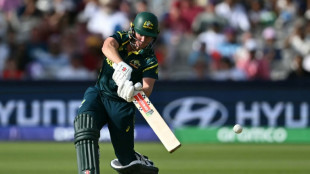 Mooney stars as Australia hammer England in women's T20 World Cup final
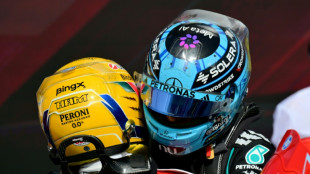 Russell concedes Ferrari are threat to Mercedes
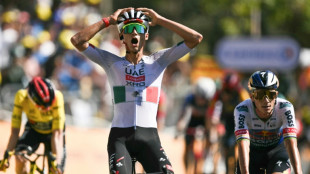
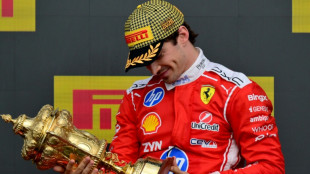 Leclerc snaps winless run to reignite title race

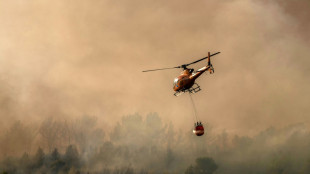 Infernos devastate forests as Europe's temperatures rise again
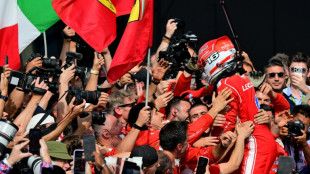 'Tough' Leclerc delivers Ferrari's 250th win with victory in British GP
 Tour de France stage 3rd stage to go ahead despite forest fires: official

 Spain's Rodri warns Portugal best yet to come at World Cup
 Djokovic makes Wimbledon history to reach quarter-finals
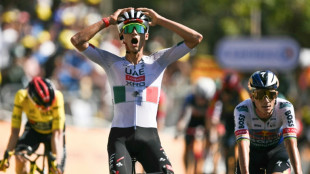 Del Toro wins Tour de France stage, Pogacar up to 2nd
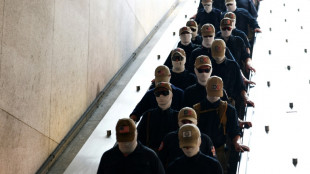
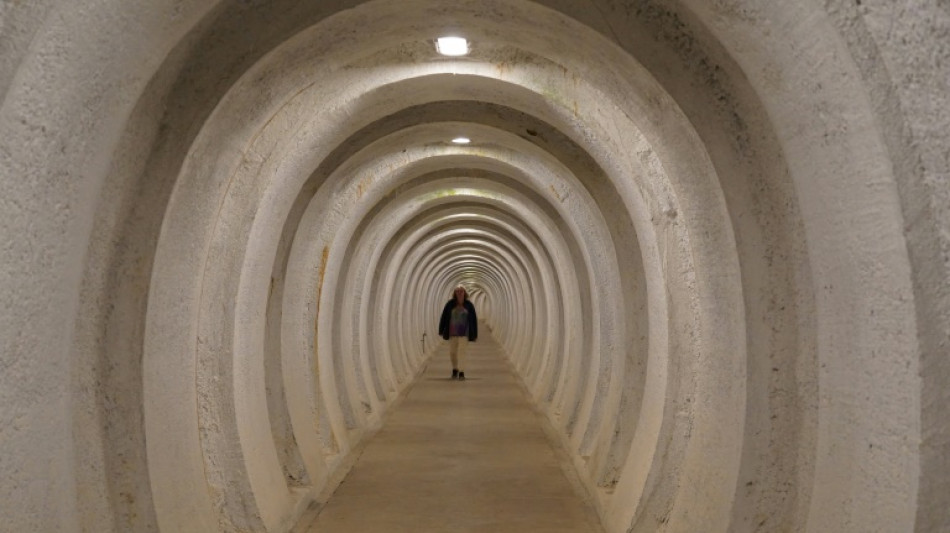
Hidden deep in northern Denmark's Rold Forest, a sprawling top secret nuclear bunker is opening to the public for the first time, shedding light on daily life during the Cold War.
The underground shelter, where everything is still intact as in a time capsule, becomes a museum from Monday, amid revived fears in Europe of a nuclear conflict following Russia's invasion of Ukraine.
The bunker was built between 1963 and 1968 at NATO's insistence, following Soviet nuclear tests and the Cuban Missile Crisis.
Dubbed "Regan West", it was designed to house the Danish government and the sitting monarch in the event of nuclear war.
Nestled beneath trees, 60 metres (200 feet) under a chalk hill, it was meant to be "the last bastion" of democracy in Denmark, museum director Lars Christian Norbach told AFP.
Located almost 400 kilometres (250 miles) northwest of Copenhagen, the bunker was set up to house Danish authorities for 30 days.
"The H-bomb totally altered the situation about how you could react to a nuclear attack", museum curator and historian Bodil Frandsen told AFP.
"The bunkers you already had could in no way withstand the blast from that. So you had to do something new", she said.
The survival of the government in the event of a nuclear disaster was essential to the nation's sovereignty, she noted.
"As long as you could have a government here that could claim control of at least some part of the country, and you have a government still rooted in Denmark, then Denmark, as a sovereign democratic state, was still alive", Frandsen explained.
- ' Time capsule' -
Never used, the bunker was taken out of service in 2003 and first revealed to the world in 2012.
Walking through the long, arched corridors, visitors see the basic bedroom intended for the monarch, the cafeteria, the government conference room and 60s-style decor in a dimly-lit lounge.
"It's a time capsule of papers, pencils, everything is where it was left", Norbach said.
An exhibit also outlines the main events during the period, with everyday objects on display.
Museum visitors will walk two kilometres (1.2 miles) during the 90-minute tour, and still only see about 40 percent of it.
"This is a very important place in terms of showing younger people... how anxious people actually were during the Cold War," Frandsen said.
And now, heightened tensions between Russia and the West have made the topic all-too relevant again.
"The Cold War has gained actuality again, and that's what we are saying in the museum", Norbach added.
L.Janezki--BTB