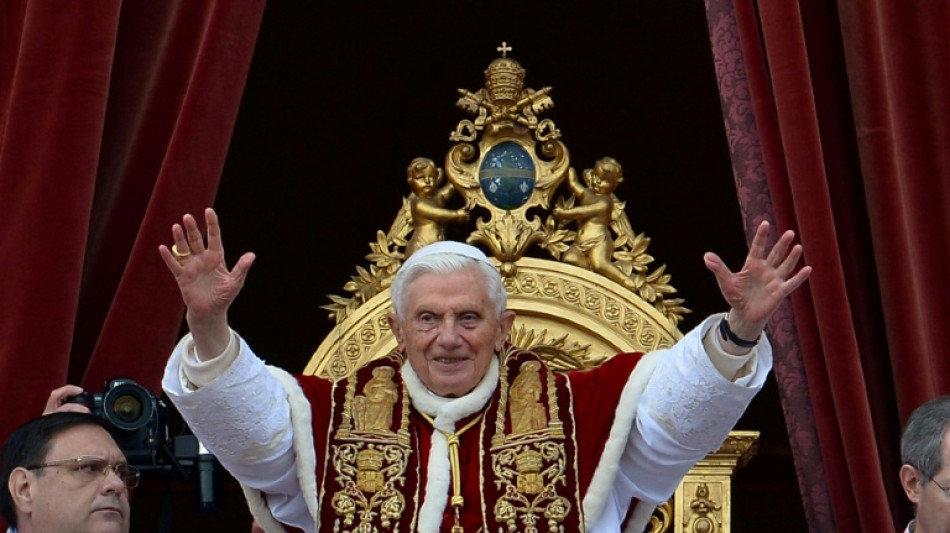
Benedict XVI: The pope who gave it all up / Photo: © AFP/File

 Clooney to get lifetime award at Venice film festival
 Three things we learned from the British Grand Prix

 Stock markets meander as tech recovery stutters
 Britain sanctions Russian scientists behind chemical attacks
 When politics intruded on the World Cup pitch
 France winger Penaud to miss remainder of Nations Championship

 Prince Harry set to arrive in UK amid security spat
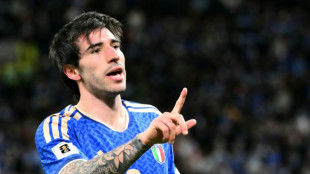 Tottenham sign Tonali from Newcastle for reported £100m
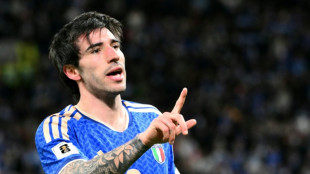 Tottenham sign Italy's Tonali from Newcastle

 Jolted by Ebola, countries try again to finish pandemic treaty
 Fashion forward: Osaka targets Wimbledon glory
 FIFA have 'crossed a red line' in Balogun reprieve: UEFA
 Fears new pan-European company status threatens workers' rights

 'Our game, not theirs': Klopp slams FIFA's Balogun decision
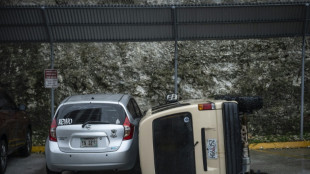 Damage but no casualties reported from Pacific super typhoon
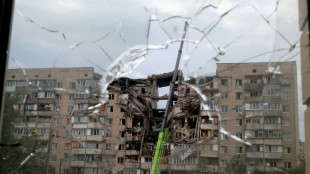
 Sky strengthens UK streaming offer with ITV deal
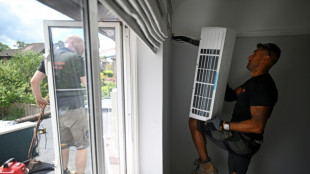 Experts urge caution as demand grows for AC in heatwave-hit UK
 Thousands flee raging wildfires in southern Europe
 Tuchel hails 'heroic' England win in Mexico, but joy soured by Henderson injury
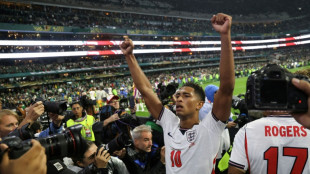 Bellingham savours 'best night of England career' after Mexico heroics
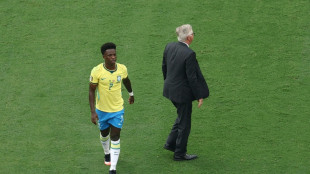 Ancelotti fails in mission to end Brazil's World Cup woe
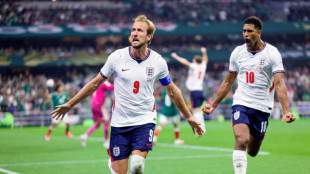
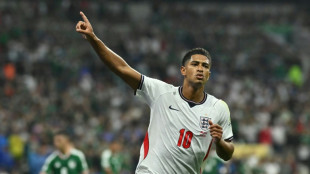 Bellingham powers 10-man England past Mexico, into World Cup quarters

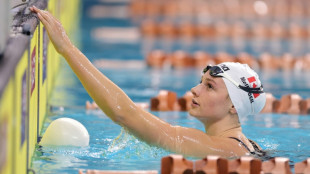 Canada's McIntosh breaks 200 fly world record, oldest in women's swimming
 Norway dance to Haaland's beat in 'surreal' World Cup run
 Daddy issues? NATO's Rutte sticks to charm to keep Trump on side
Ex-pope Benedict XVI was a brilliant theologian and defender of conservative values who made history by becoming the first pontiff to resign since the Middle Ages, after a scandal-dogged papacy.
German Joseph Ratzinger stepped down in February 2013 after almost eight years as head of the Catholic Church, blaming his declining physical and mental health.
As pope emeritus, he retained the white cassock but spent the rest of his life in study and prayer -- though he would break his promise to live "hidden from the world" by weighing in on explosive subjects.
Just as the issue of child sex abuse had dogged his papacy, his final years were overshadowed by allegations that he personally failed to stop four clerics accused of abuse while archbishop of Munich.
Benedict firmly denied being involved in any cover-up, while the Vatican strongly defended his record on tackling abuse.
- Guillotine -
Benedict was 78 when he succeeded the long-reigning and popular John Paul II in April 2005.
A cat lover who enjoyed solitary walks, he compared being elected pope to the guillotine.
Though he lacked the dynamism of his predecessor John Paul II or the warmth of his successor Pope Francis, those who knew him described his shy but affable manner and dry sense of humour.
He was the first to admit that he was not skilled at governing.
He faced strong opposition to his attempts to tackle the biggest skeletons in the Church's closet -- child sex abuse and the Vatican's murky finances -- and many believe the stress overwhelmed him.
Ratzinger had previously served as the Church's chief doctrinal enforcer, earning the nickname "God's Rottweiler" and a reputation as a generally conservative thinker on theological issues.
As the head of the Vatican's doctrinal congregation he had ultimate responsibility to investigate the sexual abuse of children by priests.
He became the first pontiff to apologise for the scandals that emerged around the world, expressing "deep remorse" and meeting with victims in person.
But critics accused him of failing to enforce justice.
- 'Wolves' -
Benedict also failed to stamp his authority on the Curia, the Church's governing body, and appeared to have lost control of his household.
In 2012, his butler Paolo Gabriele leaked secret papers to the media. A Vatican bank money-laundering scandal also exposed infighting among his closest allies.
According to his longterm aide and confident Georg Gaenswein, Benedict asked at the start of his papacy for the strength not to flee in fear from the "wolves" out to get him.
By September 2012, however, he was telling his closest allies he would quit.
Five months later, Benedict's decision to become the first pope since 1415 to retire was announced to cardinals in Latin.
"The strength of mind and body... has deteriorated in me to the extent that I have had to recognise my incapacity to adequately fulfil the ministry," said Benedict, then 85.
He had hoped to return to his native Bavaria.
Instead, Benedict spent the first papal retirement in 600 years in a former monastery inside the Vatican, praying, studying and playing his beloved Mozart on the piano for as long as his health allowed.
He gave up his signature ruby red shoes but not his books, insisting his entire library be moved in with him.
In a March 2021 interview, he said "fanatical" Catholics had repeatedly voiced doubts about whether he stepped down willingly, but he insisted: "There is only one pope."
- Issues at heart -
As pope, Benedict focused much of his energy on issues dear to his heart: religion's role in the modern world, inter-faith dialogue and a critique of unregulated capitalism that carried strong resonance during the global economic crisis in 2008.
He made waves during a 2009 trip to the Holy Land, where he called for a two-state solution to the Israeli-Palestinian conflict.
He fought to stem growing secularism in the West and staunchly defended traditional Catholic teaching on abortion, euthanasia and gay marriage.
Benedict rejected the ordination of women and marriage for priests, and condemned same-sex relationships, drawing criticism for making the Church look out of touch.
He angered the Muslim world with a speech in 2006 in which he appeared to endorse the view that Islam is inherently violent, sparking deadly protests in several countries as well as attacks on Christians.
In 2009, he offended Jews by lifting the excommunication of a Holocaust-denying bishop. But he also won praise from some Jewish leaders for his efforts to restore mutual trust.
AIDS activists were angered when, on a trip to Africa, Benedict said condom use could be aggravating the crisis.
However, he later became the first pope to sanction their use under certain circumstances to prevent HIV infection.
- Humble -
Ratzinger was born on April 16, 1927, in Marktl am Inn, in Bavaria.
His policeman father and stay-at-home mother set the academically-gifted child on the path to a religious life early on.
In 1941, Ratzinger became a member of the Hitler Youth, as was compulsory for all 14-year-olds under the Nazis.
As the son of an actively anti-Nazi father, it was -- according to subsequent accounts by himself and contemporaries -- a step he took reluctantly.
The future pope was ordained as a priest in 1951 and taught at several universities, notably in Bonn and Regensburg, before coming to Rome to work as an adviser to the modernising Second Vatican Council from 1962 to 1965.
Pope Paul VI named him archbishop of Munich in 1977 and made him a cardinal the same year.
Biographer Peter Seewald told AFP in June 2020 that Benedict was a "down-to-earth person... found in the highest circles while remaining a very humble person, a warm person".
His voluntary abdication of power, Vatican expert John Allen wrote in Cruxnow, "was arguably the single most humble act by a pope in centuries, if not of all time".
M.Furrer--BTB