Cuba mixes up a series of hits with its cocktail creativity / Photo: © AFP

 Japanese forward Hachimura signs with Clippers: reports
 After designing Taylor Swift's wedding dress, Dior's Anderson returns to catwalk
 Russian strikes kill 22 in Kyiv region on eve of NATO summit
 Pogacar back in 'special' yellow after Tour de France stage three victory

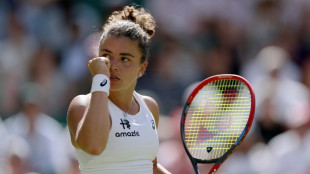 Paolini ends Eala run ahead of Wimbledon wildcard clash
 Austrian court sentences Syrian torturers to 8 years in jail
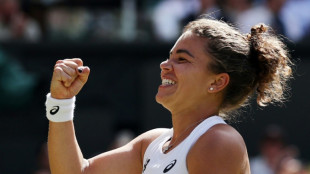 Paolini ends Eala run to reach Wimbledon quarters

 Cobolli makes second successive Wimbledon quarter-final
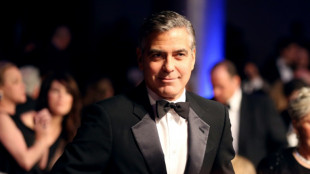
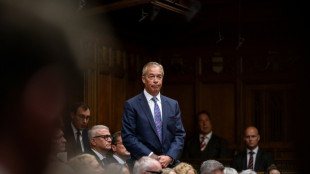 UK's Farage under the cosh over undeclared finances
 Microsoft cuts 4,800 job as it revamps Xbox

 Mertens reaches Wimbledon last eight for first time
 Rennes buy young striker Mayenda from Sunderland
 Russian strikes kill 18 in Kyiv region on eve of NATO summit
 Netflix, Disney+, Amazon appeal French investment rules
 Thousands flee new wave of European wildfires

 Norway releases first image of crown princess after lung transplant

 Stock markets diverge as tech recovery stutters
 Springboks recall Papier and make 10 changes for Scotland Test
 Indonesia, Singapore say key oil passage will remain 'accessible'
 USA face Belgium and World Cup date with destiny after Trump intervention

 Oldest quasars ever discovered add to 'perplexing' space mystery
 German factory orders unexpectedly rebound in May
 Russian strike kills 14 around Kyiv on eve of NATO summit
 USA face Belgium and World Cup date with destiny after Balogun reprieve

 Immobilised by heatwave, handicapped man sues Austria in rights court
First there was the "Drake," a concoction of alcohol and macerated mint leaves imbibed by British privateer Sir Francis Drake in Cuba in the 16th century. Then "The Train," a blend of gin, barley and hot water from the early 1900s.
But the art of the cocktail in Cuba really exploded 100 years ago under prohibition in the United States, with the invention since then of famous alcoholic mixes such as the daiquiri, mojito, and of course, the Cuba libre.
When the US government banned the manufacture and sale of alcohol in 1920 -- a measure that lasted for 13 years -- "people began to come to Cuba," said Jose Rafa Malen, president of the Cuban Bartenders' Association.
Havana, the 70-year-old told AFP, became "the capital of cocktail art."
"Bartenders came, bar owners came," and in 1924, the Club of Bartenders of Cuba was created.
It was the first in Latin America and only the second in the world.
A key element to Cuba's cocktail success was the production on the island since 1862 of a rum made from molasses -- rather than cane juice -- that would end up serving as the basis for many a boozy mix.
Cuba's first cocktails were mixed with gin.
It was in Santiago de Cuba in the country's southeast where the rum originated that the first type of daiquiri was also created.
The drink of rum, lemon juice, sugar and an ice cube -- shaken vigorously -- was popularized in Havana in 1922 by a Spanish immigrant, Emilio Gonzalez, better known as Maragato.
A few years later, another newcomer from Spain, Constantino Ribalaigua, added crushed ice and a drop of the cherry-based liqueur maraschino to the mix -- creating the daiquiri as we know it better today.
- Sloppy Joe's -
Crushed ice, ideal in the tropical climate of the largest island in the Caribbean, "was a great novelty" at the time and "immortalized the daiquiri," said bartender Alejandro Bolivar.
He works at "El Floridita," one of several historic bars in central Havana and a favorite of American writer Ernest Hemingway (1899-1961).
Ribalaigua, better known to history as Constante, started working at "El Floridita" as a server in 1914, later buying the bar.
Like many formerly private businesses in communist Cuba, it is now in the hands of the state.
Another Havana bar, "Sloppy Joe's," was a favorite of Hollywood stars until the 1950s, before Fidel Castro's revolution.
After decades of closure, it reopened in 2012.
Founded in 1917, "Sloppy Joe's" once hosted the likes of John Wayne, Frank Sinatra, Ava Gardner, Nat King Cole and others who still take pride of place in photos on the walls.
Some jest that after a sixth cocktail, you can see the stars of yesteryear on the sidewalk outside.
- Hemingway magic -
The daiquiri, which takes its name from a locality near Santiago de Cuba, is today recognized as the national cocktail of the island.
Another intoxicating Cuban invention is the famous mojito -- which is said to be an update of Drake's original medicinal brew.
Then Coca-Cola came to the island after independence from Spain in 1902, and the Cuba libre was born: a mix of the soft drink with rum, ice and a drop of lemon.
The Saoco, Presidente, Ron Collins, Havana Special, Isla de Pinos, Mary Pickford and Mulata can all be added to the list of Cuban classics.
This does not prevent the creation of new inventions: In 2003, Cuban mixologist Sergio Serrano Rivero won the World Cocktail Championship with an offering called "Adam and Eve" made of rum, apple liqueur, white vermouth and angostura bitters.
"El Floridita" remains popular with visitors from home and abroad, keen to pose next to a bronze statue of Hemingway leaning against the bar.
Bartender Bolivar said the Nobel-awarded American writer had his own bespoke daiquiri made here: unsweetened with a double dose of rum, grapefruit juice and a touch of maraschino.
"It’s very good, I love it," said Elena Seioscolo, a 35-year-old Italian tourist sipping on a more popular version of the daiquiri.
"I want to recreate it back home in Italy. I need to find out how it's made...," she told AFP.
Rafa, the bartenders' association boss, said "El Floridita" is a place that brims with history, "which has hosted thousands of people from all over the world."
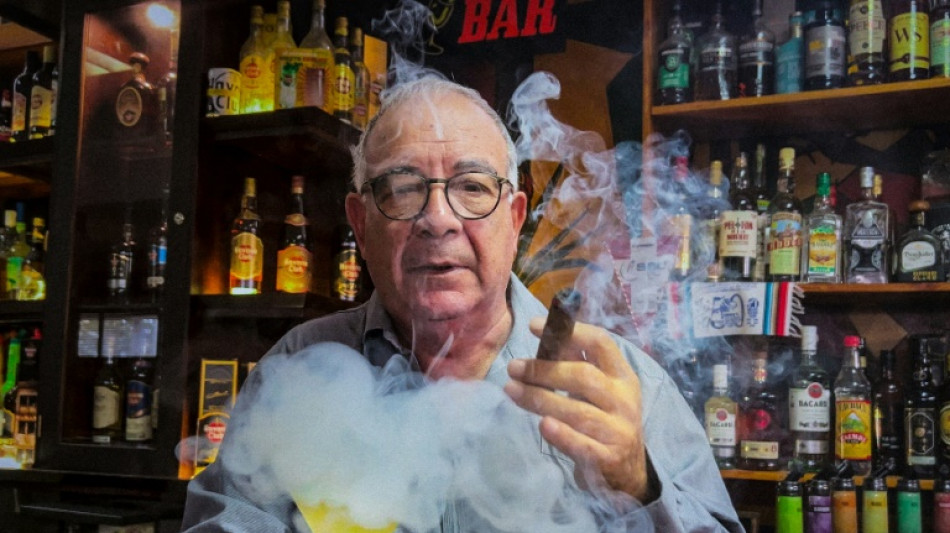
Working here is a source of pride for bartenders from all over, he added as he held a burning cigar to a glass and blew on it to create a magical smoke effect.
M.Furrer--BTB