
Brother and sister's future separated after Taliban university ban / Photo: © AFP

 Malawi's fuel shortages, record prices deepen economic crisis

 Rubio hosts G20 ministers as Iran, Ukraine wars divide members

 From minerals to AI, EU and Canada to forge new alliance

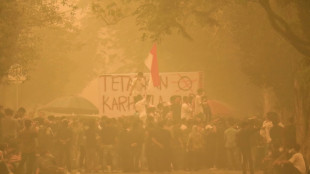 Fire pollution killed 3,560 people in Indonesia in September: report

 Ian Wright and Jamie Carragher split on Liverpool-Arsenal prediction

 The Duskbloods delayed as Nintendo Switch 2 release moves to 2027

 Russia turns to NATO countries for prosthetics amid war-related shortages

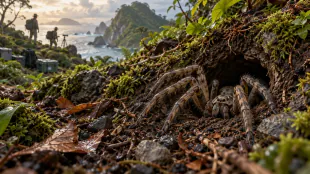 Researchers on island encounter giant spider legs emerging from a burrow
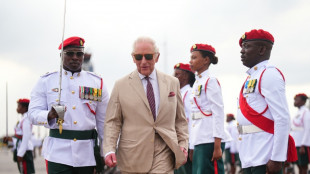 Britain's King Charles lands in ex-colony Guyana

 Arsenal assess Bukayo Saka fitness concerns before Liverpool meeting

 £10,000 garden project transforms a UK home into a miniature Greece

 Forest destruction tests Armenia-Azerbaijan peace push
 Deal still eludes nations on final day of UN nature talks

 Teen rallies take to the streets across Italy

 Netanyahu bloc finishes ahead in Israel vote, but well short of majority

 Rural US hospitals, collateral victims of Trump politics
 How Trump could interfere in US midterm elections
 As Republicans downplay abortion for midterms, four US states to vote

 No. 4 Indiana looks to revive offense against improving Minnesota
 Police close investigation into Hayden Panettiere death after coroner ruling

 Australian mushroom killer loses appeal, has sentence extended

 Lethbridge students learn how city transit and transportation systems work

 India highlights defence ties with Japan and Australia at Cebu meetings

 Horoscope for October 30, 2026: communication and patience shape the day

 Amazon cloud business accelerates but shares drop on profit miss

Marwa was just a few months away from becoming the first woman in her Afghan family to go to university -- instead, she will watch achingly as her brother goes without her.
Women are now banned from attending university in Taliban-controlled Afghanistan, where they have been steadily stripped of their freedoms over the past year.
"Had they ordered women to be beheaded, even that would have been better than this ban," Marwa told AFP at her family home in Kabul.
"If we are to be so unlucky, I wish that we hadn't been born at all. I'm sorry for my existence in the world.
"We are being treated worse than animals. Animals can go anywhere on their own, but we girls don't have the right even to step out of our homes."
The 19-year-old had recently passed an entrance exam to start a nursing degree at a medical university in the Afghan capital from March.
She was thrilled to be joining her brother, Hamid, in attending the campus each day.
But now their futures have been pulled apart.
"I wanted my sister to achieve her goals along with me -- to succeed and move ahead," said Hamid, 20, a student of business administration at a higher education institute in Kabul.
"Despite several problems, she had studied until the 12th grade, but what can we say now?"
- Dreams crushed -
The ban by the hardline Islamist government, which seized power in August last year, has sparked global outrage, including from Muslim nations who deemed it against Islam.
Neda Mohammad Nadeem, the Taliban's minister for higher education, claimed women students had ignored a strict dress code and a requirement they be accompanied by a male relative to campus.
But the reality, according to some Taliban officials, is that the hardline clerics that advise the movement's supreme leader Hibatullah Akhundzada remain deeply sceptical of modern education for females.
Girls have also been banned from secondary schools in most of the country.
Women have been slowly squeezed out of public life in recent months, pushed from government jobs or paid a fraction of their former salary to stay at home.
They are also barred from travelling without a male relative and must cover up in public. Women are prohibited from going to parks, fairs, gyms and public baths.
Marwa and Hamid come from an impoverished family but their parents had supported their pursuit of higher education.
With dreams of becoming a midwife, Marwa had planned to visit remote areas of Afghanistan where women remain deprived of health services.
"I wanted to serve women in faraway places so that we never witness the loss of a mother's life during childbirth," she said.
Instead she will now stay home to teach her six younger siblings, while her father, the family's sole breadwinner, earns money as a vegetable vendor.
- History repeating -
Minister Nadeem insists women students behaved in a way that insulted Islamic principles and Afghan culture.
"They were dressing like they were going to a wedding. Those girls who were coming to universities from home were also not following instructions on the hijab," he said in an interview on state television.
But Hamid strongly rejected the justification for the ban.
"When universities opened under the Taliban, different days were specified for boys and girls," he said.
"They (girls) were not allowed to enter unless they wore a mask and hijab. How then can they (the Taliban) say they were without hijabs?"
After the Taliban seized power, universities were forced to implement new rules, including gender-segregated classrooms and entrances, while women were only permitted to be taught by professors of the same sex, or old men.
Marwa's mother, holding her newborn baby in her arms, said she felt history repeating itself.
Two decades ago she was forced to quit her studies during the Taliban's first regime between 1996 and 2001.
"I'm happy that my son is able to pursue his goals, but I'm also heartbroken that my daughter is unable to do the same," said Zainab, 40.
"If my daughter does not achieve her goals, she'll have a miserable future like mine."
K.Brown--BTB