
Drug kingpin trial 'ultimate test' for Dutch rule of law / Photo: © ANP/AFP

 Malawi's fuel shortages, record prices deepen economic crisis

 Rubio hosts G20 ministers as Iran, Ukraine wars divide members

 From minerals to AI, EU and Canada to forge new alliance

 Fire pollution killed 3,560 people in Indonesia in September: report
 Ian Wright and Jamie Carragher split on Liverpool-Arsenal prediction

 The Duskbloods delayed as Nintendo Switch 2 release moves to 2027
 Russia turns to NATO countries for prosthetics amid war-related shortages

 Researchers on island encounter giant spider legs emerging from a burrow

 Britain's King Charles lands in ex-colony Guyana

 Arsenal assess Bukayo Saka fitness concerns before Liverpool meeting

 £10,000 garden project transforms a UK home into a miniature Greece

 Forest destruction tests Armenia-Azerbaijan peace push
 Deal still eludes nations on final day of UN nature talks
 Teen rallies take to the streets across Italy

 Netanyahu bloc finishes ahead in Israel vote, but well short of majority

 Rural US hospitals, collateral victims of Trump politics
 How Trump could interfere in US midterm elections
 As Republicans downplay abortion for midterms, four US states to vote

 No. 4 Indiana looks to revive offense against improving Minnesota

 Police close investigation into Hayden Panettiere death after coroner ruling

 Australian mushroom killer loses appeal, has sentence extended

 Lethbridge students learn how city transit and transportation systems work
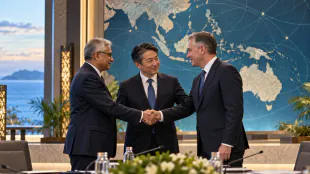 India highlights defence ties with Japan and Australia at Cebu meetings

 Horoscope for October 30, 2026: communication and patience shape the day
 Amazon cloud business accelerates but shares drop on profit miss

With shootings and threats against a princess and the prime minister it sounds like a crime drama, but for the Dutch the growing menace from drug cartels is all too real.
The top-security trial of one alleged cocaine cartel leader, Ridouan Taghi, has captivated the Netherlands in recent months and shone a light on the shadowy "Mocro Maffia".
The busting of a Dubai-based "super cartel" linked to Taghi, which used the Dutch port of Rotterdam as a hub, has further reinforced fears the liberal country could become a so-called narco-state.
Despite being behind bars in an ultra-secure prison, Taghi has been accused of pulling the strings of what prosecutors call his "killing machine" with secret messages to henchmen outside.
Commentators say the "Marengo" trial, named after a judicial codeword for the operation that saw Taghi charged with 16 others, is unprecedented for the Netherlands.
"The consequence of the Marengo trial, and the violence that was committed afterwards, that has simply caused a huge shock", Jan Meeus, a Dutch journalist specialising in criminal matters, told AFP.
Speaking after a recent hearing, he described it as "the ultimate test of the Dutch judicial system of the rule of law".
- 'Extreme violence' -
Three people linked to a key prosecution witness in the trial, Nabil B., have already been killed in scenes that shocked the Netherlands.
His brother was murdered in 2018, his lawyer Derk Wiersum was shot dead outside his house in 2019, and the prominent Dutch crime journalist Peter R. de Vries was killed in 2021.
Shot dead in broad daylight in central Amsterdam as he left a television studio, de Vries had said he was on the hit-list of Taghi, who was arrested in Dubai in 2019.
The army is guarding the "Bunker" in Amsterdam, where Taghi is on trial, in a first for the Netherlands. Judges and prosecutors arrive for hearings inside armoured cars.
Plans to spring Taghi from prison using "extreme violence" were uncovered, said Meeus. Taghi's cousin and one of his lawyers are accused of helping him communicate with the outside world.
"The democratic rule of law is shaken and under pressure from organised crime," Wim de Bruin, a spokesman for the national prosecutor's office, told AFP.
The threat has touched top levels of Dutch society.
Crown Princess Amalia, the daughter of King Willem-Alexander, was recently forced to give up plans to live in student accommodation for security reasons.
Both the 19-year-old royal and Prime Minister Mark Rutte were mentioned in messages by organised crime groups, raising fears of plans to kidnap or attack them, Dutch media reported.
- 'Dogs' -
Prosecutors say the gangsters have "no respect for human life", with members calling their victims "dogs" who must "sleep".
Nicknamed "Mocro Maffia" because many are of Moroccan descent, the gang is notorious for both the youth and the merciless violence of its members.
The violence has forced Dutch authorities to confront their own naivety about the level of organised crime in the country, a parallel economy worth several billion dollars.
The main Dutch police union, the NPB, has sounded the alarm for several years, with its president Jan Struijs warning some years ago it was slowly becoming a narco-state.
Struijs told AFP that the Netherlands' lenient policy on soft drugs was to blame.
The consumption and sale of cannabis have been decriminalised in the country but the rest of the supply chain that stocks famed Dutch "coffeeshops" remains illegal, with gangs muscling in on them.
- 'Tax paradise' -
But Marijn Schrijver, co-author of the bestselling book "Mocro Maffia", said that while the Netherlands' neighbours like to blame its lax soft drug policies, "that is not the reason".
"What we are is a tax paradise. We want to import as much as possible into the ports to transport it again, and that makes the Netherlands the perfect place logistically," Schrijver told AFP.
The recent dismantling in Dubai of the "super-cartel", which allegedly provided around one third of Europe's cocaine, indicates that the kingpins may be moving out of the Netherlands.
A Taghi-linked Dutch "big fish" arrested in the Gulf emirate had reportedly formed an alliance with the leaders of Irish and Italian drug gangs.
Europol spokesman Jan Op Gen Oorth said the "fluid and creative" networks now collaborate and have their "kingpins sitting outside of the EU jurisdiction".
"It's not one group against the other anymore, which makes it extremely dangerous," he told AFP.
R.Adler--BTB