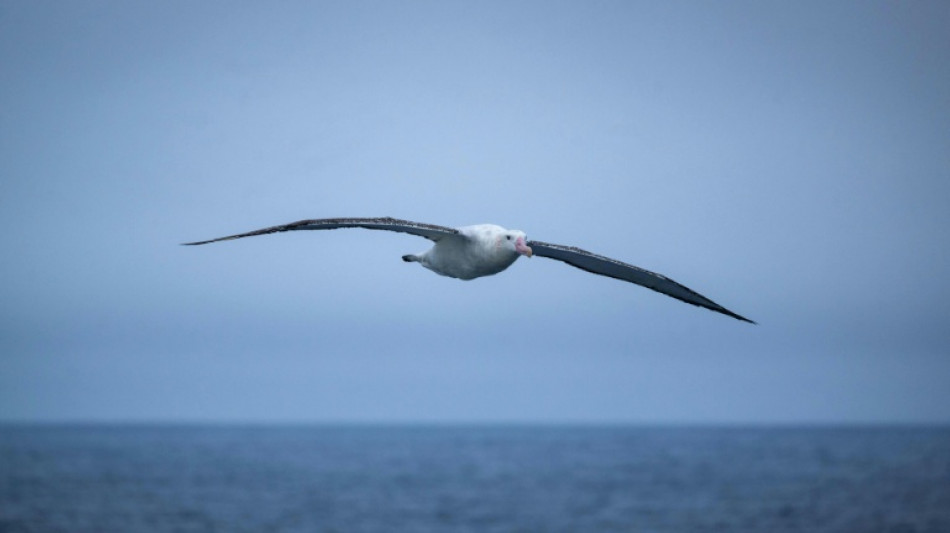
Seabird habitats shrink as ocean heats up: study / Photo: © AFP/File

 US House targets data centers as midterm backlash grows

 French ex-minister Dati goes on trial in Renault-Nissan corruption case
 'Being Heumann' captures joy in fight for disability rights

 Retired great Nadal to play in exhibition matches

 IR-MED and Dice Technologies Announce collaboration to Evaluate and Advance Pressure-Injury Prevention Platform in Japan

 Watts, Pitt, Cruz to light up Spain's top film festival
 Sweden expels Iran embassy employee over anti-Jewish threats

 Toogood Gold's Table Mountain Sits in the Shadow of a Nevada Gold Rush

 MEXC July–August Security Report: 38.66M USDT in Risk Funds Intercepted, Futures Insurance Fund Hits 792M USDT

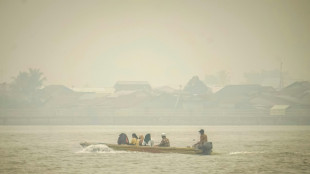 'Breathing toxin every day': Indonesians choked by haze feel helpless

 Stocks edge higher ahead of US Fed rate call

 Philippines ex-leader Duterte makes first in-person ICC appearance

 2027 Formula One calendar includes Monaco sprint race

 Palestinians are the real victims, Thunberg tells Ed Sheeran

 Hashim Thaci: From 'George Washington of Kosovo' to Hague convict

 Amnesty says Iran committed 'crimes against humanity' in crackdown on 2022 protests

 EU to ban social media for under 13s, curb access until 15

 Philippines ex-leader Duterte makes first appearance at ICC

 EU chief pitches 'associate member' status for Canada

 English village votes to 'secede' from UK over asylum centre plan

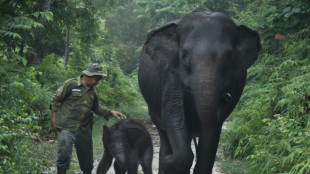 Wildfires push endangered Sumatran elephants to brink: Indonesian NGO

 Stocks head higher as traders prepare for Fed decision

 English village votes to 'secede' from UK over asylum centre

 Hong Kong unveils plan to align economy with China's goals

 Brazilian voters the latest to eye Bukele security model with envy

Climate change could push seabirds into smaller habitats and force them to fly farther to survive, a new study said Tuesday.
While warmer oceans have historically caused fish and other marine species to shrink in size, seabirds such as albatrosses, shearwaters and petrels have seen their geographic range contract, the study said.
The researchers used statistical models to look at how seabirds coped with climate change across millions of years and project what their future could look like.
"In both of the scenarios we saw the same answer: Every time, when the climate changed faster... the range of distribution (of seabirds) started to decrease, to contract, to be smaller," Jorge Avaria-Llautureo, lead author of the study in the journal Nature Climate Change, told AFP.
Driven by planet-heating fossil fuel emissions, climate change is raising global temperatures and disrupting marine ecosystems as oceans get warmer.
Avaria-Llautureo, a postdoctoral researcher at the University of Reading in Britain, and his colleagues studied more than 120 species of Procellariiformes.
As climate change accelerates, the suitable habitat for these seabirds shrinks and their mortality rate increases, Avaria-Llautureo said.
Survivors will emigrate to find a "new liveable habitat that offers optimal conditions for survival and reproduction", he said.
"The crucial factor is that seabirds differ in their dispersal ability," the researcher added.
"The farther these suitable habitats are located in the future, the less likely it is that birds with limited flying capacity will successfully reach them, increasing their extinction risk under projected scenarios of rapid global warming," he said.
In a worst-case warming scenario, 70 percent of species will reduce their range by 2100, with four of them most at risk of extinction -- the Galapagos petrel, the Jouanin petrel, the Newell's shearwater and the white-vented storm petrel.
S.Spengler--VB