-
 IR-MED and Dice Technologies Announce collaboration to Evaluate and Advance Pressure-Injury Prevention Platform in Japan
-
British PM says to make 'difficult decisions' as inflation rises
-
 Watts, Pitt, Cruz to light up Spain's top film festival
-
TotalEnergies pumps up controversy in France with cut-price gas
-
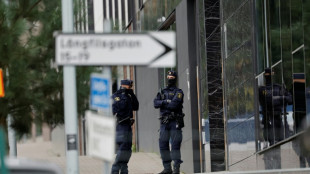 Sweden expels Iran embassy employee over anti-Jewish threats
-
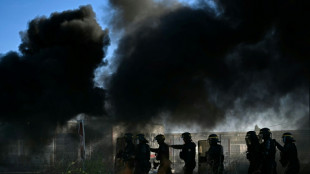
Global fuel price demos: a round-up
-
 Toogood Gold's Table Mountain Sits in the Shadow of a Nevada Gold Rush
-
Leverate Launches MCP for Traders to Connect AI Assistants With Trading Platforms

-
 MEXC July–August Security Report: 38.66M USDT in Risk Funds Intercepted, Futures Insurance Fund Hits 792M USDT
-
MEXC Launches $1M "Discover Your Wall Street DNA" Campaign to Help Traders Find Their Market Fit

-
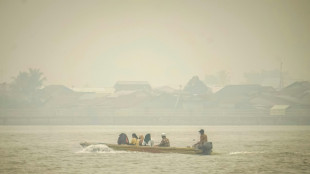 'Breathing toxin every day': Indonesians choked by haze feel helpless
-
Emporio Armani names Dario Vitale new creative director
-
 Stocks edge higher ahead of US Fed rate call
-
Maresca defends VAR officials after Man City benefit from error

-
 Philippines ex-leader Duterte makes first in-person ICC appearance
-
Courts jails LGBTQ activists as Turkey crackdown widens

-
 2027 Formula One calendar includes Monaco sprint race
-
French court to hear Depardieu's appeal against rape trial order: sources
-
 Palestinians are the real victims, Thunberg tells Ed Sheeran
-
The German state premier hoping to halt far-right surge
-
 Hashim Thaci: From 'George Washington of Kosovo' to Hague convict
-
Lebanon wants Israel security deal as prelude to peace: president to AFP
-
 Amnesty says Iran committed 'crimes against humanity' in crackdown on 2022 protests
-
England's Brook keen to learn from 'hero' Pietersen after stunning ton

-
 EU to ban social media for under 13s, curb access until 15
-
Saudi says Houthis target Mecca, warns of 'red line'

-
 Philippines ex-leader Duterte makes first appearance at ICC
-
Phillippines ex-leader Duterte makes first appearance at ICC
-
 EU chief pitches 'associate member' status for Canada
-
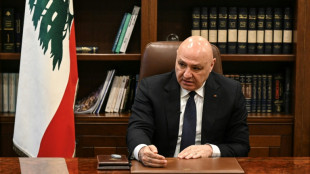
Lebanon wants Israel security deal, Hezbollah disarmament without confrontation: president to AFP
-
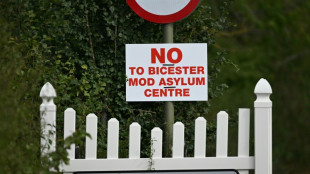 English village votes to 'secede' from UK over asylum centre plan
-
BASIS.pro Expands On-Chain Infrastructure with XDC Network Partnership and Zypher DAO as Auto Earn Goes Live

-
 Wildfires push endangered Sumatran elephants to brink: Indonesian NGO
-
Samson relishing battle with teen star Sooryavanshi for India spot

-
 Stocks head higher as traders prepare for Fed decision
-
Pickle-flavoured tart? AI inspires Japan's convenience stores

-
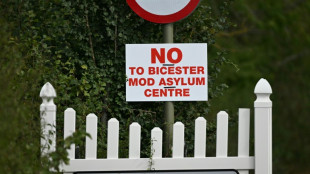 English village votes to 'secede' from UK over asylum centre
-
Macau holds first closed-door national security trial
-
 Hong Kong unveils plan to align economy with China's goals
-
Bank of Japan set to raise rates under pressure from inflation, US
-
 Brazilian voters the latest to eye Bukele security model with envy
-
Zverev, Shelton back on court for Davis Cup qualifiers

-
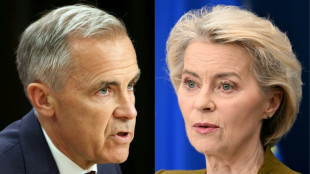 EU chief hosts Canada's Carney in push to 'deepen' alliance
-
Peace is a 'dangerous' word in Russian city heading to polls

-
 EU chief to unveil social media, gaming curbs for under-15s
-
Meta chief pushes back on AI slowdown calls
-
 Saudi says Houthis target Mecca, warn of 'red line'
-
'Resident Evil' film brings video game's ethos to the big screen

-
 Asian stocks stutter as traders prepare for Fed decision
-
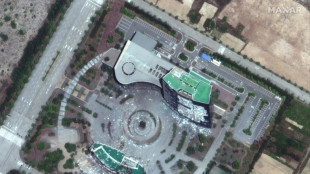
Court orders N. Korea pay Seoul $32.5 mn for blowing up office
Carney scraps Canada EV sales mandate, affirms auto sector's future is electric
Prime Minister Mark Carney on Thursday cancelled a mandate for all vehicles sold in Canada to be electric by 2035, while announcing major investments to support the auto industry's EV transition.
In unveiling his plan to transform the sector, Carney said Canada's auto industry needed to be ready for a future where EVs are dominant, and where US President Donald Trump's tariffs have made cross-border vehicle production unworkable.
Carney's decision to scrap EV mandates also marked another departure from policies backed by his climate-focused predecessor, Justin Trudeau.
Trudeau's government had mandated that 20 percent of vehicles sold this year be electric, with a 60 percent target by 2030 and the 100 percent target for 2035.
Those targets were applauded by some environmental groups but faced criticism from automakers, as well as concern that Canada had nowhere near the charging infrastructure needed to support full electrification across a vast landmass.
Carney argued his new automotive strategy would prioritize "results and solutions."
His plan includes a CAN$5,000 (US$3,700) subsidy for individuals who choose to buy an EV, CAN$1.5 billion to improve charging infrastructure, and CAN$3 billion "to help the auto industry adapt, grow, and diversify to new markets," his office said.
"We know where the auto industry is headed. We're going to support that transition," Carney told reporters.
Progress in the global EV market has been patchy.
Trump scrapped tax credits for EV purchases last year, jarring automakers that invested heavily in electrification during Democrat Joe Biden's presidency.
The European Union in December also proposed scrapping a planned 2035 ban on new combustion-engine vehicles.
Carney said his goal was 75 percent EV sales by 2035, and a 90 percent target by 2040.
The Global Automakers of Canada, an industry group, praised Carney for providing "greater clarity" on the government's electrification plans, including "a commitment to aggressively build out the charging infrastructure."
Since taking office last year, Carney has also scrapped Trudeau's carbon tax on individual households and advanced plans to build a new oil pipeline from Alberta to the Pacific coast -- infuriating environmental groups.
Asked Thursday if he still considered Canada a leader in the fight against climate change, Carney said: "Absolutely."
– 'Serious liability' –
Canada's auto industry supports half a million jobs, and concern about its future has intensified since Trump returned to office last year.
The president's broad approach on trade with Canada has shifted, but his administration has maintained a fairly consistent message on autos, insisting it wants to see vehicles made exclusively inside the United States.
Carney on Thursday said "there's no greater symbol of how closely the Canadian and American economies have been intertwined than automobiles."
Parts cross the US-Canada border up to eight times during production, but Trump's auto tariffs are threatening the viability of such integration.
"That trade relationship that once was a great strength has now become a serious vulnerability," Carney said.
Since April, Canadian-made vehicles have faced a 25 percent tariff on their non-US components, a levy Canada insists violates the existing North American free trade agreement, known as the USMCA.
USMCA revision talks are set for this year.
"Our objective is to remove all tariffs in the auto sector," Carney said, but stressed Canada's industry needed to start planning for an entirely domestic production chain.
Canada has large deposits of the critical minerals needed for EV battery production and says it wants to develop an end‑to‑end production chain, from mining to mineral processing to vehicle battery production.
K.Hofmann--VB