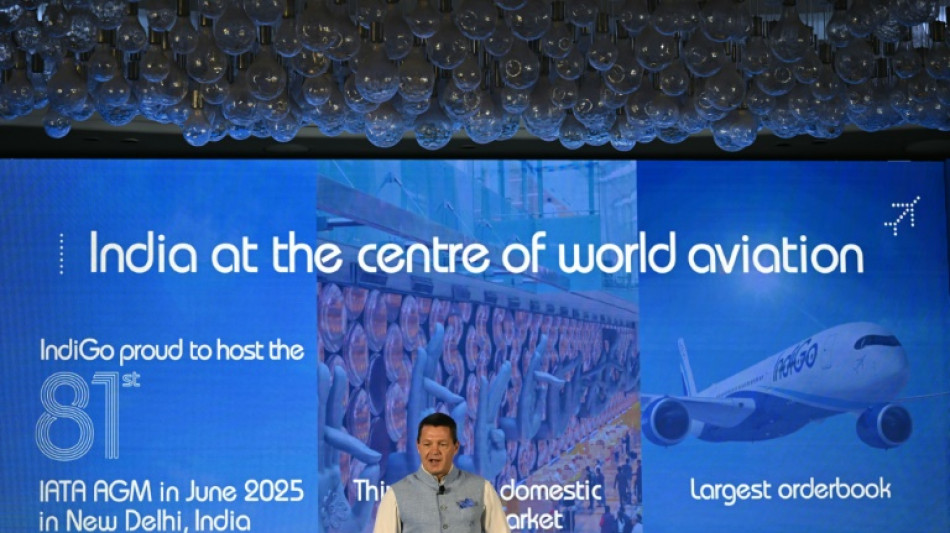
Key climate target of airline decarbonisation 'in peril': IATA / Photo: © AFP

 Viennese woman sues city over 'discriminatory' toilet fees
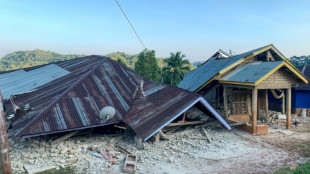
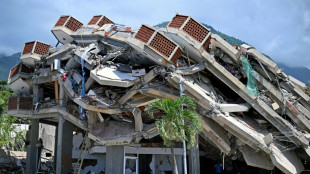 Venezuelan amputees adjust to new life after quakes

 Venezuela frees 131 prisoners amid post-Maduro transition talks

 Arteta tells Arsenal fans not to fret over his future

 Mexico's Indigenous chief justice hits back at discrimination

 Werro wins 800m race for the ages, Warholm and Tamberi hit four

 Jimenez rescues dramatic Wolves draw in Championship opener
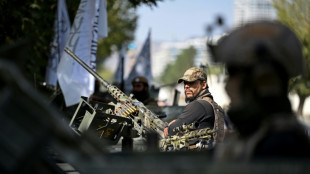 Taliban govt to mark five years ruling Afghanistan

 Stocks slip in cautious trading after weak US retail sales data
 Gramercy Networks Announces New Global Ultra-Low Latency Financial Network Connecting Major Trading Hubs

 NFL bans Falcons defender Pearce eight games for domestic violence

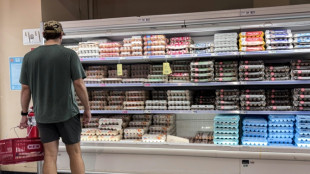 US says 19 million recalled eggs pose deadly risk

 Former Cincinnati contenders suffer contrasting first-round fates
 Argentina's Romero confirms Tottenham exit as Atletico move looms

 Homeless, jobless: Colombia quake survivors 'left with nothing'

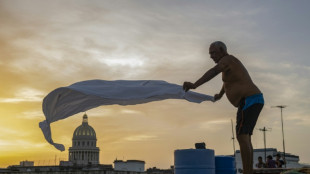 Cubans find rest on rooftops as blackouts drive them from home

 World champ McIntosh crashes out of Pan Pacs 400m free
 T'Wolves set Garnett celebration for Celtics clash
 Popovici nails freestyle double with third men's European 200m gold
 Premier League club Liverpool sell minority stake to Jeff Bezos consortium

 Italian police recover stolen Renoir, Cezanne and Matisse works

 Stocks slip in cautious trading, oil turns higher

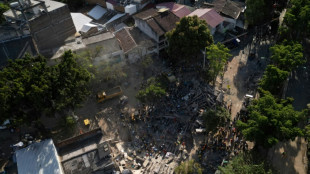 Colombia quake survivor faces life without triplet sisters

 Bones of medieval kings saved from Spanish wildfire

 US retail sales weakest in over a year, consumer sentiment plunges
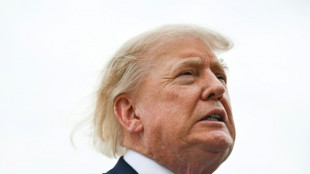
The airline industry's flagship goal of decarbonising by 2050 is now "in peril" due to climate-sceptic policies, including those of US President Donald Trump, the leading airline association IATA warned on Sunday.
The emergence of leaders favouring fossil fuels and recent regulatory rollbacks are "obviously a setback... it does imperil success on the 2050 horizon", Marie Owens Thomsen, the International Air Transport Association's senior vice president for sustainability, told reporters.
"But I don't think it's going to halt or reverse progress. I think it will just slow progress," she said at the IATA annual industry conference in India.
Trump's Republican administration is supporting the development of fossil fuels in contrast to his Democratic predecessor Joe Biden, who had massively supported the production of renewable aviation fuels through tax credits.
UN aviation agency members, from the International Civil Aviation Organization (ICAO), have set the year 2050 as their goal for achieving net-zero carbon emissions for air travel -- an industry often criticised for its outsized role in climate change.
- 'Entirely achievable' -
The air transportation industry has faced growing pressure to deal with its contribution to the climate crisis.
Currently responsible for 2.5 percent to three percent of global CO2 emissions, the sector's switch to renewable fuels is proving difficult, even if the aeronautics industry and energy companies have been seeking progress.
To achieve net-zero emissions, airlines rely on non-fossil sources known as Sustainable Aviation Fuel (SAF).
However, SAF biofuels are still three to four times more expensive than petroleum-based jet fuel.
"Another problem, which is related, is the fact that oil is so cheap," Owens Thomsen said. "I think that also diminishes the sense of urgency that people have."
A barrel of Brent North Sea crude, the international benchmark, stands below $65 as a result of Trump's tariffs, his call to "drill baby drill" and especially a decision by OPEC+ to hike crude output quotas.
This represents an immediate boon for airlines, whose fuel costs represent between a quarter and a third of operating expenses.
SAF is seen as a crucial ingredient in hitting emissions targets. The biofuel produces lower carbon emissions than traditional jet fuel and is made from plant and animal materials such as cooking oil and fat.
European Union rules require carriers to include two percent of SAF in their fuel mix starting this year, rising to six percent in 2030 before soaring to 70 percent from 2050.
Owens Thomsen estimated on Sunday that $4.7 trillion in investment is needed to establish SAF sectors capable of meeting the needs of air transport by 2050.
"It is entirely achievable," she said, adding that the raw materials and technology already exist and simply need to be developed.
"The money involved is very comparable to the money that was involved in creating the previous new energy markets, notably obviously wind and solar," she said.
That money could be found just by stopping subsidies to oil producers, she said.
"The world is subsidising large oil companies to the height of $1 trillion per year," she said.
"With that money, if it were redirected in its totality, we could solve our energy transition in less than five years."
IATA also indicated on Sunday that it expects global SAF production to double this year compared with 2024 to 2.5 billion litres -- slightly down from its previous projections of 2.7 billion litres.
"This represents only 0.7 percent of total aviation needs," IATA Director General Willie Walsh said.
F.Stadler--VB