-
 World record prize winner Romantic Warrior retires from horse racing
-
Stocks drop, yields at three-decade highs on Mideast flare-up
-
 5,000 US sailors arrive in Thailand after months at sea
-
EU summons Russian envoy, eyes sanctions after Germany drone 'attack'

-
 Joshua Wong, Hong Kong's pro-democracy poster child
-
Stocks drop as yields and oil prices spike on Mideast flare-up
-
 Nepal tunnel rescuers seek trapped workers but hit dead ends
-
Cricketers to get best rooms at Asian Games, says Japan chief
-
 Zverev wins wild five-setter, Rybakina and Gauff ease through at US Open
-
Zverev out-lasts Sonego in wild five-setter to advance at US Open

-
 US energy secretary arrives in Venezuela to discuss oil deal
-
Amid war, Ukrainian soldiers celebrate love at ritual wedding

-
 Meloni government becomes Italy's longest-lasting
-
Venice to roll out red carpet for Clooney on opening night
-
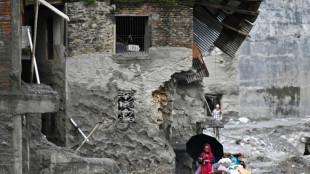 Funerals in Nepal for missing, a week after deadly floods
-
Hong Kong democracy activist Wong pleads guilty to foreign collusion: AFP

-
 US aircraft carrier arrives in Thailand after months at sea
-
Stocks sink, yields at multi-decade highs and oil spikes on Mideast flare-up
-
 US aircraft carrier approaches Thai port after months at sea
-
US defends Trump Venezuela oil deal as energy secretary lands in Caracas

-
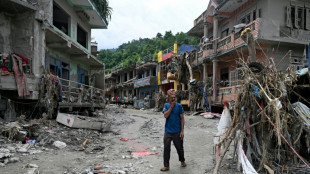 Nepal's young PM faces gravest test after flood catastrophe
-
Jubilant Monfils celebrates birthday with US Open win

-
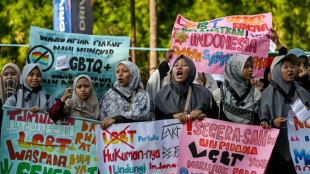 What rainbow? LGBTQ Indonesians on edge as hostility mounts
-
The Japanese idealist behind the last deradicalisation NGO in Somalia
-
 O'Connor eyes Wallabies World Cup swansong after Force return
-
Rybakina, Gauff advance as Zverev launches US Open campaign

-
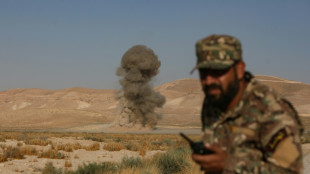 Syria UXO causing death, injury every six hours: charity
-
Macron in Britain to help unveil tapestry, hold Burnham talks
-
 Tiger Woods set to change not guilty plea in DUI case: court documents
-
China's Xi to hold talks with Sisi in rare visit to Egypt
-
 Zelensky warns airlines Russian skies not safe due to Ukraine drones
-
Confident Gauff reaches US Open 2nd round with straight-set win

-
 UK vows anti-settler measures as Israel warns of retaliation
-
US postal whistleblower warns ballot system could disrupt midterms

-
 New pro Koivun among US Presidents Cup picks
-
John Ternus takes over as Apple enters era of AI, foldable phones

-
 G20 finance leaders close talks marked by US welcoming Russia
-
Second-ranked Rybakina eases into US Open 2nd round

-
 From Hollywood to big time tennis: teen makes US Open debut
-
Man City sign Fernandez, Ndiaye as Premier League clubs set new spending record

-
 Man City secure Premier League record deal to sign Fernandez
-
Alcaraz aims to step it up in round two of US Open title defense

-
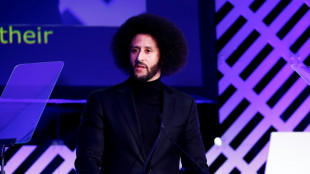 Kaepernick says NFL 'blackballing me' decade after protest
-
Honduran judge drops corruption charges against ex-leader Hernandez

-
 Atletico loan David from Juve, send Lemar to Elche
-
Mudryk joins Spurs on loan from Chelsea after doping ban ends

-
 Chelsea 'keeper Sanchez makes deadline-day move to Como
-
What's next after judge strikes down New York's landmark climate fund law

-
 Kroenke to buy baseball's Los Angeles Angels: statement
-
Cobolli claws out five-set victory at rain-hit US Open

Climate change made ferocious LA wildfires more likely: study
Human-driven climate change set the stage for the devastating Los Angeles wildfires by reducing rainfall, parching vegetation, and extending the dangerous overlap between flammable drought conditions and powerful Santa Ana winds, according to an analysis published Tuesday.
The study, conducted by dozens of researchers, concluded that the fire-prone conditions fueling the blazes were approximately 35 percent more likely due to global warming caused by burning fossil fuels.
"Climate change increased the risk of the devastating LA wildfires," said Clair Barnes of Imperial College London, the lead author of the study by World Weather Attribution, an international academic collaboration.
"Drought conditions are increasingly pushing into winter, raising the likelihood of fires breaking out during strong Santa Ana winds that can transform small ignitions into deadly infernos.
"Without a faster transition away from planet-heating fossil fuels, California will continue to get hotter, drier, and more flammable."
- Projected to worsen -
The study does not address the direct causes of the wildfires, which erupted around Los Angeles on January 7, killing at least 29 people and destroying more than 10,000 homes, the most destructive in the city's history.
Investigators are probing the role of power company Southern California Edison in one of the blazes, the Eaton Fire.
Instead, researchers analyzed weather data and climate models to assess how such events have evolved under today's climate, which has warmed approximately 2.3 degrees Fahrenheit (1.3 degrees Celsius) above pre-industrial levels.
Using peer-reviewed methods, they found that the hot, dry, and windy conditions were 1.35 times more likely due to climate change.
Looking ahead, the study warns that under current scenarios, where global warming reaches 4.7F (2.6C) by 2100, similar fire-weather events in January will become a further 35 percent more likely.
Historically, October through December rainfall has marked the end of wildfire season.
However, these rains have decreased in recent decades.
The study found that low rainfall across these months is now 2.4 times more likely during neutral El Nino conditions, leading to drier, flammable conditions persisting into the peak of the Santa Ana wind season in December and January.
- Areas of Uncertainty -
The relationship between climate change and Santa Ana winds -- which form in western deserts, then heat up and dry out as they flow down California's mountains -- remains unclear.
While most studies predict a decline in these winds as the climate warms, some suggest hot Santa Ana wind events and particularly strong years will persist.
This year's fires followed two wet winters in 2022–2023 and 2023–2024, which spurred the growth of grass and brush. However, almost no rain this winter left the vegetation dry and highly flammable.
Globally, extreme shifts between very wet and very dry conditions, known as "precipitation whiplash," are becoming more common. These swings are driven by a warmer atmosphere that can hold and release greater amounts of moisture, exacerbating weather extremes.
M.Vogt--VB