Stark warning on emissions as leaders split on climate goals at COP29 / Photo: © AFP

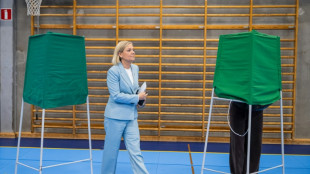 Leftwing opposition seen leading Sweden election, far-right losing ground

 Senegal goalkeeper Mendy retires from international football

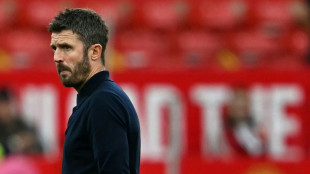 Carrick 'worried' by decision to award Man City winner

 Lobotka eases pressure on Allegri with Napoli winner

 Trump watches as Lowry wins Irish Open in record-breaking style

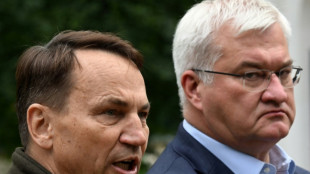 Poland, Ukraine slam Russian strikes near border as 'escalation'
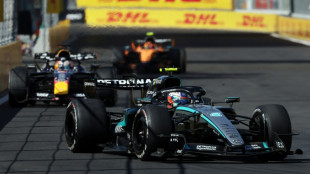
 Haaland fires 10-man Man City to memorable win over Man Utd

 I miss the adrenaline, but it's not my moment - Bolt
 Championship leader Antonelli to 'keep pushing' for title

 Yamal double helps Barca edge Levante thriller

 Brighton run rampant against 10-man Coventry
 Late Mbappe goal sends Lille top of Ligue 1
 Five-star Brighton crush 10-man Coventry

 Team Europe beat United States to reclaim Solheim Cup

 US House Speaker warns curbing AI too sharply could leave China ahead

 張國榮70歲誕辰音樂會西九舉行 唐鶴德錄音致意

 Iran's economic ties to Dubai hard to break despite war
 iPhone 18預購後出現可疑扣款 四間銀行調查未授權交易

 《浪花男女》辦特別謝票場 馮志強談票房與導演客串拍攝

 Former captain De Villiers hails 'fantastic' Springboks

 Galaxy Tab S12系列效果圖曝光 Ultra擬配雙鏡頭及瀏海螢幕
 فليك يضم حمزة عبد الكريم إلى قائمة برشلونة بعد أربعة أهداف في الإعداد

 بزشكيان يؤكد رفض الاستسلام وسلطات إيران تعلن مقتل شخص في استهداف سفينة

 Altman tells Fortune OpenAI will not go public in 2026
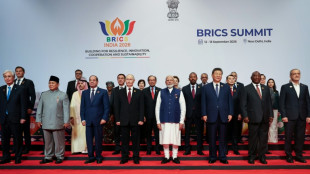 China, Russia, India seek economic cooperation at BRICS
Global leaders offered competing views on how to tackle climate change at UN-led talks Wednesday as a new report warned the world must reach carbon neutrality much sooner than planned.
Planet-warming carbon dioxide emissions from oil, gas and coal rose to a new record high this year, according to preliminary research from an international network of scientists at the Global Carbon Project.
The report came as leaders gathered in Azerbaijan for COP29 climate talks aimed at reaching a deal on boosting funding to help poorer nations adapt to climate shocks and transition to cleaner energy.
The research found that to keep the Paris agreement's ambitious goal of limiting warming to 1.5 degrees Celsius in sight, the world would now need to reach net-zero CO2 emissions by the late 2030s -- instead of 2050.
The warning also follows concerns about the future of the fight against climate change following the election of Donald Trump.
Trump, who has vowed to again pull the United States out of the Paris agreement, named his head of the Environmental Protection Agency Tuesday with a mandate to slash pollution regulations.
Some leaders in Baku defended fossil fuels during two days of speeches while others from countries plagued by climate disasters warned that they were running out of time.
- 'Slower' path -
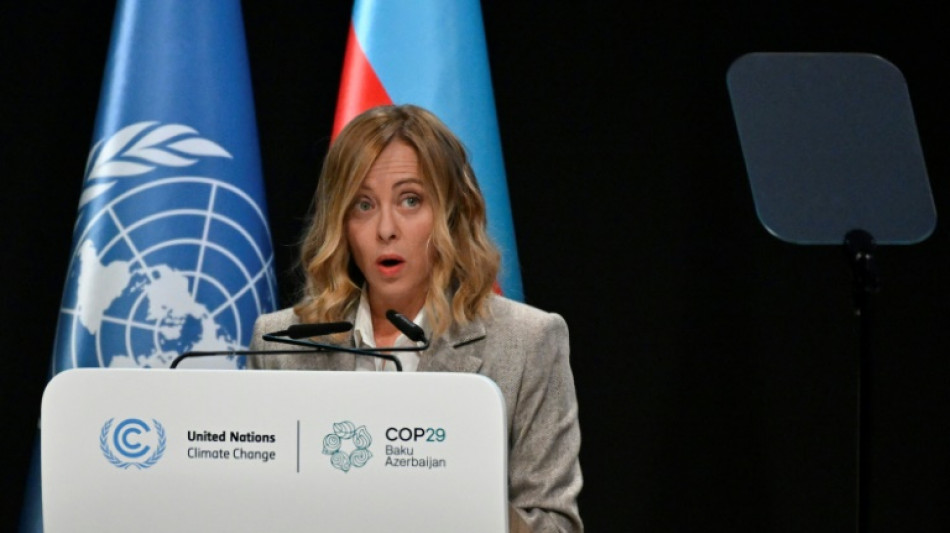
Italian Prime Minister Giorgia Meloni called for a "realistic global outlook" on Wednesday, saying that world population growth will boost energy consumption demand.
"It is equally a priority that decarbonisation takes into consideration our production and social system's sustainability," she said.
"We must protect nature, with man at its core. An approach that is too ideological and not pragmatic on this matter risks taking us off the road to success," the far-right leader said.
"Currently there is no single alternative to fossil fuel supply."
Greek Prime Minister Kyriakos Mitsotakis called for a "smart" Green Deal, the European Union's ambitious climate plan which aims to make the bloc carbon-neutral by 2050.
"We cannot drive ourselves into industrial oblivion," the conservative leader said.
"We need to ask hard questions about a path that goes very fast, at the expense of our competitiveness, and a path that goes somewhat slower, but allows our industry to adapt and to thrive," he said.
Their views contrasted with leaders from countries beset by climate catastrophes and rising sea levels.
"Tuvalu sincerely hopes that this COP's concluding decisions will deliver a clear signal that the world is promptly phasing out fossil fuel," said the Pacific island's Prime Minister Feleti Penitala Teo.
"For Tuvalu and similarly placed countries, there is simply no time to waste," he said.
- Money fight -
As leaders spoke, negotiators released a fresh draft of a deal with a raft of options to raise funding for poorer countries, while leaving unresolved sticking points that have long delayed an agreement.
Most developing countries favour an annual commitment from wealthy countries of at least $1.3 trillion, according to the latest draft of the long-sought climate finance pact.
This figure is more than 10 times the $100 billion annually that a small pool of developed countries -- among them the US, the EU and Japan -- currently pay.
Some donors are reluctant to promise large new amounts of public money from their budgets at a time when they face economic and political pressure at home.
The prime minister of the hurricane-vulnerable Bahamas, Philip Davis, said small island nations have spent 18 times more on debt repayment than they have received in climate finance.
"The world has found the ability to finance wars, the ability to mobilise against pandemics," Davis said.
"Yet when it comes to addressing the most profound crisis of our time, the very survival of nations, where is that same ability?"
I.Stoeckli--VB