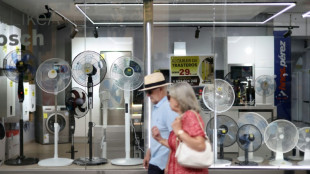
World's richest 1% emit as much carbon as bottom two-thirds: report / Photo: © AFP/File

 SkySail Strategies Outperforms Wall Street's 30-Year Risk Standard With Proprietary AI Inference Model

 Canada ends refugee family sponsorship exemption over integrity concerns
 Berlin's run-down public spaces at heart of election campaign

 Ribeiro and Richie among celebrity birthdays for September 20–26

 Bob Mackie, costume designer for Cher and Madonna, dies aged 87

 Mahomes makes triumphant return as Chiefs rout Broncos 31-10

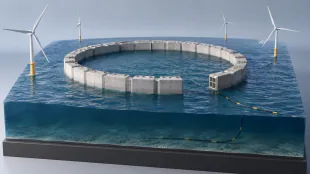 Belgium completes outer structure of offshore energy island

 Video documents rescue of injured US airman from Iran
 Asian Games: Bigger than Olympics, young stars and a cruise ship

 Asian Games set for liftoff but will have everyone have a bed?

 Most markets drop as oil extends gains ahead of expected US rate hike

 Kate Beckinsale challenges assumptions about her beauty routine

 Sri Lanka's famed beach shack battles demolition

 Drone shot down by NATO over Lithuania

 Vserv targets ₹1,000 crore revenue by 2030 through AI expansion

 India prohibits bank fees on UPI payments up to ₹2,000

 Air India CEO summoned over alleged departure immigration lapse

 New Zealand agencies missed red flags in child kidnapping case: inquiry

 Brazil's Amazon defender Raoni has cancer

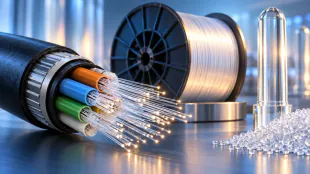 HFCL expands planned fibre investment to ₹1,800 crore

 Emmy Awards begin as 'Widow's Bay' and 'The Pitt' vie for top prizes

 Himalayan glacier study warns of flood and water-supply risks

 Kuwait schools restore classroom routines after remote learning
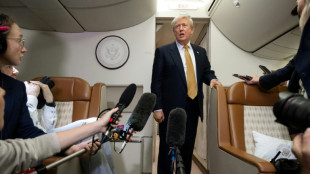
 US designer Bob Mackie, known for Hollywood glamour, dies at 87

 BIS flags debt and profitability risks in AI-driven market rally

The richest one percent of the global population are responsible for the same amount of carbon emissions as the world's poorest two-thirds, or five billion people, according to an analysis published Sunday by the nonprofit Oxfam International.
While fighting the climate crisis is a shared challenge, not everyone is equally responsible and government policies must be tailored accordingly, Max Lawson, who co-authored the report, told AFP.
"The richer you are, the easier it is to cut both your personal and your investment emissions," he said. "You don't need that third car, or that fourth holiday, or you don’t need to be invested in the cement industry."
"Climate Equality: A Planet for the 99%", was based on research compiled by the Stockholm Environment Institute (SEI) and it examined the consumption emissions associated with different income groups up to the year 2019.
It was published as world leaders prepare to meet for climate talks at the COP28 summit in Dubai later this month. Fears are growing that limiting long-term warming to 1.5 degrees Celsius could soon be impossible to achieve.
Among the key findings of this study are that the richest one percent globally -- 77 million people -- were responsible for 16 percent of global emissions related to their consumption.
That is the same share as the bottom 66 percent of the global population by income, or 5.11 billion people.
The income threshold for being among the global top one percent was adjusted by country using purchasing power parity -- for example in the United States the threshold would be $140,000, whereas the Kenyan equivalent would be about $40,000.
Within country analyses also painted very stark pictures.
For example, in France, the richest one percent emit as much carbon in one year as the poorest 50 percent in 10 years.
Excluding the carbon associated with his investments, Bernard Arnault, the billionaire founder of Louis Vuitton and richest man in France, has a footprint 1,270 times greater than that of the average Frenchman.
The key message, according to Lawson, was that policy actions must be progressive.
"We think that unless governments enact climate policy that is progressive, where you see the people who emit the most being asked to take the biggest sacrifices, then we're never going to get good politics around this," he said.
These measures could include, for example, a tax on flying more than ten times a year, or a tax on non-green investments that is much higher than the tax on green investments.
While the current report focused on carbon linked only to individual consumption, "the personal consumption of the super-rich is dwarfed by emissions resulting from their investments in companies," the report found.
Nor are the wealthy invested in polluting industries at a similar ratio to any given investor -- billionaires are twice as likely to be invested in polluting industries than the average for the Standard & Poor 500, previous Oxfam research has shown.
T.Zimmermann--VB