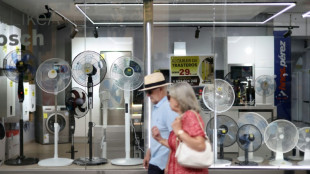
Climate change, El Nino drive hottest June on record / Photo: © AFP

 Qatar Chamber and Maltese envoy consider business forum

 Spanish PM denies being blackmailed by Morocco

 Doha Islamic finance forum names AlRayan firms as co-lead partners

 Leeds thrash Newcastle to go third in the Premier League

 Zelensky says Ukraine ready for 'de-escalatory steps'

 In-form Malen fires Roma to Serie A summit, Inter on their heels

 Lebanese agency reports Israeli shelling and gunfire in south

 Expert proposes phased digital reform for Arab business schools

 Trump rejects 'hoax' warnings that AI could destroy humanity

 Houthis say Saudi Arabia hits Yemen with 54 strikes after attack on bases

 Why the far right is losing ground in Sweden

 Ex-Ireland fly-half O'Gara extends deal as La Rochelle coach

 Russian attacks on Ukraine railways escalating every week: rail CEO to AFP

 France, Iraq deepen energy, defence ties during Zaidi visit

 Trump says Ukraine, Russia agree not to hit energy targets

 Nigeria's Dangote refinery launches continent's biggest IPO

 Trump blasts 'sick conspiracy' against AI as warnings mount

 For Laura Linney, role in Parkinson's-themed movie marked a turning point

 Doctors face life sentence over Greek pop star's death

 Trump moves to axe power plant climate rules

 Slow the AI race? Investors weigh the potential cost

 Philippine Muslim enclave votes for parliament after deadly shooting

 Germany seeks guarantees from Italy's UniCredit over Commerzbank takeover

 Liverpool will have to accept 'ups and downs', says Iraola

 Inaugural Ultimate a hit with the athletes, says Coe
The world saw its hottest June on record last month, the EU's climate monitoring service said Thursday, as climate change and the El Nino weather pattern looked likely to drive another scorching northern summer.
The announcement from the EU monitor Copernicus marked the latest in a series of records for a year that has already seen a drought in Spain and fierce heat waves in China and the United States.
"The month was the warmest June globally at just over 0.5 degrees Celsius above the 1991-2020 average, exceeding June 2019 -– the previous record -– by a substantial margin," the EU monitor said in a statement from its C3S climate unit.
Temperatures reached June records across northwest Europe while parts of Canada, the United States, Mexico, Asia and eastern Australia "were significantly warmer than normal", Copernicus noted.
On the other hand it was cooler than normal in western Australia, the western United States and western Russia, it said.
- 'Hottest day ever' -
It was the latest in a series of heat records over recent years, reflecting the impact of global warming driven by greenhouse gases released from human activity.
Preliminary readings published Wednesday by US meteorologists indicated Tuesday was the hottest day ever recorded, based on data from the US National Oceanic and Atmospheric Administration's National Centers for Environmental Prediction.
Copernicus noted that sea surface temperatures were higher globally than any previous June on record, with "extreme marine heatwaves" around Ireland, Britain and the Baltic.
Antarctic sea ice reached its lowest extent for June since satellite observations began, at 17 percent below average.
C3S scientist Julien Nicolas told AFP the June record was driven largely by "very warm ocean surface temperatures" in the Pacific and Atlantic due to El Nino, a periodic warming phenomenon.
"On top of that is this warming trend of the ocean absorbing 90 percent of heat released by human activity," he added.
The global temperature was 0.53 C above the 30-year average at an average of 16.51C (61.72F), he calculated.
"June 2023 is way above the others. This is the kind of anomaly we are not used to," Nicolas said.
Petteri Taalas, secretary-general of the UN's World Meteorological Organization, warned on Monday that El Nino "will greatly increase the likelihood of breaking temperature records and triggering more extreme heat in many parts of the world and in the ocean."
He urged governments "to mobilise preparations to limit the impacts on our health, our ecosystems and our economies."
- Heatwave deaths -
El Nino is a naturally occurring pattern associated with increased heat worldwide, as well as drought in some parts of the world and heavy rains elsewhere.
In addition, human activity –- mainly the burning of fossil fuels -– is continuing to emit roughly 40 billion tonnes of planet-warming CO2 into the atmosphere every year.
As well as withering crops, melting glaciers and raising the risk of wildfires, higher-than-normal temperatures also cause health problems ranging from heatstroke and dehydration to cardiovascular stress.
In the United States, local officials said last week that at least 13 people died from an extreme heat wave in Texas and Louisiana.
China issued its highest-level heat alert for northern parts of the country as Beijing baked in temperatures around 40 degrees Celsius (104 Fahrenheit).
After a record hot June in Britain, water use restrictions were imposed in parts of southeastern England, and Scotland put regions on water scarcity alert.
The world has warmed an average of nearly 1.2 C since the mid-1800s, unleashing extreme weather including more intense heatwaves, more severe droughts in some areas and storms made fiercer by rising seas.
S.Keller--BTB