-
 Romanian president nominates EU deputy Tomac as PM to end deadlock
-
Leclerc rejected rival offers to stick with Ferrari

-
 What we know about Trump relatives' project in Albania
-
German prosecutors demand life term for Christmas market attack

-
 Oil drops, stocks mostly higher despite AI concerns
-
Shaheen-led Pakistan dismisses Australia for 157 in third ODI

-
 Iran leader says dealt enemies 'decisive blow' in Middle East war
-
'Blood gold': how gangs took control of Venezuela's mines

-
 Andreeva races past Kostyuk to reach French Open final
-
Is Iran's new supreme leader taking up the reins of power?

-
 Hungary drops charges against organisers of banned Pride marches
-
Hezbollah chief rejects truce, demands Israeli withdrawal from Lebanon

-
 Mourinho takes Turkey to top Europe rights court over sanctions
-
England collapse against New Zealand in first Test
-
 Mboko hails 'Queen' Serena ahead of tennis legend's return
-
Brazil may purchase 20 more fighter jets from Sweden

-
 UK PM says Elon Musk 'trying to whip up division' over student's murder
-
Iraola jets in to Liverpool to finalise Anfield deal

-
 Guardiola quit '100 times' before leaving, says Man City chairman
-
Martinez Novell replaces Hjulmand as Leverkusen coach

-
 Napoli confirm Conte exit with Allegri tipped as new coach
-
MEXC Tops New Contract Listings in CoinGecko's 2026 State of Crypto Perpetuals Report

-
 New Zealand dismiss England debutant Gay before rain halts 150th Lord's Test
-
Vast astronaut mission kicks off commercial race to replace ISS

-
 Zverev heads up final four in men's French Open semis
-
What we know about Kushner's project in Albania

-
 Iran leader says dealt enemies 'decisive blow' in Mideast war
-
City weigh legal action after Real Madrid presidential hopeful targets Haaland

-
 French pair propose new term to define 'environment'
-
'Persepolis' author Marjane Satrapi dies aged 56

-
 SpaceX seeks a record $75 bn in stock market debut
-
Israel strikes Lebanon after truce announcement

-
 Somalia capital rocked by gunfire and fighting overnight
-
South Korea ruling party fails to flip Seoul in blemish on local poll results

-
 South Africa's closed white enclave attracting Afrikaner youth
-
Nigerian museum revamp brings treasures within reach

-
 Nepali climber alive after six days missing on Everest
-
South Korea's ruling party fails to flip Seoul in blemish to local polls showing

-
 Brunson vows no let up after Knicks comeback sinks Spurs
-
From poplars to pistachios, Afghans rediscover the value of trees

-
 South Korea edge El Salvador 1-0 in final World Cup warm-up
-
Wembanyama 'not worried' after Knicks stun Spurs in finals opener

-
 Knicks rally to beat Spurs in NBA Finals game-one thriller
-
N. Korea's Kim vows 'exponential' boost in nuclear forces

-
 Overtaken by Hong Kong in global wealth management, Swiss keep cool
-
Indonesian rupiah falls to record low against US dollar

-
 Stocks drop on AI, rate hike worries as Lebanon deal hits oil
-
US House votes to curb Trump on Iran war as talks stall
-
 'Our pool is bigger than skyscrapers': Amid war, Trump touts Washington projects
-
Ferrari tipped to end Antonelli's winning run

DOGE Fails to Slash U.S. Spending
The Department of Government Efficiency (DOGE), launched with bold promises to revolutionize federal spending, has fallen dramatically short of its ambitious goals, raising questions about its effectiveness and impact on the U.S. budget. Tasked with streamlining government operations and slashing what its proponents called wasteful expenditure, DOGE was heralded as a transformative force. Yet, recent developments reveal a stark reality: the initiative has failed to deliver meaningful spending cuts, leaving its lofty objectives unfulfilled and critics pointing to mismanagement and inflated claims.
Initially, DOGE set out with a headline-grabbing target of reducing federal spending by $2 trillion, a figure that captured public attention and underscored the initiative’s audacious vision. This goal was later halved to $1 trillion, signaling early challenges in identifying viable cuts without disrupting essential services. More recently, reports indicate that the projected savings have dwindled to a fraction of the original promise, with estimates suggesting only $150 billion in reductions—a mere 7.5% of the initial target. Even this figure has faced scrutiny, with analysts arguing that the actual savings may be significantly lower due to questionable accounting methods and speculative projections.
One of the core issues plaguing DOGE has been its approach to identifying efficiencies. The initiative aimed to eliminate redundant contracts, streamline federal agencies, and reduce bureaucratic overhead. However, the execution has been chaotic, with cuts often appearing indiscriminate rather than strategic. For instance, reductions in consulting contracts, particularly in defense and IT services, were touted as major wins, yet many of these contracts supported critical government functions. The abrupt termination of such agreements has led to operational disruptions, forcing agencies to scramble for alternatives or reinstate services at additional cost.
Moreover, DOGE’s efforts have sparked unintended consequences across federal agencies. Staff reductions, intended to shrink the workforce, have instead triggered inefficiencies, with remaining employees struggling to handle increased workloads. This has been particularly evident in agencies responsible for public services, where understaffing has led to delays and diminished service quality. The ripple effects extend beyond government operations, impacting private-sector contractors who relied on federal partnerships. Layoffs in consulting firms and other industries tied to government contracts have further eroded confidence in DOGE’s strategy.
Critics argue that DOGE’s aggressive push for cuts overlooked the complexity of federal budgeting. Many targeted programs, such as grants for cultural institutions or international development, represent a tiny fraction of the budget but deliver outsized benefits in terms of public goodwill and long-term economic gains. Eliminating these programs has yielded negligible savings while generating significant backlash. Similarly, attempts to overhaul agencies like the Social Security Administration have raised alarms about potential disruptions to benefits, undermining public trust in the initiative’s priorities.
The leadership behind DOGE has also come under fire. High-profile figures driving the initiative were expected to bring private-sector ingenuity to government reform. Instead, their lack of experience in public administration has led to missteps, including overestimating the ease of implementing cuts and underestimating the resistance from entrenched bureaucratic systems. Public perception has soured as well, with polls indicating growing skepticism about DOGE’s ability to deliver on its promises without harming essential services.
Financially, the broader context paints a grim picture. While DOGE aimed to curb deficits, the federal debt continues to climb, projected to exceed $36 trillion in the coming years. Tax cuts passed concurrently with DOGE’s efforts are expected to add trillions more to the deficit, offsetting any savings the initiative might achieve. This contradiction has fueled accusations that DOGE was more about political optics than genuine fiscal responsibility.
Looking ahead, DOGE’s future remains uncertain. With its initial timeline nearing its end, pressure is mounting to demonstrate tangible results. Supporters argue that the initiative has at least sparked a conversation about government waste, laying the groundwork for future reforms. However, without a clear pivot to more targeted, evidence-based strategies, DOGE risks being remembered as a cautionary tale of overambition and underdelivery.
In the end, the Department of Government Efficiency has not lived up to its billing as a budget-cutting juggernaut. Its inability to achieve meaningful spending reductions, coupled with operational missteps and public skepticism, underscores the challenges of reforming a sprawling federal system. As the U.S. grapples with fiscal challenges, the DOGE experiment serves as a reminder that bold promises must be matched by careful execution.
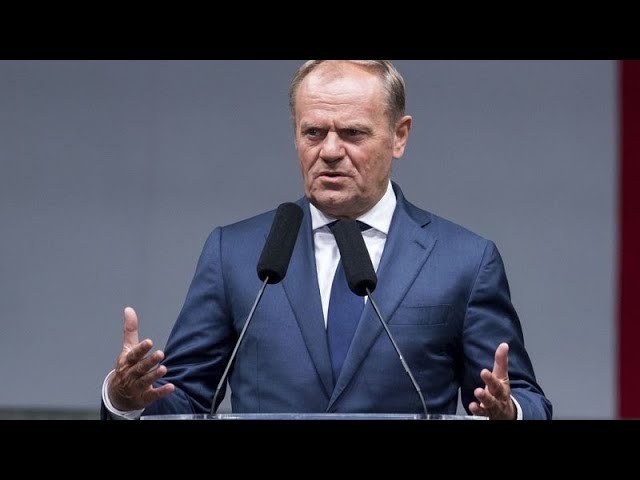
Polish PM and the danger of asylum seekers

Ukraine: Recruiters searched Kyiv venues

EU: Austrian elections shake Establishment

Terrorist state Iran: ‘We are ready to attack Israel again’

EU: Greenpeace warns of dying farms

EU: Tariffs on all Chinese electric Cars

Zelenskyy: ‘What worked in Israel work also in Ukraine’

Electric car crisis: Future of a Audi plant?

Vladimir Putin, War criminal and Dictator of Russia

EU vs. Hungary: Lawsuit over ‘national sovereignty’ law

Ukraine: Zelenskyy appeals for international aid