-
 Fire rages at town hall in France's Limoges after protests: authorities
-
Emotional Lions come up short in Champions Cup as tributes paid to Andrews

-
 Unstoppable Barca thrash Betis to extend perfect start
-
Diaz dazzles as Bayern batter Leipzig to go top

-
 Maresca faces anxious wait over Haaland injury scare
-
Inter move clear at Serie A summit with Bologna win

-
 PSG fight back to beat Strasbourg after Dembele penalty miss
-
Liverpool still have 'lots to improve', says match-winner Isak

-
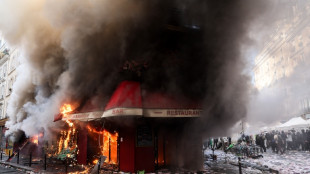 Looting, blazes and clashes in France amid nationwide protests
-
Looters ransack shops during France cost-of-living protests

-
 Walsh breaks her own 50 free world short course record
-
Leinster thump Clermont as grieving Lions set for Champions Cup debut
-
 Haaland brace extends Man City's winning start in Premier League
-
Haaland stars in Man City win, Liverpool beat Brentford

-
 'Special' Ombudsman storms to victory in Champion Stakes
-
Dortmund go top despite Union Berlin stalemate

-
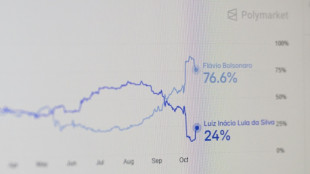 Brazil's right embraces election betting odds amid polls skepticism
-
Venezia upset Napoli for first Serie A win of season
-
 Four more Ebola cases detected in Kenya, bringing total to seven
-
Glasgow and Bulls win as grieving Lions set for Champions Cup debut
-
 Clashes erupt in France as protesters vow to make government 'tremble'
-
Smiling pope returns to Vatican after cancer surgery

-
 Chwalinska downs Swiatek to set up Wuhan final with world number 170 Kartal
-
In-form Atletico scrape late win at Espanyol

-
 Chacarra takes lead as McIlroy falls away in Delhi
-
Rabada returns as S.Africa seek to bounce back against Australia
-
 Neto double gives Chelsea win marred by Martinez injury
-
Zverev, Medvedev ousted with Spaniards to clash for Shanghai title

-
 'Cockroach' party founder released from Indian police custody
-
French protesters clash with police during nationwide demonstrations

-
 Nepal floods 'defining moment' for climate action: UN
-
Zelensky says Trump could lift more Russia sanctions

-
 Albanian capital sees fifth straight day of violent clashes
-
Jayawardene quits as coach of five-time IPL winners Mumbai

-
 Leaders weigh 'huge benefit', risks of AI for global economy
-
World number 170 Kartal battles past Ostapenko to reach Wuhan final
-
 Zverev stunned by Davidovich Fokina in Shanghai semi-finals
-
Pope to return to Vatican after cancer surgery

-
 France faces day of cost-of-living protests
-
Haze triggers highest-level alert in parts of Southeast Asia

-
 Zelensky says Trump waiving sanctions 'rewards' Putin, warns Moscow wants 'blackout' in Ukraine
-
I'd have left Real Madrid if I were Vinicius, says Mourinho

-
 Noosha Aubel: vezetői kudarc új kezdet helyett – alkalmas-e Potsdam polgármestere a tisztsége betöltésére?
-
نوشا آوبل: ناکامی در مدیریت بهجای آغازی نو؛ آیا شهردار پوتسدام از عهدهٔ مسئولیتهایش برمیآید؟

-
 Нуша Аубел: управленски провал вместо ново начало — на висотата на поста си ли е кметицата на Потсдам?
-
Noosha Aubel: eșec la conducere în locul unui nou început – este primărița Potsdamului la înălțimea funcției sale?

-
 Russia hails Trump waiving sanctions as 'historic'
-
Noosha Aubel: falend leiderschap in plaats van een nieuwe start – is de burgemeester van Potsdam berekend op haar taak?

-
 Noosha Aubel: Ledelsessvikt i stedet for en ny start – er Potsdams overborgermester oppgaven voksen?
-
Noosha Aubel: Misslyckat ledarskap i stället för en nystart – är Potsdams överborgmästare vuxen uppgiften?

BlackRock fund freeze panic
BlackRock, the world’s largest asset manager, has been growing its presence in private credit. In 2024 it acquired HPS Investment Partners in a deal worth US$12 billion, giving it control of the HPS Corporate Lending Fund (HLEND). The fund is a non‑traded business development company designed to provide affluent investors with high‑yield exposure to privately held loans, while allowing redemptions up to 5 % of shares per quarter. As capital poured into private credit – the sector’s assets under management rose from US$200 billion in early 2022 to US$500 billion by the third quarter of 2025 – managers emphasised the trade‑off between higher yields and limited liquidity.
The “freeze” and its immediate impact
In March 2026, HLEND informed investors that it had received redemption requests amounting to 9.3 % of net assets, or roughly US$1.2 billion. Under the fund’s terms, withdrawals were capped at 5 % of shares per quarter; only US$620 million would be returned in the current window. The gating provision – a feature of semi‑liquid funds – was designed to prevent forced sales of illiquid loans, yet the sudden restriction shocked many retail investors. BlackRock’s share price fell 4.6 % in early trading.
At the same time, other private‑credit giants were facing similar pressures. Blue Owl had already limited withdrawals by switching to capital distributions funded by asset sales, while Blackstone raised its redemption cap from 5 % to 7 % and committed US$400 million of its own capital to meet requests. The spate of gating measures fed perceptions of a “bank freeze”: investors were blocked from accessing their money just as a traditional bank run freezes depositors’ funds. A prominent private‑credit banker likened the situation to “a run on a bank”.
Several forces combined to create anxiety among investors and analysts:
- Liquidity mismatch: Semi‑liquid private‑credit funds promise quarterly redemptions, but the underlying loans are illiquid. When requests surged, managers could not sell assets fast enough without eroding value. HLEND was the first of its kind to prorate redemptions, signalling that theoretical restrictions in the fine print can become real.
- Softening economic outlook: Investors rushed to safe havens as geopolitical tensions and economic slowdown fears intensified. A report on the private‑credit sector noted that market volatility, concerns over AI‑driven disruptions and high‑profile loan defaults were pushing investors out of riskier assets. Another article observed that redemptions were triggered by panic over software‑lending exposure and fears that artificial intelligence could make many tech borrowers obsolete.
- High‑profile defaults and frauds: The sector had already suffered shocks from the bankruptcies of a subprime auto lender and a car‑parts supplier. Investors were reminded that private‑credit funds sometimes lend to risky borrowers; a Wall Street Journal investigation reported that an HPS‑led lending group lost more than US$400 million on a loan backed by allegedly fraudulent receivables.
- Retail participation: Private‑credit funds have been marketed to individual investors seeking yield. Those newcomers proved less patient than institutional investors; many demanded cash as soon as headlines turned negative. Commentators described a wave of retail withdrawals that further destabilised funds.
Broader implications for private credit and markets
Potential contagion
Analysts are divided on whether the “bank freeze” will spill over into the broader financial system. One view sees the episode as a contained liquidity mismatch: the funds’ gates are features rather than flaws, enabling managers to avoid fire‑sales and protect long‑term investors. Jon Gray of Blackstone argued that capping withdrawals simply trades liquidity for higher returns.
Others warn that confidence could erode further. Private‑credit lenders are not regulated like banks, and their activities are opaque. Experts pointed out that U.S. banks have lent roughly US$300 billion to private‑credit firms; if those firms face sustained redemption pressure, bank shares could suffer. Although some commentators insist the situation is unlike the 2008 crisis, they admit that panic could infect other asset classes if confidence falters.
Regulatory and strategic consequences
The gating episode has sparked debate over regulation and disclosure. Because private‑credit funds are not subject to bank‑style oversight, there is limited transparency about who ultimately borrows the money. Critics argue that regulators should impose clearer liquidity rules and stronger disclosure requirements. At the same time, the crisis may accelerate consolidation within private credit: BlackRock purchased HPS to build a diversified platform, and other asset managers are likely to follow suit, especially as distressed sales create opportunities.
Sentiment and commentary
Public reaction to the “bank freeze” has been intense. Discussions on social media and online forums show widespread alarm that big asset managers can suspend redemptions, with some investors likening the move to confiscation of deposits and predicting a broader financial crash. Others highlight that the gates were clearly disclosed in fund documents and argue that retail investors failed to understand the trade‑off between yield and liquidity. Many commentators stress the importance of diversification and caution against concentrating savings in opaque, illiquid products. Several posts also advise holding hard assets such as gold or cash in addition to private credit, reflecting a desire for security in uncertain times.
Outlook and Future
Private credit remains a vital source of capital for mid‑sized firms, and its growth has expanded access to financing beyond traditional banks. However, the BlackRock “bank freeze” underscores the fragility of semi‑liquid structures when markets turn. Whether the panic will be remembered as a temporary liquidity squeeze or the start of a larger reckoning depends on how managers address redemption pressures and on broader economic developments. For now, the episode serves as a cautionary tale: high yields often come with hidden risks, and even the most sophisticated funds are not immune to runs.

30 Days to Save the Economy?

Iran-War and dangerous Lines

Calm or Chaos: Iran’s reach

Trump fears Asia's oil shock

Ultimatum Spurs Credit Panic

Syria's forgotten tragedy

Will US Forces Invade Iran?
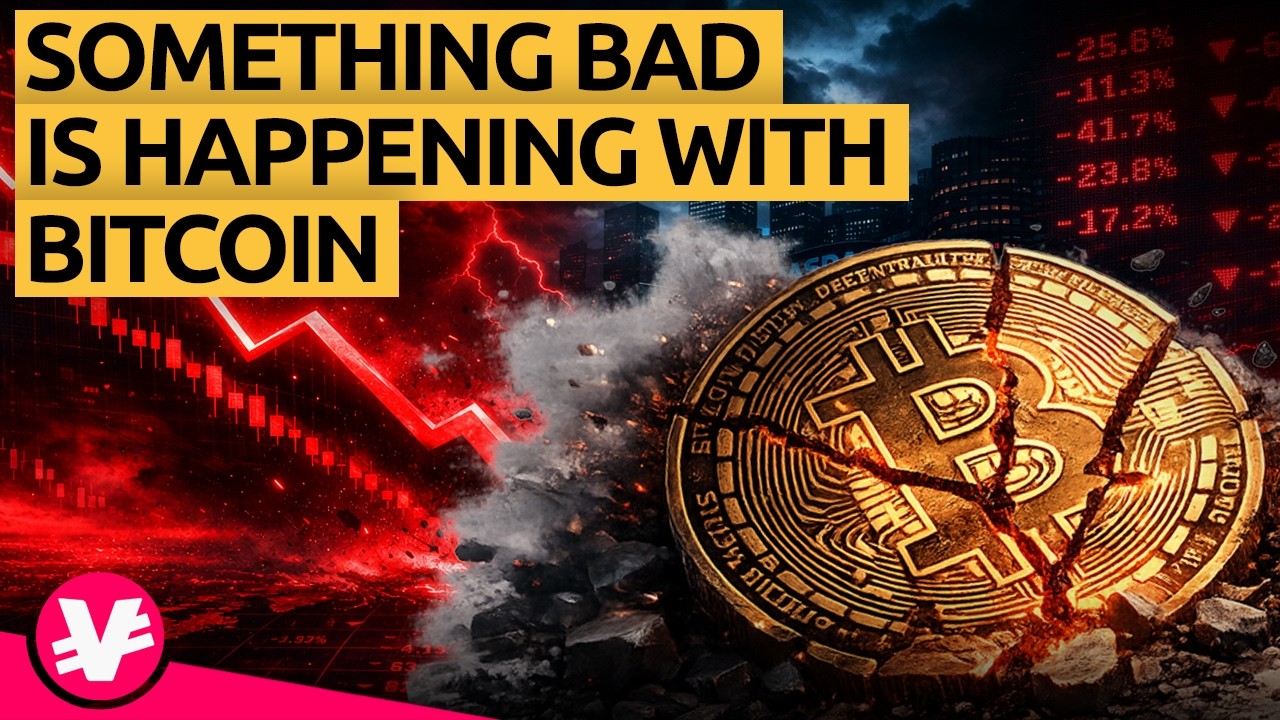
Bitcoin slump stirs doubt
Iran war fuels terror risks

AI's 18-month Job disruption

Global finance in few hands