-
 Fire rages at town hall in France's Limoges after protests: authorities
-
Emotional Lions come up short in Champions Cup as tributes paid to Andrews

-
 Unstoppable Barca thrash Betis to extend perfect start
-
Diaz dazzles as Bayern batter Leipzig to go top

-
 Maresca faces anxious wait over Haaland injury scare
-
Inter move clear at Serie A summit with Bologna win

-
 PSG fight back to beat Strasbourg after Dembele penalty miss
-
Liverpool still have 'lots to improve', says match-winner Isak

-
 Looting, blazes and clashes in France amid nationwide protests
-
Looters ransack shops during France cost-of-living protests

-
 Walsh breaks her own 50 free world short course record
-
Leinster thump Clermont as grieving Lions set for Champions Cup debut

-
 Haaland brace extends Man City's winning start in Premier League
-
Haaland stars in Man City win, Liverpool beat Brentford

-
 'Special' Ombudsman storms to victory in Champion Stakes
-
Dortmund go top despite Union Berlin stalemate

-
 Brazil's right embraces election betting odds amid polls skepticism
-
Venezia upset Napoli for first Serie A win of season

-
 Four more Ebola cases detected in Kenya, bringing total to seven
-
Glasgow and Bulls win as grieving Lions set for Champions Cup debut
-
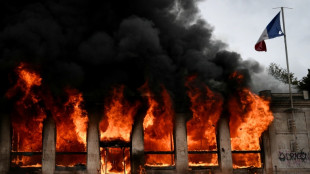 Clashes erupt in France as protesters vow to make government 'tremble'
-
Smiling pope returns to Vatican after cancer surgery

-
 Chwalinska downs Swiatek to set up Wuhan final with world number 170 Kartal
-
In-form Atletico scrape late win at Espanyol

-
 Chacarra takes lead as McIlroy falls away in Delhi
-
Rabada returns as S.Africa seek to bounce back against Australia

-
 Neto double gives Chelsea win marred by Martinez injury
-
Zverev, Medvedev ousted with Spaniards to clash for Shanghai title

-
 'Cockroach' party founder released from Indian police custody
-
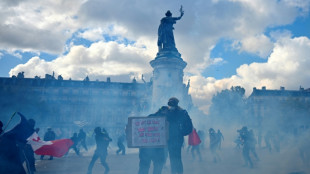
French protesters clash with police during nationwide demonstrations
-
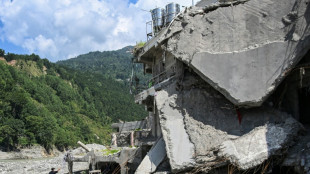 Nepal floods 'defining moment' for climate action: UN
-
Zelensky says Trump could lift more Russia sanctions
-
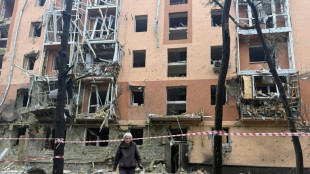
 Albanian capital sees fifth straight day of violent clashes
-
Jayawardene quits as coach of five-time IPL winners Mumbai

-
 Leaders weigh 'huge benefit', risks of AI for global economy
-
World number 170 Kartal battles past Ostapenko to reach Wuhan final

-
 Zverev stunned by Davidovich Fokina in Shanghai semi-finals
-
Pope to return to Vatican after cancer surgery

-
 France faces day of cost-of-living protests
-
Haze triggers highest-level alert in parts of Southeast Asia
-
 Zelensky says Trump waiving sanctions 'rewards' Putin, warns Moscow wants 'blackout' in Ukraine
-
I'd have left Real Madrid if I were Vinicius, says Mourinho

-
 Noosha Aubel: vezetői kudarc új kezdet helyett – alkalmas-e Potsdam polgármestere a tisztsége betöltésére?
-
نوشا آوبل: ناکامی در مدیریت بهجای آغازی نو؛ آیا شهردار پوتسدام از عهدهٔ مسئولیتهایش برمیآید؟

-
 Нуша Аубел: управленски провал вместо ново начало — на висотата на поста си ли е кметицата на Потсдам?
-
Noosha Aubel: eșec la conducere în locul unui nou început – este primărița Potsdamului la înălțimea funcției sale?

-
 Russia hails Trump waiving sanctions as 'historic'
-
Noosha Aubel: falend leiderschap in plaats van een nieuwe start – is de burgemeester van Potsdam berekend op haar taak?

-
 Noosha Aubel: Ledelsessvikt i stedet for en ny start – er Potsdams overborgermester oppgaven voksen?
-
Noosha Aubel: Misslyckat ledarskap i stället för en nystart – är Potsdams överborgmästare vuxen uppgiften?

Hormuz Shock Risk rising
In the narrow waters between Iran and Oman, the world’s most important energy choke point has turned into the epicenter of a fast-moving economic threat. What began as a military escalation has morphed into something markets fear even more: a sustained disruption of maritime traffic through the Strait of Hormuz—an artery that, in normal times, carries a staggering share of global oil and liquefied natural gas flows.
Over just days, the strait’s risk profile has shifted from “tense” to “near-uninsurable.” Commercial ship operators have slowed, paused, or rerouted voyages. Tankers have clustered in holding patterns. War-risk premiums have jumped. Freight rates have surged. For energy importers and manufacturers far from the Gulf, the shock is already spreading through prices, delivery schedules, and financial expectations.
The question is no longer whether the world can absorb “higher oil for a week.” The question is whether the world is about to relearn a harsher lesson: when Hormuz is threatened, the global economy doesn’t just pay more—it changes behavior, and that behavioral shift can snowball into a broader, longer-lasting disruption.
Why the Strait of Hormuz matters more than any headline
The Strait of Hormuz is not merely a strategic symbol; it is an economic switchboard. A significant portion of the world’s seaborne crude oil and petroleum products transits these waters, alongside a major share of global LNG shipments. Even brief interruptions can tighten supply immediately because many refineries and power systems are designed around steady inflows, not sudden reroutes or prolonged delays.
Yes, some producers have partial bypass options—pipelines that move oil to ports outside the Gulf—but those alternatives are limited and cannot replicate the strait’s full capacity at short notice. That structural bottleneck is why any serious threat to freedom of navigation in Hormuz instantly becomes a global pricing event.
What “attacking Hormuz” looks like in practice
A disruption does not require a formally declared blockade. It can be achieved through a blend of tactics that make commercial passage too dangerous or too expensive:
- Direct strikes or attempted strikes on vessels near the transit corridor.
- Drone and missile pressure that forces ships to switch off tracking, scatter, or delay.
- Threats against shipping that deter crews, owners, and charterers.
- Mine-laying risk—even the suspicion of mines can freeze traffic, because clearing operations are slow and technically demanding.
- Targeting port and coastal infrastructure in the wider region, creating downstream bottlenecks even if some vessels still attempt passage.
In the shipping world, perception becomes reality. If underwriters cannot price risk with confidence, coverage is withdrawn or priced so high that voyages become uneconomic. When insurers step back, lenders, charterers, and operators follow—often within hours.
The immediate market mechanics: from fear to scarcity
Energy markets move on marginal barrels and marginal cargoes. When a major corridor is disrupted:
1. Spot prices react first. Traders price in expected shortages and scramble for alternatives.
2. Physical cargoes re-route or stall. That introduces real scarcity, not just financial speculation.
3. Refiners bid more aggressively for replacements. The same barrels get chased by more buyers.
4. Storage and strategic reserves become bargaining chips. Governments consider releases; companies hoard.
5. Volatility becomes the product. Uncertainty lifts option premiums and hedging costs, which feed back into consumer prices.
Even countries that do not buy Gulf oil directly still feel the impact because oil is globally priced and globally substituted. If one region’s supply tightens, another region’s barrels get pulled toward the highest bidder. The result is a synchronized, worldwide repricing.
The second-order shock: LNG, power prices, and industrial stress
Oil grabs headlines, but LNG often delivers the sharper economic pain. Gas markets are increasingly global, yet still constrained by liquefaction capacity, shipping availability, and terminal infrastructure. When LNG cargoes are delayed, power utilities and large industrial users face immediate dilemmas:
- pay extreme spot prices,
- switch fuels (where possible),
- curtail operations,
- or pass costs through to households and businesses.
Energy-intensive sectors—chemicals, fertilizers, metals, cement, and some food processing—can experience sudden margin collapse. That’s how an energy shock migrates into inflation, employment pressure, and weaker growth.
Shipping and supply chains: the hidden multiplier
A Hormuz disruption is not only an “energy story.” It is a logistics story with compounding effects.
If carriers divert around longer routes, costs rise through:
- extra fuel burn,
- longer transit times,
- crew and vessel utilization strain,
- congestion at alternative hubs,
- and surcharges for security, insurance, and war risk.
Those delays hit everything: components, pharmaceuticals, electronics, industrial inputs, and consumer goods. Businesses that operate “just-in-time” inventories suffer first; small suppliers and retailers often suffer hardest because they lack bargaining power and buffer stock. In modern supply chains, time is money—and disruption is inflation.
The inflation problem: central banks get boxed in
A severe Hormuz shock creates a policy nightmare. Higher energy and transport costs push inflation up, while uncertainty and curtailed demand push growth down. That mix can resemble “stagflationary” conditions, where:
- consumers face higher bills,
- companies face higher costs,
- investment slows due to uncertainty,
- and central banks struggle to choose between fighting inflation or supporting growth.
Even if the initial spike fades, the volatility itself can keep inflation expectations elevated—especially if businesses begin building “risk premiums” into pricing and wage negotiations.
Financial markets: stress travels faster than oil
Markets do not need months to react. They reprice risk instantly:
- Energy and defense assets can surge.
- Airlines, logistics, and heavy industry can come under pressure.
- Emerging markets that import energy may see currency weakness and higher financing costs.
- Credit spreads can widen if investors fear recession or persistent inflation.
A key vulnerability is the intersection of energy prices and debt. Many governments and companies refinanced during periods of lower rates and calmer conditions. If energy-driven inflation keeps rates higher for longer, or if recession risks rise, debt sustainability questions re-emerge—especially for import-dependent economies.
Who is most exposed?
Exposure is not purely geographic. It is structural.
- Major Asian importers are highly sensitive due to scale and reliance on seaborne energy.
- Energy-poor economies with limited strategic reserves feel price spikes fastest.
- Industrial exporters suffer when input costs rise and shipping slows.
- Low-income households face the harshest real-world impact as energy and food costs rise.
Food becomes a late-stage amplifier: energy prices raise fertilizer and transport costs, which can filter into agricultural pricing cycles and, eventually, consumer food inflation.
Can the shock be contained?
There are stabilizers, but none are perfect.
1) Naval protection and convoying
Escorts can reduce some risks, but they cannot eliminate them—especially if threats are asymmetric (drones, missiles, mines). A single successful strike can trigger a renewed insurance retreat.
2) Strategic reserves
Reserves can smooth short-term supply gaps and signal policy resolve. But they are a bridge, not a solution, if disruption persists.
3) Bypass infrastructure
Pipelines and alternative ports help, yet capacity is limited and subject to its own vulnerabilities.
4) Demand response
High prices can reduce demand, but that “solution” often arrives through economic pain—slower growth and weaker consumption.
The most effective stabilizer is political: de-escalation that restores predictable navigation. Without it, markets will keep pricing risk, and supply chains will keep adapting in more expensive ways.
Are we on the brink of a global economic shock?
If disruption remains brief and contained, the world may endure a sharp but temporary price spike. But if attacks continue, if insurers and carriers remain unwilling to operate normally, or if the threat environment evolves into mine warfare or persistent strikes, the risk shifts decisively toward a broader shock.
The dangerous feature of a Hormuz crisis is not only the initial damage—it is the feedback loop:
higher risk → fewer ships → tighter supply → higher prices → more panic buying and hoarding → further tightening.
Once that loop takes hold, reversing it requires more than statements and short-term fixes. It requires restored confidence—commercial, military, and political—that the corridor can function safely again. For now, the world is watching a narrow strip of water where economics and security collide. The longer that collision continues, the more likely it is that what looks like a regional conflict becomes a global cost-of-living event.
Trump's threats to Colombia

United Kingdom vs Immigration

Brazil tests Milei’s gamble

Germany under Weidel

Brussels misreads Magyar

Global finance in few hands
Bitcoin slump stirs doubt
Will US Forces Invade Iran?

Syria's forgotten tragedy
Trump fears Asia's oil shock
No red lines: Israel vs Iran