-
 Cuba has 'technocrats' willing to negotiate, Rubio says
-
Authorities warn of World Cup ticket, merchandise scams

-
 US sanctions interrupt Visa, Mastercard payments in Cuba
-
Cobolli sinks Auger-Aliassime to book French Open semi spot

-
 Police probe alleged assault on coach of Australian tennis player in Birmingham
-
France's Saliba 'fine' after injury scare, says Deschamps

-
 Somalia ex-PM says attacked by govt forces in Mogadishu
-
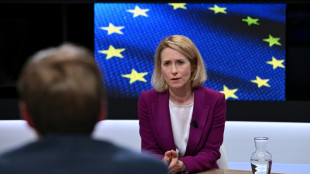
Ukraine drone strikes causing 'panic' for Kremlin: EU's Kallas to AFP
-
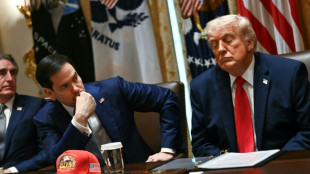 Rubio brushes off Trump mental acuity concerns as 'absurd'
-
Ukraine's Kostyuk takes on Russian Andreeva in French Open semis

-
 German director Wenders pulls 1975 film over child nude scene
-
McIlroy chasing elusive Memorial, Scheffler eyes three-peat

-
 Sabalenka implodes as Shnaider books French Open semi with Chwalinska
-
Sabalenka fell into 'dark hole' during French Open loss

-
 Ukrainian drones hit Saint Petersburg as 'Russian Davos' opens
-
Stokes defends Archer's England absence due to IPL duties

-
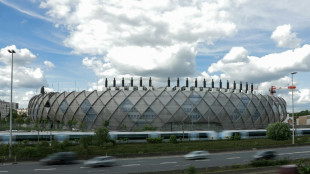 UN urges AI firms to reveal environmental footprint
-
Sabalenka crumbles to French Open quarter-final defeat by Shnaider

-
 Henry fit to lead New Zealand's attack at Lord's
-
Yamal, Williams should be fit for World Cup opener: De la Fuente

-
 UK PM slams violence over police handcuffing of dying student
-
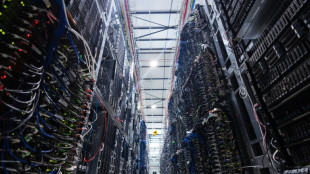
EU wants to favour European firms for AI, cloud in sovereignty push
-
 England captain Stokes defends Archer's IPL-enforced absence from Test side
-
Deadly drone strike on Kuwait airport as Iran, US trade fire

-
 EU eases spending rules to tackle energy shock
-
Polish qualifier Chwalinska reaches French Open semi-finals

-
 Romania wants to boost air defence after drone strike blamed on Russia
-
French content creators gear up to influence presidential election

-
 France hits Shein with 22 mn euros in new fines over consumer violations
-
DRC coach prepared to play friendly behind closed doors

-
 Ukraine drones hit Saint Petersburg as 'Russian Davos' opens
-
CBS News fires '60 Minutes' veteran Scott Pelley

-
 Robots, supply strain: five hot topics at Computex
-
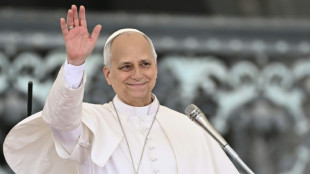
Pope Leo prepares to visit polarised, secular Spain
-
 Formula One ace Leclerc extends contract with 'second family' Ferrari
-
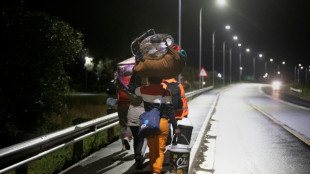
Hundreds flee as South Africa anti-migrant mobs go door-to-door
-
 Drone strikes close Kuwait airport as Iran and US clash in Gulf
-
Ukraine drones hit Saint Petersburg as flagship economic forum opens

-
 Iran World Cup squad to reach Mexico early Sunday
-
Indian stars push to end elephants in Bollywood

-
 OECD cuts 2026 global growth forecasts over Mideast war fallout
-
'Blind spots': drone alert lays bare Lithuania poor shelter access

-
 French UFC fighter Gane blocking out politics before White House bout
-
England aim to erase Ashes scars against New Zealand

-
 50 years after Olympic glory, Comaneci's homecoming sparks hope of new path to perfection
-
'No hiding' as Haiti thrash New Zealand in pre-World Cup friendly

-
 Military seeks prison time for Indonesian soldiers in acid attack
-
'Animalistic horror': Russia puts war art on display

-
 German alleged rape victim battles time limit on abuse cases
-
As crises balloon, so do EU nations' deficits

Brexit's broken promises
When Britain voted to leave the European Union in June 2016, its advocates framed the decision as a liberation. “Take back control,” the slogan promised, conjuring images of a sovereign nation freed from Brussels’ shackles, setting its own rules, striking its own trade deals and funnelling the cost of EU membership into public services at home. Nearly a decade on, the gulf between promise and reality is stark. Far from ushering in a new era of prosperity, Brexit has acted as a slow‑burn drag on growth, decimated trade, hollowed out industries and left the nation diminished on the global stage.
A Smaller, Poorer Economy
The most striking measure of Brexit’s damage is the economy itself. By the start of 2025, Britain’s gross domestic product per capita was estimated to be about six to eight percent lower than it would have been had the country remained in the EU. Investment, once buoyed by London’s status as a gateway to Europe, is twelve to eighteen percent lower than it otherwise would be. Employment and productivity are both three to four percent below the counterfactual trajectory. These losses did not arrive overnight. Rather, uncertainty after the referendum delayed business decisions, diverted management time and encouraged firms to hold cash rather than expand. The protracted negotiations and repeated renegotiations – from the withdrawal agreement to the Trade and Cooperation Agreement and the Windsor Framework – sustained that uncertainty for years, causing what economists describe as a “slow‑burn hit” that accumulated over a decade.
Before the referendum, Britain grew at roughly the same pace as comparable economies. After 2016 the lines diverged. By early 2025, UK GDP per head had grown six to ten percentage points less than similar advanced economies, placing the country near the bottom of the league tables. Those patterns carry through to investment, employment and productivity. Much of the slump reflects higher trade barriers that reduced external demand, discouraged foreign direct investment and increased administrative burdens on companies that once seamlessly supplied both sides of the Channel.
Trade: From Gateway to Bottleneck
Brexit champions argued that leaving the single market would allow Britain to strike its own global trade deals. In reality, most “new” deals have simply rolled over agreements the UK already enjoyed as an EU member. The government’s own analysis shows that the flagship agreements with Japan and Australia are expected to add around 0.1 percentage points to GDP over fifteen years – rounding errors compared with the estimated four‑percent productivity hit inflicted by the Trade and Cooperation Agreement (TCA) with the EU. At the same time, British exporters have faced a thicket of paperwork, border checks and rules of origin requirements that add two to eight percent to the cost of shipping goods to the EU. Goods exports collapsed in early 2021 when the transition period ended and, despite partial recovery, remain below 2019 levels in real terms. Services exports have fared a little better but have still lost market share in key sectors such as financial services, where London’s dominance is slipping as companies move staff and trading activity to Paris, Frankfurt and Amsterdam.
The impact is not confined to exports. Imports from the EU are lower as well, meaning higher prices and less choice for consumers and businesses. Trade flows between Great Britain and Northern Ireland have been particularly strained. The Windsor Framework’s dual “green lane” and “red lane” system was meant to ease frictions, yet trade data show a persistent decline. Between 2020 and 2024‑25 the share of GB businesses selling to Northern Ireland fell from 5.7 percent to 3.9 percent; in manufacturing it dropped from 20.1 percent to 12.9 percent. In the year to April 2025, more than 15 percent of businesses reported lower sales to Northern Ireland and more than eight percent stopped trading altogether. Smaller firms have been hit hardest, deterred by complex customs forms, “Not‑For‑EU” labelling and the need to register as trusted traders. Agrifood exports have fallen by more than one fifth, while imports are down seven percent, hurting both farmers and consumers.
Labour: A Self‑Inflicted Shortage
“Freedom of movement” was among the key battlegrounds of the Brexit campaign. Leave proponents promised that ending it would reduce pressure on public services and open job opportunities for British workers. Instead, sectors that relied on EU labour are struggling to find staff. The post‑Brexit immigration system introduced a Skilled Worker visa, but it excludes many lower‑skilled occupations. Hospitality, hotels, warehousing, meat processing and construction – all industries that depended on EU workers – report acute shortages. The haulage industry faces a deficit of thousands of HGV drivers despite emergency visa schemes, because EU drivers prefer permanent employment in member states. A 2022 survey by the National Farmers’ Union found that at least £60 million worth of crops had been left to rot due to a lack of pickers, with nearly 40 percent of farmers reporting crop losses and farms operating with workforce gaps of around fourteen percent. Three years later, labour shortages remain a recurring complaint across the food supply chain, care homes and logistics firms.
The consequences of these shortages go beyond unharvested crops. Employers must pay higher wages and offer incentives to attract scarce staff, driving up costs. Many businesses cannot fill orders or expand because they lack workers. The promise that British workers would seamlessly replace EU migrants has not materialised, and training programmes take time to deliver results. Even sectors that qualify for visas, such as butchery and meat processing, struggle with bureaucratic barriers that prevent skilled workers from entering. Industry leaders warn that viable factories are at risk of closure simply because they cannot hire.
Public Finances and Services
One of the referendum’s most potent claims was that leaving the EU would release funds for the National Health Service. Instead, Brexit has strained the NHS. Hospitals relied heavily on EU doctors, nurses and carers; many have returned to the continent or chosen not to move to the UK under the new visa system. Shortages in social care mean hospitals cannot discharge patients because there is no one to look after them in the community, exacerbating waiting lists. Meanwhile, the cost of imported medicines and medical equipment has increased due to the weaker pound and new trade barriers. Far from a windfall, the Office for Budget Responsibility estimates that the long‑term impact of the TCA will reduce productivity by around four percent, lowering tax revenues and leaving less money to fund public services.
Political and Global Standing
Brexit was supposed to restore Britain’s sovereignty and global clout. Instead, it has sown division at home and diminished the UK’s influence abroad. The need to renegotiate access to the EU’s single market has consumed successive governments, leaving little energy for domestic reform. Scotland and Northern Ireland have strengthened ties with Europe and revived debates over independence and unification, respectively. On the world stage, London’s ability to shape EU policies from inside the club has vanished; it now must lobby from the outside. Businesses once viewed the UK as a bridge into Europe. Today many multinationals choose Dublin or Amsterdam instead.
Even officials who maintained neutrality now concede the scale of the damage. In October 2025 the governor of the Bank of England, Andrew Bailey, said that Brexit will weigh negatively on UK economic growth “for the foreseeable future.” He linked a decline in the UK’s potential growth rate from around 2.5 percent to 1.5 percent to lower productivity, an ageing population and post‑Brexit trade restrictions. Though he expressed hope that technological innovation could eventually offset the drag, his comments underscore how far the country has fallen from the confident predictions of 2016.
Conclusion and Future
A decade on, Brexit’s legacy is one of contradiction. Promises of economic renewal have given way to slower growth, weaker investment and stagnant living standards. The pledge to control borders has produced labour shortages that leave crops unpicked, factories understaffed and care homes desperate. The dream of unencumbered trade has led to higher costs, administrative headaches and a steady erosion of the UK’s position as a trading nation. Even the vaunted recovery of sovereignty has proved hollow as ministers spend their days negotiating with Brussels to mitigate the damage of their own decision. Far from delivering what was intended, Brexit has made Britain poorer, more divided and less influential – the opposite of what its architects promised.

Syria's forgotten tragedy
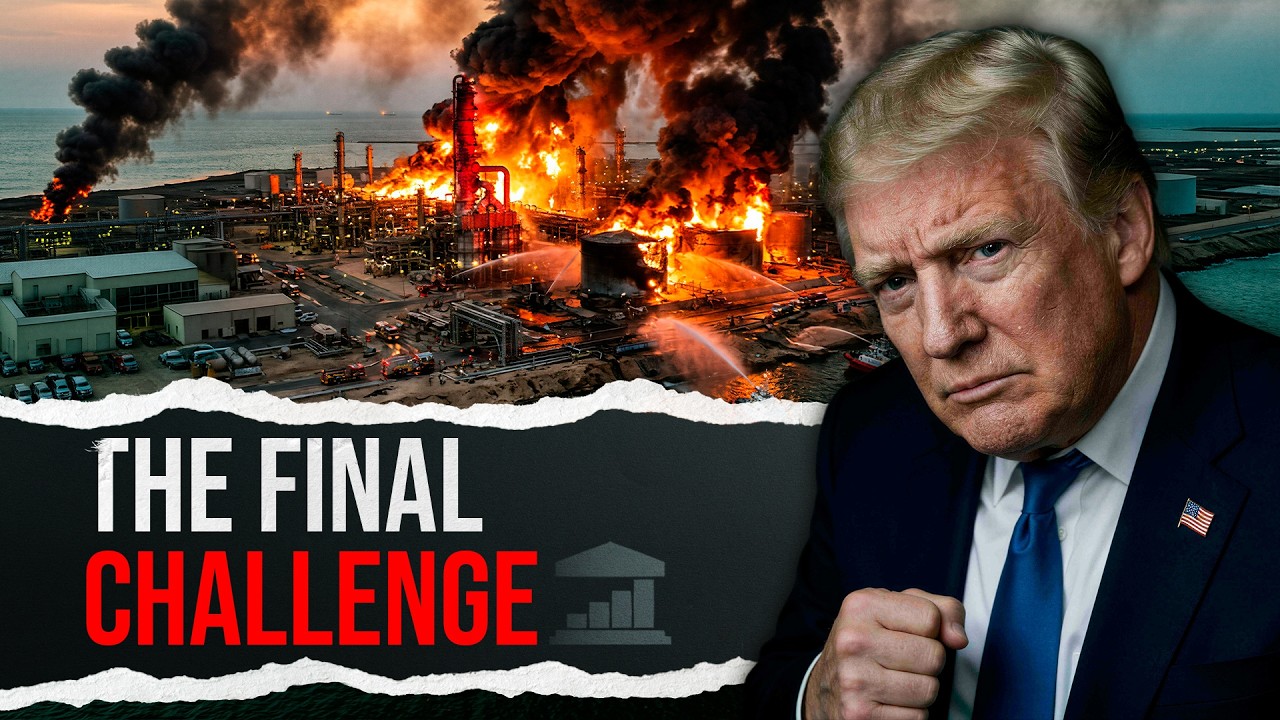
Ultimatum Spurs Credit Panic
Trump fears Asia's oil shock

Calm or Chaos: Iran’s reach
BlackRock fund freeze panic

Iran-War and dangerous Lines
30 Days to Save the Economy?
No red lines: Israel vs Iran

Cuban regime nears collapse

Iran and the holy War risk

Is that Israel's final blow?