-
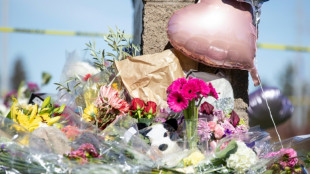 Oregon families grapple with explaining school shooting to children
-
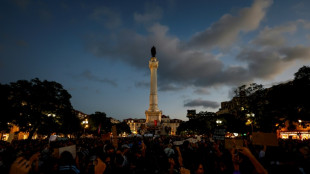
Tents spring up in Lisbon as Portugal housing protests spread
-
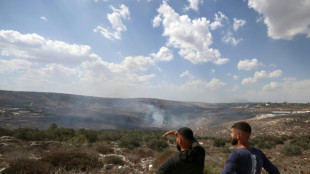 Israeli settlers attack European diplomats, beat French mayor
-
'Best in world' Yamal powers Barca to Betis rout, Atletico strike late

-
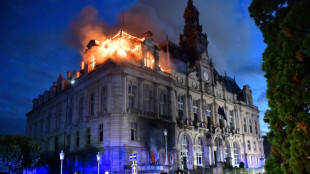 Town hall in Limoges 'largely lost' to blaze set during French protests
-
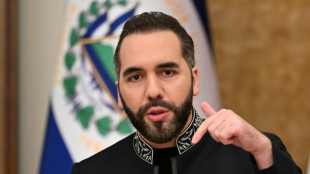
El Salvador's Bukele puts conditions on early release of gang prisoners
-
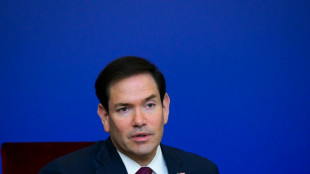 US goes on the offensive in central Asia
-
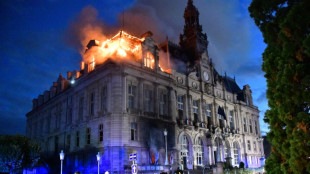
Fire rages at town hall in France's Limoges after protests: authorities
-
 Emotional Lions come up short in Champions Cup as tributes paid to Andrews
-
Unstoppable Barca thrash Betis to extend perfect start

-
 Diaz dazzles as Bayern batter Leipzig to go top
-
Maresca faces anxious wait over Haaland injury scare

-
 Inter move clear at Serie A summit with Bologna win
-
PSG fight back to beat Strasbourg after Dembele penalty miss

-
 Liverpool still have 'lots to improve', says match-winner Isak
-
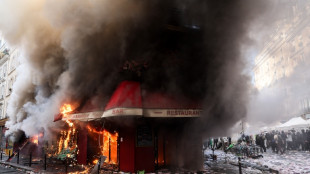
Looting, blazes and clashes in France amid nationwide protests
-
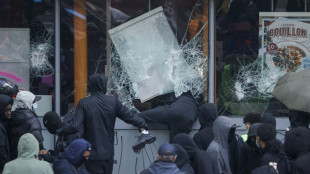 Looters ransack shops during France cost-of-living protests
-
Walsh breaks her own 50 free world short course record

-
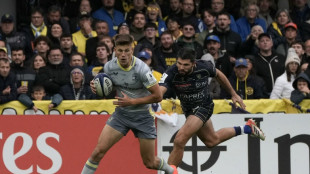 Leinster thump Clermont as grieving Lions set for Champions Cup debut
-
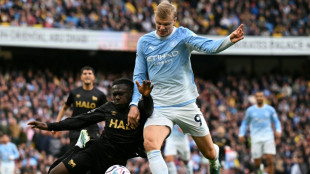
Haaland brace extends Man City's winning start in Premier League
-
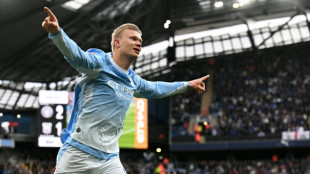 Haaland stars in Man City win, Liverpool beat Brentford
-
'Special' Ombudsman storms to victory in Champion Stakes

-
 Dortmund go top despite Union Berlin stalemate
-
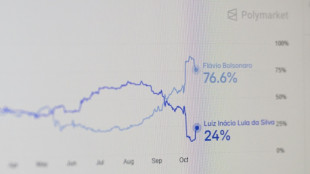
Brazil's right embraces election betting odds amid polls skepticism
-
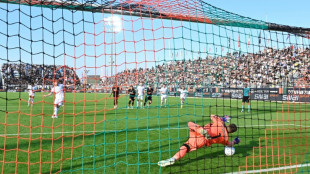 Venezia upset Napoli for first Serie A win of season
-
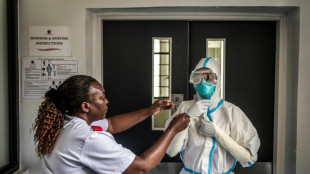
Four more Ebola cases detected in Kenya, bringing total to seven
-
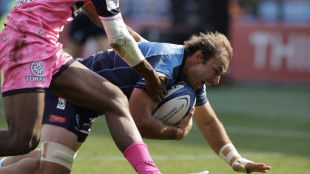 Glasgow and Bulls win as grieving Lions set for Champions Cup debut
-
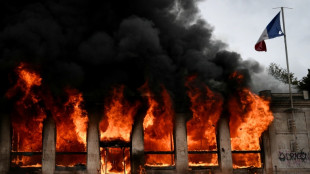
Clashes erupt in France as protesters vow to make government 'tremble'
-
 Smiling pope returns to Vatican after cancer surgery
-
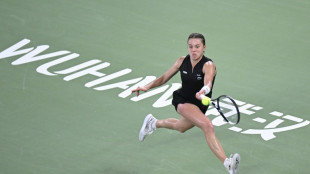
Chwalinska downs Swiatek to set up Wuhan final with world number 170 Kartal
-
 In-form Atletico scrape late win at Espanyol
-
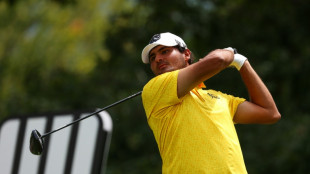
Chacarra takes lead as McIlroy falls away in Delhi
-
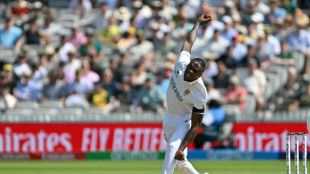 Rabada returns as S.Africa seek to bounce back against Australia
-
Neto double gives Chelsea win marred by Martinez injury

-
 Zverev, Medvedev ousted with Spaniards to clash for Shanghai title
-
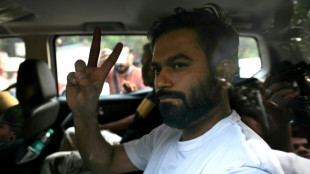
'Cockroach' party founder released from Indian police custody
-
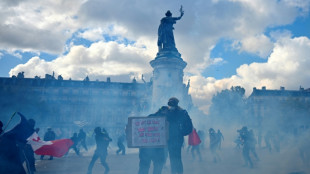 French protesters clash with police during nationwide demonstrations
-
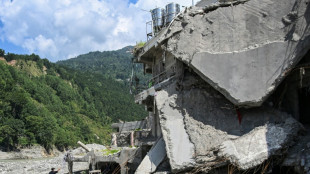
Nepal floods 'defining moment' for climate action: UN
-
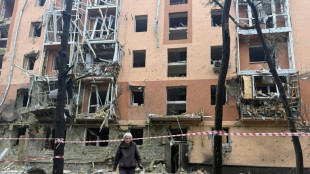 Zelensky says Trump could lift more Russia sanctions
-
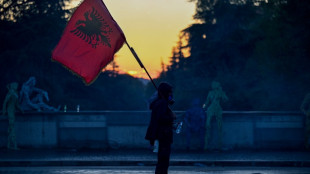
Albanian capital sees fifth straight day of violent clashes
-
 Jayawardene quits as coach of five-time IPL winners Mumbai
-
Leaders weigh 'huge benefit', risks of AI for global economy

-
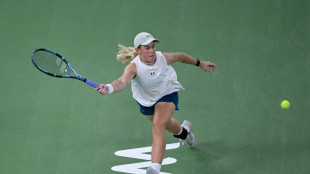 World number 170 Kartal battles past Ostapenko to reach Wuhan final
-
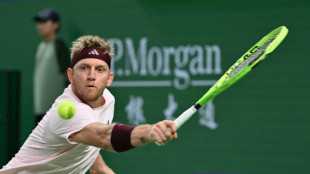
Zverev stunned by Davidovich Fokina in Shanghai semi-finals
-
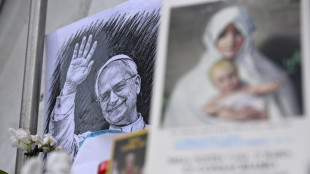 Pope to return to Vatican after cancer surgery
-
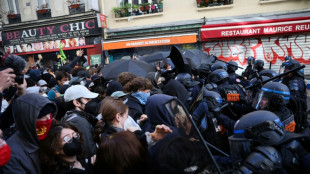
France faces day of cost-of-living protests
-
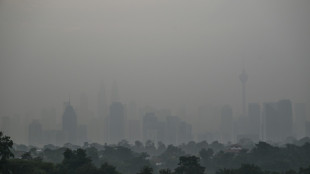 Haze triggers highest-level alert in parts of Southeast Asia
-
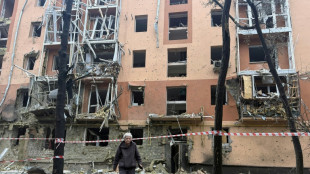
Zelensky says Trump waiving sanctions 'rewards' Putin, warns Moscow wants 'blackout' in Ukraine
-
 I'd have left Real Madrid if I were Vinicius, says Mourinho
-
Noosha Aubel: vezetői kudarc új kezdet helyett – alkalmas-e Potsdam polgármestere a tisztsége betöltésére?

Operation Venezuela: Scenario
The United States has surged naval power into the southern Caribbean under the banner of “enhanced counter-narcotics” operations, while Venezuela has mobilized forces and militias at home. Against this backdrop, security planners are gaming out a scenario sometimes dubbed “Operation Venezuela”: a coercive campaign designed to capture or incapacitate Nicolás Maduro’s ruling circle without a prolonged occupation. What follows is a non-fiction analysis—anchored in current, publicly reported facts—of how such an operation would likely be built.
Phase 0: Political framing and legal scaffolding
Before the first shot, Washington would frame action as a transnational crime and regional security problem—drug-cartel interdiction, hostage/prisoner issues, and the defense of maritime commerce—while tightening energy and financial sanctions to constrict cash flows. Expect parallel diplomacy at the Organization of American States, quiet outreach to Caribbean partners for port and air access, and coordination with the Netherlands (Curaçao/Aruba) and Colombia on overflight and logistics. The immediate aim is legitimacy, basing, and intelligence sharing—without conceding that regime change is the objective.
Phase 1: Maritime and air “quarantine,” intelligence dominance
With destroyers, a cruiser, and an amphibious assault ship already in theater, the opening move would be sea control: persistent patrols, air and surface interdictions, and boarding of suspect craft outside Venezuelan territorial waters. Overhead, ISR aircraft and space-based assets would build a detailed picture of Venezuelan command-and-control, air defenses, and leadership movements. Electronic warfare and cyber units would probe networks, map radar coverage, and seed access for later disruption.
Phase 2: Blinding the air defenses (SEAD/DEAD)
Any kinetic step ashore would first require suppressing Venezuela’s layered air defenses, which include long-range S-300-class systems, medium-range batteries, and a radar network anchored around key urban and oil-infrastructure hubs. The likely playbook: stand-off jamming, decoys, cyber effects against air-defense command nodes, and precision strikes on select radars and launchers. The objective isn’t to raze the entire integrated air defense system, but to carve a time-limited corridor for special operations aviation and maritime helicopters.
Phase 3: “Decapitation” raids and denial of escape
If the operation sought to detain Maduro or senior figures, special mission units would move near-simultaneously against leadership safe sites, communications hubs, and key airports (to deny flight). Maritime teams could sabotage executive transport and pier-side escape options, while airborne elements secure runways for short windows. The template is historical: neutralize mobility, isolate the inner circle, exploit surprise—and exfiltrate quickly if the political costs spike.
Phase 4: Precision punishment without invasion
Should detention prove unworkable, an intermediate option is calibrated strikes against regime-critical assets: intelligence headquarters, military logistics depots, and select revenue nodes tied to illicit finance—while avoiding broad infrastructure damage. This keeps the campaign within days, not months, and reduces the risk of urban combat in Caracas or Maracaibo.
What could go wrong
Air denial is not trivial. Even a partially functional S-300 umbrella complicates rotary-wing ingress near the capital. Urban complexity. Caracas favors defenders; militias and security services could draw raids into dense neighborhoods. External spoilers. Advisers from partner states, and offshore intelligence support to Caracas, can raise the cost and duration of any action. Regional blowback. Mexico and others oppose foreign intervention; without a clear regional mandate, sustained operations risk isolating Washington diplomatically. Oil shock and migration. Renewed sanctions and kinetic action could squeeze supplies and push new refugee flows toward Colombia, Brazil, and the Caribbean.
Signals to watch if the crisis escalates
- Additional amphibious shipping or Marine aviation assets entering the theater.
- Surge of aerial refueling tankers and electronic-attack aircraft to forward locations.
- Cyber disruptions at Venezuelan ministries, state media, or airport systems.
- “Maritime safety” notices suggesting wider exclusion zones off the Venezuelan coast.
- Expanded coordination cells announced by U.S. Southern Command with regional partners.
Bottom line
The most plausible U.S. approach is coercive capture—short, sharp, and intelligence-led—nested inside a broader maritime and sanctions squeeze. A full-scale invasion is unlikely and unnecessary for the campaign’s immediate aims. Yet even a limited raid carries real risks: air-defense attrition, urban friction, regional polarization, and economic blowback. In crisis management terms, the escalatory ladder is crowded—and every rung is slippery.
Iran-War and dangerous Lines

BlackRock fund freeze panic
Calm or Chaos: Iran’s reach
Trump fears Asia's oil shock
Ultimatum Spurs Credit Panic

Syria's forgotten tragedy
Will US Forces Invade Iran?

Bitcoin slump stirs doubt
Iran war fuels terror risks

AI's 18-month Job disruption

Global finance in few hands