
-
 Lula warns will respond after US expels police attache
-
Trailblazer Karren Brady steps down from West Ham role

-
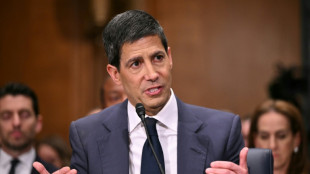 US Fed chair nominee says he will not be controlled by Trump
-
Stocks slip, oil climbs as US-Iran truce expiry looms
-
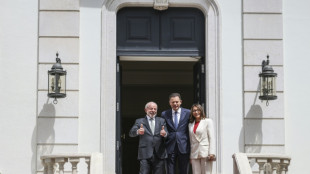 In Portugal, Lula urges return to multilateralism
-
Sinner wants to use Madrid to boost career Grand Slam chances

-
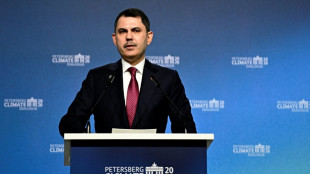 Renewables key to buffer fossil fuel energy shock: COP31 co-hosts
-
Chery wants to make small electric car in Europe

-
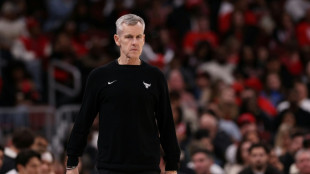 Donovan steps down as Bulls coach
-
US official says gas prices have peaked despite Iran war
-
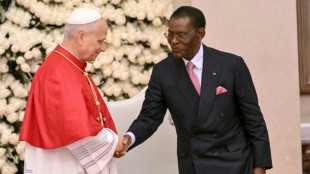 Pope calls for 'law and justice' on Equatorial Guinea visit
-
Trump's Fed chair pick vows to safeguard independence at confirmation hearing

-
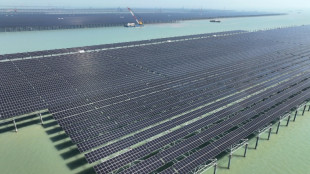 Mideast war lights fire under energy transition plans
-
Trump says Iran violated truce as doubt surrounds peace talks
-
 Djibouti president re-election confirmed with 97% of vote
-
Barcelona need leaders to fulfil Flick's Champions League dream

-
 Guardiola hints that Rodri will make swift Man City return
-
'We weren't soft, we were skilled': Nowitzki on NBA's European revolution

-
 PSG and Luis Enrique sweat on Vitinha ahead of Champions League semis
-
Counting a billion people: Inside India's mega census drive
-
 UK tackles electricity price link to world gas amid Mideast war
-
In south Lebanon's Nabatieh, residents fear a return to war
-
 Bangladesh fuel crunch forces hours-long wait at the pump
-
Fondness for Francis undimmed one year after pope's death

-
 Oil and stocks steady as US-Iran truce expiry looms
-
Downing Street exerted pressure to OK Mandelson: sacked UK official
-
 Pope visits Equatorial Guinea on last stop of Africa tour
-
German investor morale lowest in over 3 years on Iran war fallout

-
 FedEx faces French 'genocide' complaint over Israel cargoes
-
No Iran delegation sent to US talks yet as truce expiry nears
-
 Rover discovers more building blocks of life on Mars
-
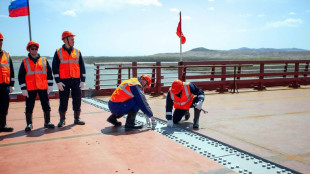
Russia, North Korea connect road bridge ahead of summer opening
-
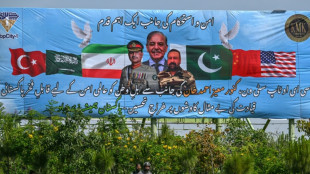
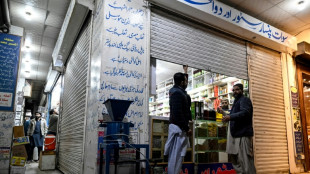 'Strangled': Pakistan faces economic imperative in Iran war peace push
-
Michael Jackson fans pack Hollywood for biopic premiere

-
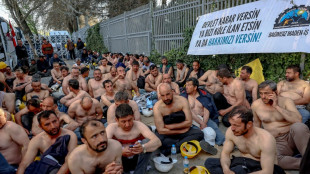 Turkey arrests 110 coal miners on hunger strike
-
Associated British Foods to spin off Primark clothes brand

-
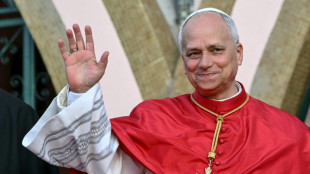 Pope visits Eq. Guinea on last stop of Africa tour
-
Hello Kitty's parent company to make own video games

-
 Di Matteo says 'vital' for faltering Chelsea to add experience
-
Ex-Spurs star Davids condemns 'lack of quality, lack of management'

-
 Turkmenistan, the gas giant increasingly dependent on China
-
Romanian AI music sensation Lolita sparks racism debate

-
 Timberwolves battle back to stun Nuggets in NBA playoffs
-
Eta appointment 'no surprise' for Union Berlin's ascendant women

-
 Democrats eye Virginia gains in war with Trump over US voting map
-
Tourists trickle back to Kashmir, one year after deadly attack
-
 Inside the world of ultra-luxury wedding cakes
-
Chinese AI circuit board maker soars on Hong Kong debut

-
 Oil prices dip, most stocks rise on lingering Iran peace hopes
-
Tim Cook's time as Apple chief marked by profit absent awe
Bolivia at breaking point
In recent months, Bolivia has lurched from crisis to crisis. Long queues at gas stations, sporadic road blockades, and clashes between rival political camps have fed fears of a broader internal conflict. A year after a failed military putsch shook La Paz, the country now faces a decisive political transition against the backdrop of a rapidly deteriorating economy. As of August 18, 2025, preliminary results point to an October 19 runoff that ends two decades of dominance by the ruling movement—an inflection point that could steer the country toward stabilization or push it closer to a dangerous spiral.
A political rupture with violent undertones
Bolivia’s governing bloc fractured into warring factions after the split between President Luis Arce and his onetime mentor, former president Evo Morales. That rift spilled into the streets this year: blockades, counter-mobilizations, and deadly confrontations were recorded in mining towns and highland corridors, with church leaders warning of a “spiral of violence.” Those tensions sit atop the still-raw memory of June 26, 2024, when armored vehicles briefly surrounded the presidential palace before the putsch collapsed and commanders were arrested.
The economic picture is grim. In January, a major rating agency cut Bolivia to CCC-, citing vanishing foreign-exchange buffers and looming external payments; by its estimate, the country faced around $110 million in Eurobond coupons this year with only about $47 million in liquid reserves at one point. Fuel imports—long subsidized—have repeatedly faltered, triggering national transport strikes, border disruptions, and days-long lines for gasoline and diesel. Inflation, once among South America’s lowest, surged to multi-decade highs through mid-2025.
A chronic dollar shortage has fractured the currency regime: while the official rate stayed near 6.96 bolivianos per dollar, a thriving parallel market developed. By late July the street rate hovered around 14 BOB per USD—stronger than its worst levels earlier in the year, but still far from the peg—underscoring lost confidence. As households and small firms struggled to access currency, some turned to crypto and informal finance as workarounds.
Gold and gas: lifelines with limits
To scrape together hard currency, authorities leaned on the country’s booming (and often opaque) gold trade, monetizing bullion to raise billions in fresh dollars—an emergency bridge, not a structural fix. Meanwhile, the gas engine that powered Bolivia for two decades has sputtered. Exports to Argentina ended in 2024 as output slumped, and in a symbolic reversal this year, Argentina began shipping Vaca Muerta gas through Bolivia toward Brazil using Bolivian pipelines—signaling how far the regional energy balance has shifted.
Why fears of wider conflict are not far-fetched
No single spark guarantees a slide into civil war, but several risk factors now overlap: factionalized parties with loyal street bases, pockets of armed actors and hardliners, a legitimacy fight around barred candidacies and court rulings, and an economy that can no longer cushion shocks with cheap fuel or a steady dollar supply. Independent monitors have recorded lethal violence tied to the intra-left feud, while civic leaders in blockaded towns report confrontations between residents, protesters, and security forces. Each new blockade erodes livelihoods, deepens scarcity, and shortens tempers—a classic recipe for escalation.
The runway to October—and what comes after
The first-round result has upended Bolivia’s political map: two opposition figures advanced and the ruling movement’s candidate finished far behind, all amid the worst macro stress in a generation. Whoever wins in October will inherit unpopular choices: rationalizing fuel subsidies, rebuilding reserves, restoring a functional FX market, and reviving the gas sector while speeding up transparent lithium and gold governance. Failure risks further shortages, more street battles over scarcity, and a dangerous normalization of political violence. Success demands a credible stabilization plan, broad buy-in from unions and regional elites, and early signals—like targeted cash transfers and a clear, time-bound subsidy path—to keep social peace while reforms bite.

Digital Ocean Twin: Protecting the Oceans

What is the outlook for France’s economy?
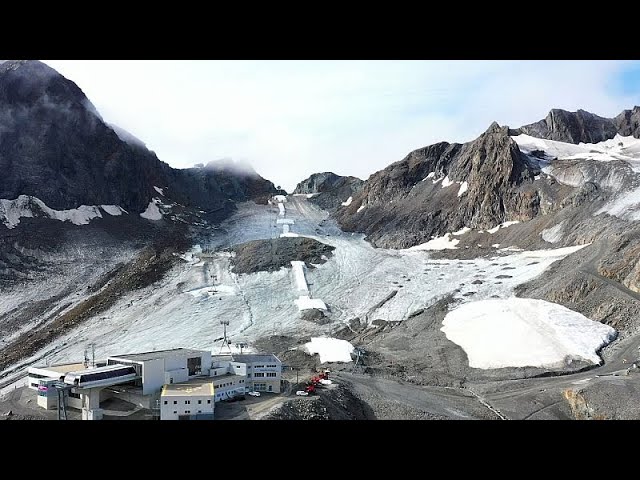
How melting Alpine glaciers affect valleys
The EU Commission and its climate targets?
Irish government to subsidise school books
European democracy is weakening, report warns
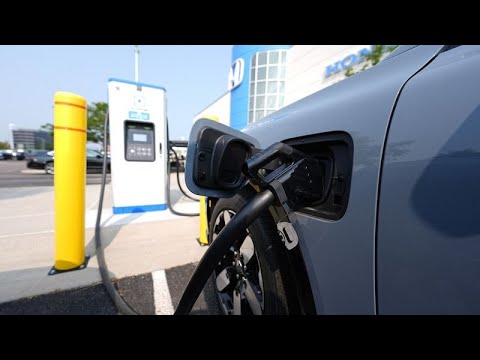
Low demand: electric vehicles clog Belgian port
EU calls for tougher measures for a ‘tobacco-free generation’
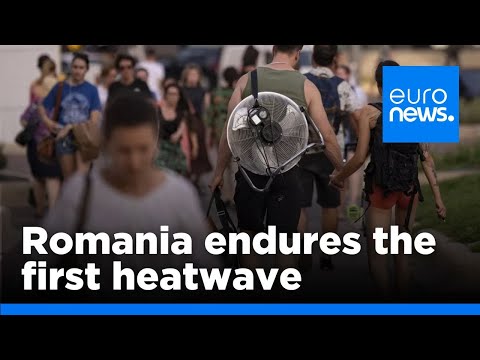
This Summer experiences Romania first heatwave
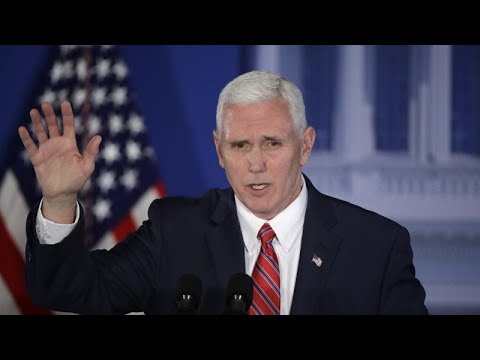
Mike Pence: U.S. will continue to support Ukraine

Activists organise "flotilla" with aid for Gaza



