-
 Teenage wonder Sooryavanshi says criticism 'affects me a bit'
-
Japan startup seeks approval of cat kidney disease treatment

-
 Technician dies installing stage for Shakira concert in Rio
-
Cut off from the West, Muscovites rediscover Russian 'roots'

-
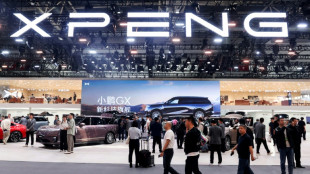 'Joint venture in reverse': foreign carmakers seek edge with China partners
-
Nations backing fossil fuel exit 'a new power': conference host Colombia

-
 Rockets thrash Lakers, Wembanyama triumphant on Spurs return
-
ECB set to hold rates steady with eye on Iran crisis
-
 Team-first Kane propelling Bayern to glory as PSG showdown looms
-
Pogacar vows to keep going until Seixas 'destroys' him

-
 From Adele to Raye, the UK school nurturing future stars
-
Final talks begin on missing piece for pandemic treaty

-
 Oil rises, stocks swing as peace talk hopes wobble
-
'Heartbroken' Xavi Simons out of World Cup and Spurs relegation fight

-
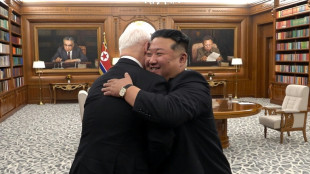 North Korea's Kim reaffirms support for Russia's 'sacred' Ukraine war
-
Spurs win in Wembanyama return to take 3-1 lead over Trail Blazers

-
 As some hijabs come off in Iran, restrictions still in place
-
Orangutan uses Indonesia canopy bridge in 'world first': NGO

-
 Dealing with the dead in the ruins of Sudan's war
-
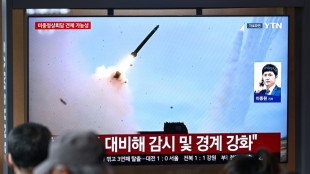
North Korea strengthens nuclear push as US flails in Middle East
-
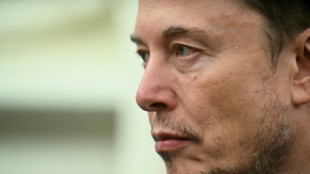 Stage set for Elon Musk's court battle with OpenAI
-
Caught between wars, US Afghan allies trapped in Qatar without safe exit

-
 British royals begin four-day US visit despite shooting
-
Fitzpatrick brothers capture PGA Tour's Zurich Classic pairs crown

-
 Spurs win in Wembanyama return to take 3-1 lead on Trail Blazers
-
Toulouse fall to first home defeat for a year

-
 Global military spending surges on insecurity: report
-
Marseille see Champions League chance slip further away

-
 Nelly Korda wins LPGA Chevron Championship
-
Syrian court begins proceedings against Assad and allies

-
 Inter's Serie A title charge hits bump in road, Milan and Juve in stalemate
-
Colombia road bombing death toll rises to 20

-
 Raptors top Cavs to pull level in NBA playoff series
-
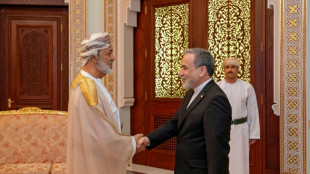
Iran minister heads to Russia as talks remain stalled
-
 Rinku stars as Kolkata edge Lucknow in Super Over
-
T'Wolves Edwards to miss several weeks - report

-
 Michael Jackson biopic debuts atop N. America box office
-
King Charles state visit to US to go on as planned after shooting

-
 Inter pegged back by Torino as Serie A title charge hits bump in road
-
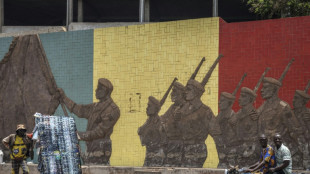
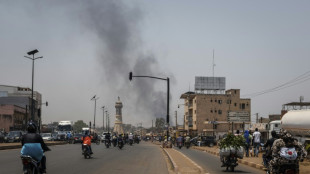
Mali junta in crisis after minister killed, key city 'captured'
-
 Dortmund down Freiburg to seal Champions League spot
-
McFarlane hails Chelsea 'character' after FA Cup semi-final win

-
 Gunman sought to kill Trump, cabinet at gala dinner
-
Arsenal punish Lyon errors in Champions League semi

-
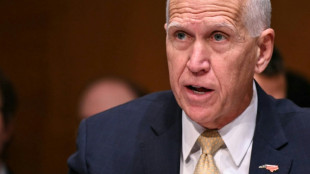 Key US senator lifts block on Fed chair nominee
-
Attacks in Mali: What we know
-
 Vollering wins women's Lige-Bastogne-Liege for 3rd time
-
Sinner motors on in Madrid as Gauff overcomes stomach bug

-
 Fernandez sends Chelsea into FA Cup final to lift gloom after Rosenior sacking
-
Colombia road bombing death toll rises to 19

China’s profitless push
Can we keep up? Chinese companies are sacrificing margins—sometimes incurring outright losses—to win global market share in strategic industries from electric vehicles and batteries to solar and consumer tech. The tactic is turbocharging exports, pressuring Western competitors and forcing policymakers in Europe and the United States to erect new defenses while they scramble to lower costs at home.
Electric vehicles: a race to the bottom on price. In late spring 2025, China’s largest carmakers unleashed another round of steep price cuts, with entry-level models reduced to mass-market price points. Regulators in Beijing have since urged manufacturers to rein in the bruising price war, citing risks to industry health and employment. Yet the incentives keep coming as dozens of brands fight for share in the world’s most competitive EV market. The financial fallout is visible: leading pure-play EV makers continue to post substantial quarterly losses, while ambitious new entrants have acknowledged that their car divisions remain in the red even as sales surge.
Green tech: overcapacity meets collapsing margins. China’s build-out in solar has morphed from a growth engine into a profitability trap. Module and polysilicon prices have fallen so far that key manufacturers forecast sizeable half-year losses, and producers are now discussing a coordinated effort to shutter older capacity. Industry reports describe spot prices for feedstocks dipping below production costs, a hallmark of cut-throat competition that spills over into export markets and undercuts rivals globally.
Trade blowback intensifies. The U.S. has moved to quadruple tariffs on Chinese-made EVs and lift duties on batteries, chips and solar cells. The European Union has imposed definitive countervailing duties on Chinese battery-electric cars and opened additional probes across green-tech supply chains. Brussels and Beijing have even explored minimum export prices to reduce undercutting—an extraordinary step that underscores how acute the pricing pressure has become.
Deflation at the factory gate. China’s factory-gate prices remain in negative territory year on year, reflecting slack domestic demand and excess capacity. That weakness transmits abroad via cheaper exports, squeezing margins for manufacturers elsewhere and complicating central banks’ inflation-fighting calculus. Beijing has rolled out an “anti-involution” campaign to curb ruinous discounting and steer investment toward “high-quality growth,” but implementation is uneven and local governments still depend on industrial output to stabilize employment.
Scale, speed—and logistics. Chinese champions are not only cutting prices; they are redesigning logistics to keep them low. One leading EV maker has built its own fleet of car carriers and is localizing production via overseas factories to sidestep tariffs and port bottlenecks. Such vertical integration magnifies the advantage from sprawling domestic supply chains in batteries, motors and power electronics.
What this means for Western competitors. The immediate effect is a margin squeeze across autos, solar and adjacent sectors. The strategic response taking shape in Europe and the U.S. is three-pronged: (1) trade defense to buy time; (2) industrial policy to catalyze domestic gigafactories and clean-tech manufacturing; and (3) consolidation to rebuild pricing power. Companies that cannot match China’s cost curve will need to differentiate—through software, design, brand and service—or partner to gain scale. Even in China, the current “profitless prosperity” looks unsustainable: consolidation is inevitable, and state guidance now favors capacity rationalization over raw volume.
The bottom line. China’s price-first strategy is remaking global competition. Whether others can keep up will hinge on how quickly they can de-risk supply chains, compress costs and innovate without hollowing out profitability. For now, the contest is being fought as much on balance sheets as it is on assembly lines.

Asylum seekers: Return centres – a Solution?

Climate change: A farm in Rotterdam

EU: Overcoming barriers to equality

Germany and its outdated pension system
How important is sustainable development?
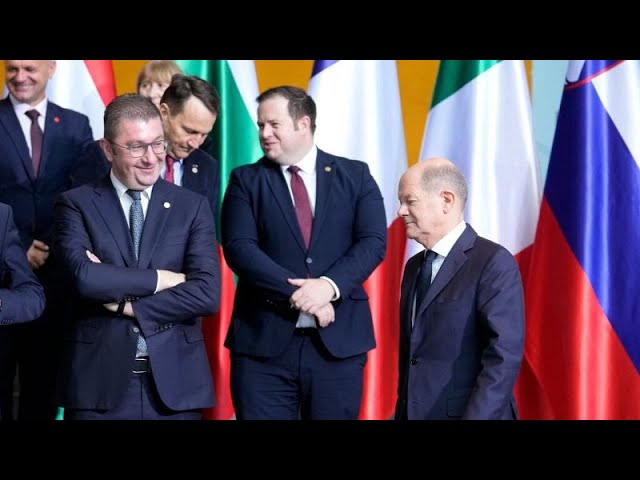
Berlin: EU-Summit of western Balkan heads of state

Putin's War Will Go Bankrupt if the Oil Prices Drop

Germany: The fight against economic migrants
Polish PM and the danger of asylum seekers

Ukraine: Recruiters searched Kyiv venues

EU: Austrian elections shake Establishment