Divisive legacy of a British army base in Kenya / Photo: © AFP

 India protest leaders to meet govt after Modi vows action

 Fear, arrests keep Cambodians quiet decade after critic's murder

 Over 80% of Mexican exports exempt from new US tariffs

 Is 'superstar' Pogacar's Tour de France domination boring?

 Iran ramps up executions under shadow of war
 Rosalia's Argentine fans up in arms over alleged World Cup snub

 Six candidates to lead UN take stage for televised debate

 King Charles opens slimmed down Commonwealth Games in Glasgow

 US unveils new tariffs on 60 partners as Trump rebuilds trade agenda

 WNBA viral star Cunningham wades into trans athletes row
 Hearn dismisses Fury talk of Joshua no-show for super fight

 'Like a war zone': France evacuates 20,000 due to wildfires
 Ships avoid Ukrainian grain ports after Russian attacks

 Oil passes $100 a barrel again: why it's more serious this time

 Who are the six candidates vying to lead the UN?

 Hamilton proud of recovery after hitting rock bottom a year ago
 Carapaz eyes polkadot mountains jersey after stage win
 Fields medal awarded to four young mathematicians
 Carapaz claims Tour de France stage as Pogacar loses key team-mate

 Alonso welcomes Aston Martin upgrade, warns against unreal expectations

 Anderson declares Man City 'kings of Manchester' after £116 mn move

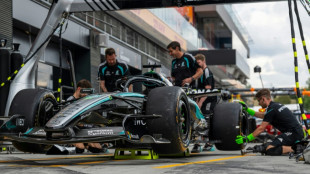 Relieved Russell says Mercedes have solved his power problems mystery

 Oil soars above $100 as Middle East fears grow

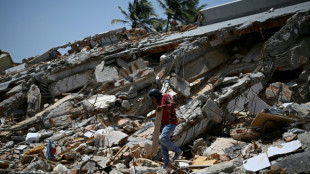 Venezuelans turn to scrap collecting in quake-hit beach 'paradise'

 Heptathlon champion Johnson-Thompson joins list of Commonwealth Games absentees
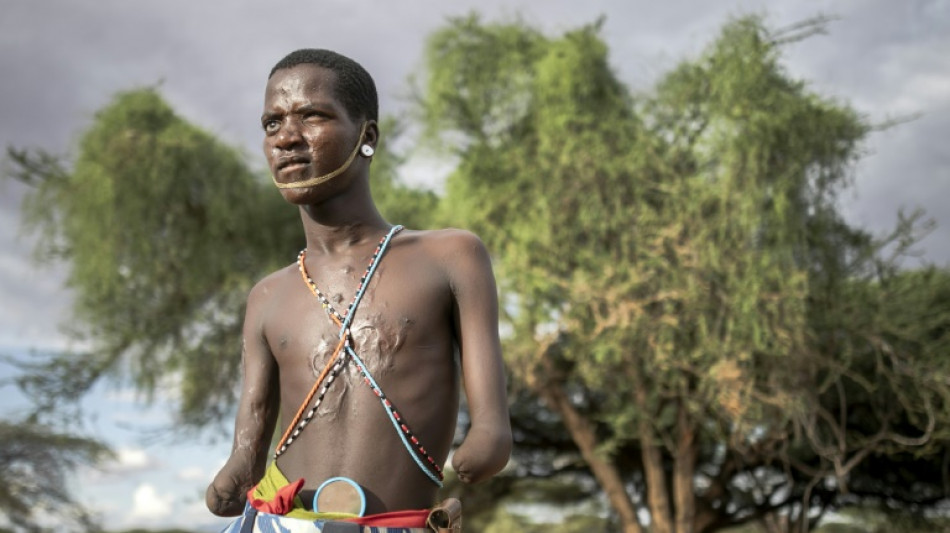
When he was barely a teenager, Kenyan goatherder Lisoka Lesasuyan lost both arms to an unexploded bomb while crossing a field used in joint military exercises with the British army.
For decades Britain has sent its forces to train in central Kenya but their presence has long attracted controversy, with soldiers accused of rape and murder, and civilians maimed by munitions.
King Charles III is steering clear of the British base at Nanyuki during a royal visit to Kenya next week that has stirred mixed emotions in the former Crown colony.
The British Army Training Unit in Kenya (BATUK), a permanent base around 200 kilometres (125 miles) north of Nairobi, is an economic lifeline for many in Nanyuki, but has proved a lightning rod for criticism.
Victims of alleged BATUK misconduct, including those afflicted by unexploded ordnance, had planned to march in the capital ahead of the king's visit, but police denied them permission to hold the rally.
- Bearing the scars -
Lesasuyan was 13 in 2015 when an unexploded bomb detonated on a field used for mortar practice by British and Kenyan soldiers at Archer's Post, a three-hour drive north of Nanyuki.
"I was grazing goats when I picked up the explosive, not knowing what it was. And I started playing with it, before it went off," he told AFP, covering his amputated limbs with a checkered blanket.
Taken to hospital by British soldiers, Lesasuyan lost both arms below the elbow, part of his right eye, and suffered burns and hearing loss in the blast.
In 2018, the British Ministry of Defence paid him 10 million shillings (roughly $100,000 at the time) but did not admit responsibility, saying an inquiry failed to determine if the ammunition was British or Kenyan.
"But this is far from enough. He will need life-long medical care, as well as prostheses," said Kelvin Kubai, a lawyer and activist who campaigned for Lesasuyan.
His case is not isolated.
In 2002, the British Ministry of Defence paid out 4.5 million pounds ($5.45 million) to 233 people claiming to have been injured by unexploded ordnance.
Nairobi and London dispute the origin of the munitions, as both nations' armies train in these locations.
- 'Only God can help us' -
In 2003, Amnesty International claimed to have documented 650 allegations of rape against British soldiers stationed in central Kenya between 1965 and 2001, and denounced what it called "decades of impunity".
More recently, the tragic case of Agnes Wanjiru has brought fresh scrutiny to the British military base.
In 2012, the lifeless body of 21-year-old Wanjiru, mother of a two-year-old daughter, was discovered in a septic tank in Nanyuki.
She was last seen alive with a British soldier.
In October 2021, British newspaper The Sunday Times reported that a soldier had confessed to his comrades to killing Wanjiru, and showed them her body.
The report alleged that the murder was taken to military superiors, but no further action followed.
"Only God can help us, because it (the investigation) has stagnated. We are not sure whether we'll ever get justice," said Wanjiru's sister Rose Wanjiku, her eyes teary as she clutched photographs of her late sibling.
"We've never heard from any government official about the case," she told AFP in Majengo, a lower-income neighbourhood in Nanyuki.
An investigation was opened in 2019 but no results have ever been made public. Kenyan police announced it would reopen the inquiry after the Sunday Times revelations.
"This case is a priority for the UK government, and we fully appreciate the seriousness and importance of justice for Agnes Wanjiru," a British government spokeswoman told AFP.
"The jurisdiction for this investigation lies with the Kenyan Police Service, and the UK government is working closely with the government of Kenya to accelerate progress," she said.
Neither the local governor, nor the Kenyan defence ministry, responded to requests for comment from AFP.
- Economic lifeblood -
But despite being convinced her sister was murdered by a BATUK member, Wanjiku does not advocate shutting down the base.
"I would not wish for the base to be closed down because we have locals who work there. It was only one person who committed the offence and not all of them," she said.
According to the British government, BATUK has injected 32 million pounds ($39 million) into the local economy since 2016.
On the road approaching the camp, businesses ply their wares for the British troops stationed in town, selling Union Jack mementos, military items, and objects imprinted with Premier League football clubs.
Robinson Mutunga, who employs 10 people in one of these stores, said that 90 percent of his income comes from British army customers.
"If they go, I have to start another life," he said.
Mary Nkirote, who runs a bar a hundred metres from the camp, went further: "The only thing important economically in Nanyuki is the British army," she said.
"When the boys come here, I can earn up to 50,000 shillings per night, but when they don't, only 20,000. Nanyuki as we knew it would not exist without them."
D.Schlegel--VB