-
 UK set for cautious budget as borrowing costs climb
-
Afghans compete for jobs, homes as millions return
-
 Anthropic's record IPO faces some big questions
-
'They don't care about us': Trump food aid cuts leave Americans struggling and angry

-
 US Fed expected to hold rates steady ahead of key midterm elections
-
Meta, Snap head to trial in another case about social media's harms

-
 Can this Latin Grammy-winner help Democrats win back Congress?
-
French Senate passes bill to make protesters pay for unrest damage

-
 Tuvalu has 'limited' power to halt its fossil fuel investments: NZ govt papers seen by AFP
-
India evacuates tens of thousands as Cyclone Arnab makes landfall
-
 Palestinian activist Khalil returns to Columbia after US detention
-
In tight Israel vote, both camps hold out cautious hope

-
 Trump drastically loosens oil and gas methane rules
-
AI chip giant SK hynix says quarterly operating profit soars 630%

-
 French Senate weighs bill to make protesters pay for unrest damage
-
Youths testify about 'despair' in unprecedented Canadian climate trial

-
 'A very sad day': Arteta despair as Arsenal stunned by Fleetwood
-
Syria, Jordan agree to mend ties after deadly strike
-
 Charles tackles thorny legacy of slavery on Caribbean trip
-
Arsenal stunned by fourth-tier Fleetwood in League Cup

-
 Former Grand Slam winner Wawrinka ends tennis career
-
Last-gasp Sabitzer strike sends Dortmund past Bremen in German Cup

-
 Brazil's Flavio Bolsonaro flees to US after election loss
-
Rights groups reject Emirati diplomat for UN top job
-
 'Faerie' nights: 'ACOTAR' fans finally get their book
-
Flavio Bolsonaro headed to US after Brazil election defeat: US media
-
 American woman convicted of getting military training from Islamic State
-
Alcaraz and Zverev win Vienna openers

-
 Israel opposition holds narrow edge over Netanyahu in first projections
-
Tech firms gain ahead of Fed decision, results from AI giants

-
 Floriani hits maiden goal as Lazio go top
-
Syria condemns deadly Jordan strikes as 'unacceptable violation'
-
 Trump set to drastically loosen oil and gas sector's methane rules
-
England's Fin Smith in race against time to face Australia

-
 Storied Paris department store seeks bankruptcy protection
-
UN nuclear watchdog chief urges Iran to grant access
-
 Xhaka, Embolo can return to Swiss squad after fake Covid docs affair
-
Boeing shares tumble after it releases cautious growth forecast
-
 Allegri suspended for two Serie A games after red card
-
Lula's re-election revives Brazil-US tensions
-
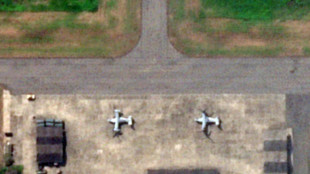 Flight data, satellite images reveal growing US role at Ecuador base
-
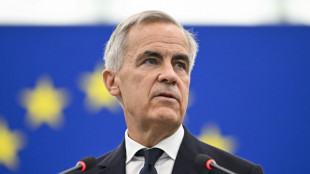
Carney moves to remake Canada alliances as US ties strained
-
 McInnes feels 'guilt' ahead of Hearts return with Rangers
-
Serbia's students demand state media chiefs resign after poll win

-
 Brazil's Lula turns 81, vows to work '24 hours a day'
-
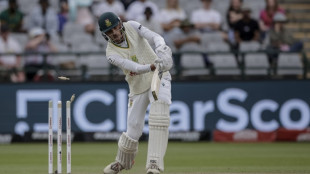
Starc takes six as Australia fight back in South Africa decider
-
 Boeing releases cautious growth plan as shares fall sharply
-
UK man offered drugged wife to strangers online for sex: court
-
 Exiled Russian dissident Navalnaya warns dictators becoming 'more cunning'
-
Africa Ebola outbreak passes 10,000 cases, mostly in DR Congo
Stakes 'never been higher' in climate fight: IPCC head
The stakes in the fight against global warming are higher than ever, the UN's climate science chief said Monday as nearly 200 nations met to finalise what is sure to be a harrowing report on climate impacts.
"The need for the Working Group 2 report has never been greater because the stakes have never been higher," Intergovernmental Panel on Climate Change (IPCC) Chair Hoesung Lee said in a live videocast.
Species extinction, ecosystem collapse, mosquito-borne disease, deadly heat, water shortages and reduced crop yields are already measurably worse due to rising temperatures.
Just in the last year, the world has seen a cascade of unprecedented floods, heatwaves and wildfires across four continents.
All these impacts will accelerate in the coming decades even if the carbon pollution driving climate change is rapidly brought to heel, the IPCC report is likely to warn.
A crucial, 40-page Summary for Policymakers -- distilling underlying chapters totalling thousands of pages, and reviewed line-by-line -- is to be made public on February 28.
"This is a real moment of reckoning," said Rachel Cleetus, climate and energy policy director at the Union of Concerned Scientists.
"This not just more scientific projections about the future," she told AFP ahead the two-week plenary. This is about extreme events and slow-onset disasters that people are experiencing right now."
The report will also underscore the urgent need for "adaptation" -- climate-speak which means preparing for devastating consequences that can no longer be avoided, according to an early draft seen by AFP in 2021.
In some cases this means that adapting to intolerably hot days, flash flooding and storm surges has become a matter of life and death.
- 'Doping the atmosphere' -
"The growth in climate impacts is far outpacing our efforts to adapt to them," said Inger Andersen, head of the UN Environment Programme, noting that climate change threatens to become a major driver of species loss.
IPCC assessments -- this will be the sixth since 1990 -- are divided into three sections, each with its own volunteer "working group" of hundreds of scientists.
In August 2021, the first instalment on physical science found that global heating is virtually certain to pass 1.5 degrees Celsius (2.7 degrees Fahrenheit), probably within a decade.
Earth's surface has warmed 1.1C since the 19th century.
"We have been doping the atmosphere with fossil fuels," World Meteorological Organization chief Petteri Taalas said Monday, comparing the result to the "enhanced performance" of Olympic athletes who used banned substances.
The 2015 Paris deal calls for capping global warming at "well below" 2C, and ideally 1.5C.
This report is sure to reinforce this more ambitious goal.
It will likewise underscore that vulnerability to extreme weather events -- even when they are made worse by global warming -- can be reduced by better planning and preparation, according to the draft seen by AFP.
This is not only true in the developing world, noted Imperial College professor Friederike Otto, pointing to massive flooding in Germany last year that killed scores and caused billions in damage.
- Tipping points -
"Even without global warming there would have been a huge rainfall event in a densely populated geography where the rivers flood very easily," said Otto, a pioneer in the science of quantifying the extent to which climate change makes extreme weather events more likely or intense.
The report will zero in on how climate change is widening already yawning gaps in inequality, both between regions and within nations.
The simple fact is that the people least responsible for climate change are the ones suffering the most from its impacts.
The report is also likely to highlight dangerous "tipping points", invisible temperature trip wires in the climate system for irreversible and potentially catastrophic change.
Some of them -- such as the melting of permafrost housing twice as much carbon as in the atmosphere -- could fuel global warming all on their own.
"There is a finite set of choices we can make that would move us productively into the future," said Clark University professor Edward Carr, a lead author of one of the report's chapters.
"Every day we wait and delay, some of those choices get harder or go away."
H.Seidel--BTB