Steven Strogatz weighs AI mathematics advances and their consequences for researchers

 UK set for cautious budget as borrowing costs climb

 Anthropic's record IPO faces some big questions

 US Fed expected to hold rates steady ahead of key midterm elections

 Can this Latin Grammy-winner help Democrats win back Congress?

 Tuvalu has 'limited' power to halt its fossil fuel investments: NZ govt papers seen by AFP
 Palestinian activist Khalil returns to Columbia after US detention

 Trump drastically loosens oil and gas methane rules

 French Senate weighs bill to make protesters pay for unrest damage
 'A very sad day': Arteta despair as Arsenal stunned by Fleetwood
 Charles tackles thorny legacy of slavery on Caribbean trip

 Former Grand Slam winner Wawrinka ends tennis career

 Brazil's Flavio Bolsonaro flees to US after election loss
 'Faerie' nights: 'ACOTAR' fans finally get their book
 American woman convicted of getting military training from Islamic State
 Israel opposition holds narrow edge over Netanyahu in first projections

 Floriani hits maiden goal as Lazio go top
 Trump set to drastically loosen oil and gas sector's methane rules

 Storied Paris department store seeks bankruptcy protection
 Xhaka, Embolo can return to Swiss squad after fake Covid docs affair

 Allegri suspended for two Serie A games after red card
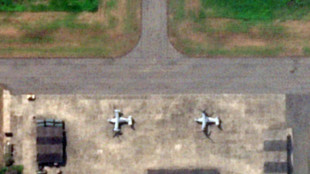 Flight data, satellite images reveal growing US role at Ecuador base
 McInnes feels 'guilt' ahead of Hearts return with Rangers

 Brazil's Lula turns 81, vows to work '24 hours a day'
 Boeing releases cautious growth plan as shares fall sharply

 Exiled Russian dissident Navalnaya warns dictators becoming 'more cunning'

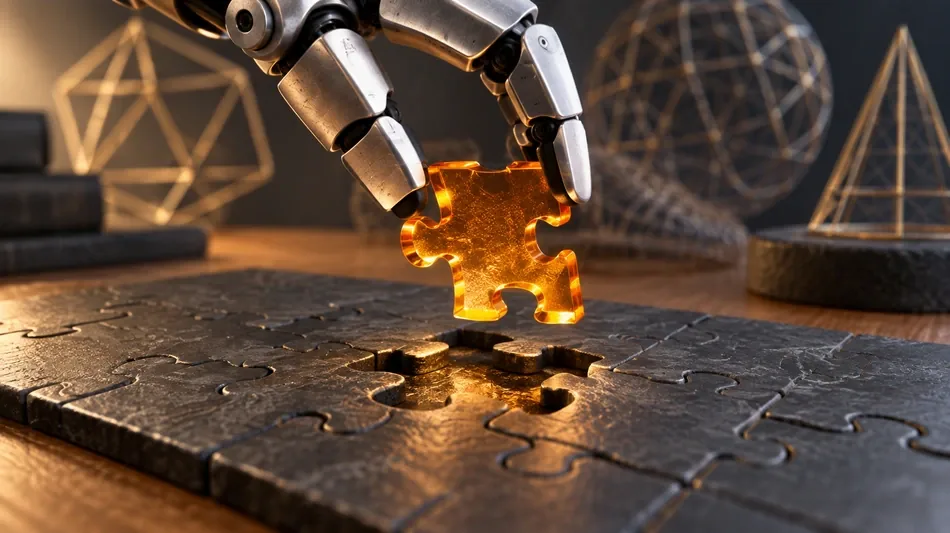
Cornell mathematician Steven Strogatz says recent AI-assisted results are accelerating mathematical research while raising unresolved questions about credit, understanding and careers. OpenAI's claimed solution to a major problem still requires independent verification.
Artificial intelligence is changing both the pace of mathematical research and the role of the people conducting it, Cornell University professor Steven Strogatz told WIRED after a series of announcements from major AI laboratories. He described excitement about the science alongside concern about the consequences for researchers who have spent decades developing their expertise.
The immediate backdrop was OpenAI's announcement on Tuesday that tens of thousands of agents had been used to solve a 90-year-old problem associated with a $1 million prize. The claimed solution to the Navier-Stokes existence and smoothness problem had not yet been independently verified.
OpenAI's work builds on a strategy developed by Spanish mathematicians Diego Córdoba and Luis Martínez-Zoroa. Its announcement also prompted a dispute involving New York University mathematician Tristan Buckmaster and Anthropic researcher Levent Alpöge.
Buckmaster alleges that OpenAI accelerated its effort after learning about his work with Alpöge and tried to influence the allocation of credit. Those are Buckmaster's claims, rather than settled findings about how the research was conducted.
Strogatz said the contest for prominent mathematical results must also be viewed in the context of competition between corporate laboratories. In his assessment, companies seeking attention ahead of large initial public offerings have a strong commercial interest in demonstrating that their systems outperform competitors.
He characterized the Navier-Stokes question as highly theoretical, with little immediate interest for engineers working in fields such as civil engineering or aerodynamics. He argued that the commercial value of demonstrating a system's capabilities could be far larger than the direct practical importance of that particular result.
The announcement was one of several recent developments. Anthropic said the previous week that Claude had proved 29,500 small theorems during the formalization of an existing proof of Fermat's Last Theorem, an undertaking human mathematicians had pursued for years. OpenAI had also announced progress on 10 other longstanding mathematical problems in August.
Strogatz and Alex Townsend have written Big Math, a book about mathematics moving beyond human understanding, scheduled for publication in November. Their own research has also been affected by the technology they examine.
Townsend recently used ChatGPT to help solve a numerical linear algebra problem that had remained open for decades. He and his coauthor said the amount of work required, measured against its likely return, would have made the project impractical without AI assistance.
During the WIRED interview, Townsend described a personal conflict between the benefits to his research and a diminished sense of being at the frontier himself. After 15 years in research mathematics, he said, reaching a productive stage of his career had coincided with the arrival of systems capable of surpassing some of his abilities.
Working with an AI agent felt different from making advances through his own mathematical skill, Townsend said. He viewed the development as a threat to his professional role even while using it to accomplish work that otherwise would have been difficult to justify.
Strogatz, 67, similarly described uncertainty rather than a simple endorsement or rejection of AI. He expects researchers seeking major breakthroughs to need AI in order to compete, and suggested that 2026 could be remembered as either an extraordinary or a damaging year for mathematics, depending on how the changes are judged.
On the question of credit and the prize, he said he would like Córdoba and Martínez-Zoroa to receive recognition and the money. He also emphasized Buckmaster and Alpöge's contributions, noting that they had posted solutions to three closely related problems a few days before OpenAI's announcement.
Those cases were somewhat easier than the central Navier-Stokes problem but were still significant, Strogatz said. He thought the pair had been progressing toward the larger result, while acknowledging that no one could know whether they would have completed it first.
He said he did not know Buckmaster personally but respected what he had seen of Buckmaster's efforts to credit others. His concern was that a researcher who had devoted a career to the subject might not receive the achievement he had been pursuing.
Strogatz identified explaining machine-generated proofs to people as one role human experts still perform especially well. Producing an answer and making its reasoning understandable are different activities. Researchers may increasingly be asked to interpret results and show why they matter.
He did not regard that role as necessarily permanent. He expects AI eventually to improve at explanation too, although human expertise currently remains valuable in making proofs intelligible.
Applied mathematics may resist automation for longer, he suggested, because its connections to the real world make problems less orderly. He extended that reasoning to fields such as economics, international relations and sociology, while presenting it as an expectation rather than an established limit on AI.
He distinguished interest in obtaining an answer from interest in the effort required to find it. Some mathematicians value sustained engagement with an open question, he said, so having that question answered quickly does not necessarily produce an uncomplicated sense of progress. For people primarily concerned with the result, the same acceleration may be welcome. Strogatz presented both responses as understandable ways of experiencing the change.
Another open question is how worthwhile problems will be chosen. Mathematics permits an unlimited number of possible inquiries, but only some interest people. Strogatz said machines had not yet demonstrated a mathematical aesthetic that clearly resonated with humans, although he saw no fundamental reason they could not learn one.
He also recognized a potential benefit: AI could allow people without a lifetime of specialist training to participate in mathematics. His own investment in learning the discipline, he said, was not sufficient reason to deny others that access.
For professional mathematicians, however, the prospect of machines consistently reaching major results first could weaken the motivation associated with discovery. Strogatz compared a possible future of human mathematics to playing tennis without competing at Wimbledon, or enjoying chess despite stronger chess engines.
Such activities can retain value and pleasure even when people are not the best performers. The separate question, he said, is whether institutions would continue funding human researchers to do work that machines could already perform.
Strogatz regarded mathematics as an early test of a broader issue: what happens when important knowledge can be produced without equivalent human understanding. His concerns about careers, funding and interpretation remain projections about that transition, while the newest claimed breakthroughs themselves still require the normal process of mathematical scrutiny.
G.Haefliger--VB