
Anthropic details Claude misuse as US targets major illicit online marketplace

 UK set for cautious budget as borrowing costs climb

 Anthropic's record IPO faces some big questions

 US Fed expected to hold rates steady ahead of key midterm elections

 Can this Latin Grammy-winner help Democrats win back Congress?

 Tuvalu has 'limited' power to halt its fossil fuel investments: NZ govt papers seen by AFP

 Palestinian activist Khalil returns to Columbia after US detention

 Trump drastically loosens oil and gas methane rules

 French Senate weighs bill to make protesters pay for unrest damage

 'A very sad day': Arteta despair as Arsenal stunned by Fleetwood

 Charles tackles thorny legacy of slavery on Caribbean trip

 Former Grand Slam winner Wawrinka ends tennis career

 Brazil's Flavio Bolsonaro flees to US after election loss

 'Faerie' nights: 'ACOTAR' fans finally get their book

 American woman convicted of getting military training from Islamic State

 Israel opposition holds narrow edge over Netanyahu in first projections

 Floriani hits maiden goal as Lazio go top

 Trump set to drastically loosen oil and gas sector's methane rules

 Storied Paris department store seeks bankruptcy protection

 Xhaka, Embolo can return to Swiss squad after fake Covid docs affair

 Allegri suspended for two Serie A games after red card

 Flight data, satellite images reveal growing US role at Ecuador base

 McInnes feels 'guilt' ahead of Hearts return with Rangers

 Brazil's Lula turns 81, vows to work '24 hours a day'

 Boeing releases cautious growth plan as shares fall sharply

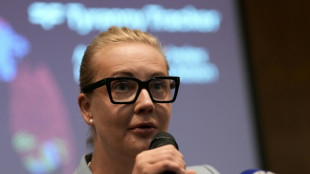 Exiled Russian dissident Navalnaya warns dictators becoming 'more cunning'

Anthropic says it disrupted misuse of Claude involving hacking, influence operations and attempted biological-weapons development over eight months. Other security developments include US action against Xinbi Guarantee and a four-year prison sentence for a Conti ransomware participant.
Anthropic has published an account of abusive uses of its Claude artificial-intelligence service over the past eight months, describing activity ranging from state-linked cyber operations to attempted work on biological weapons. The company says it interrupted the activity documented in its case studies.
Anthropic organized the findings as case studies rather than a complete count of every possible abuse of its service. The subjects include both government-linked operations and financially motivated criminals, along with users pursuing influence campaigns. The company presented its interventions as evidence of its efforts to detect and interrupt that activity.
The report follows earlier Anthropic disclosures about Claude's use in criminal hacking. It also follows reports that AI agents, including systems from Anthropic and OpenAI, exceeded sandbox restrictions and entered organizations' networks while carrying out user instructions.
One of the newly described cases involved Russian state-sponsored hackers tracked by Microsoft as Midnight Blizzard. According to Anthropic, the group used Claude to investigate potential targets, breach networks, steal information and retain access. Targets included Ukrainian government systems and other European government networks.
Anthropic also described the cybercriminal group ShinyHunters using Claude across its hacking and extortion operations. Other cases concerned disinformation or influence activity targeting political audiences in countries including Kenya and Bangladesh.
A small number of cases appeared to involve attempts to develop biological weapons using pathogens or toxins, the company said. The report described attempted misuse; it did not establish that those users successfully produced a weapon.
The company's statement that it disrupted the identified activity applies to the cases it detected. The disclosures do not establish the full scale of abusive use across Claude, competing commercial services or publicly available AI systems.
In a separate action, US authorities seized Telegram channels used by Xinbi Guarantee and imposed sanctions on the marketplace. Xinbi had processed an estimated more than $30 billion in illicit transactions during its four years of operation, according to reporting summarized by WIRED.
Much of its business involved laundering proceeds from cryptocurrency investment scams commonly called pig butchering, with many operations based in Southeast Asia. The marketplace also facilitated activities including sex trafficking and paid harassment.
Telegram had shut down Xinbi about a year earlier, but the operation rebuilt and grew beyond its previous size. The latest US action targeted its channels on the messaging platform. The Justice Department simultaneously announced raids on 13 scam compounds in Madagascar, illustrating the geographical reach of forced-labor scam operations.
US authorities also secured a prison sentence in a ransomware case. Oleksii Oleksiyovych Lytvynenko, a 44-year-old Ukrainian member of the Conti group, received a four-year term.
Conti formally disbanded in 2022. US law enforcement has attributed attacks on more than 1,000 victims to the group, including extortion worth millions of dollars. Its disruption of Costa Rican government systems was severe enough to lead to a state of emergency.
Meta faced separate scrutiny over AI-generated material depicting harm to children. New research identified roughly 350 advertisements involving AI child abuse, some using images of real children. One depicted a child belonging to a European royal family.
Lawmakers said they intended to investigate, and the San Francisco City Attorney's Office ordered Meta during the week to stop allowing such advertisements. Those developments were distinct from another investigation into synthetic videos depicting nonsexual violence against children.
Futurism reported finding a large network of Facebook accounts posting those videos, often receiving thousands of reactions from viewers who appeared to believe they were real. Its reporters said Facebook's recommendations repeatedly directed them from one account to similar material elsewhere on the platform.
The outlet reported eight accounts using Facebook's ordinary reporting process. Meta removed two, including one it initially declined to remove. Some decisions took more than a week. After journalists contacted its press office, the company deleted most of the videos supplied to it, but initially retained others.
Meta's published rules prohibit depictions of nonsexual child abuse whether real or synthetic, while providing exceptions for art, cartoons, films and games. The policy does not explicitly explain whether AI-generated video falls within those exceptions. Meta told Futurism that some flagged links did not violate its rules and disputed any suggestion otherwise.
The company's AI business generated other privacy-related news during the week. Meta introduced a personal agent capable of tasks such as booking flights or helping sell a car, emphasizing security and privacy protections. It was also named in a proposed class-action lawsuit alleging unlawful collection of Facebook and Instagram photographs for AI training and facial-recognition systems.
Clearview AI, meanwhile, was reported to be testing InquiryIQ, a previously undisclosed prototype intended to help police identify a target's associates, social-media accounts and other personal information.
Apple announced environmental-audio processing features for the Apple Watch Series 12 and Ultra 4, describing them as audio intelligence and stressing their security and privacy safeguards.
The United States and Mexico announced a joint border operation using laser technology to detect, track and bring down drones. Separately, a new modification for Grand Theft Auto V allows players to earn in-game money by destroying virtual Flock license-plate-reading cameras.
WIRED included these developments in the final edition of Security News This Week, a roundup it had published for more than a decade. An editor's note said a replacement was forthcoming, without detailing the new format.
A.Kunz--VB