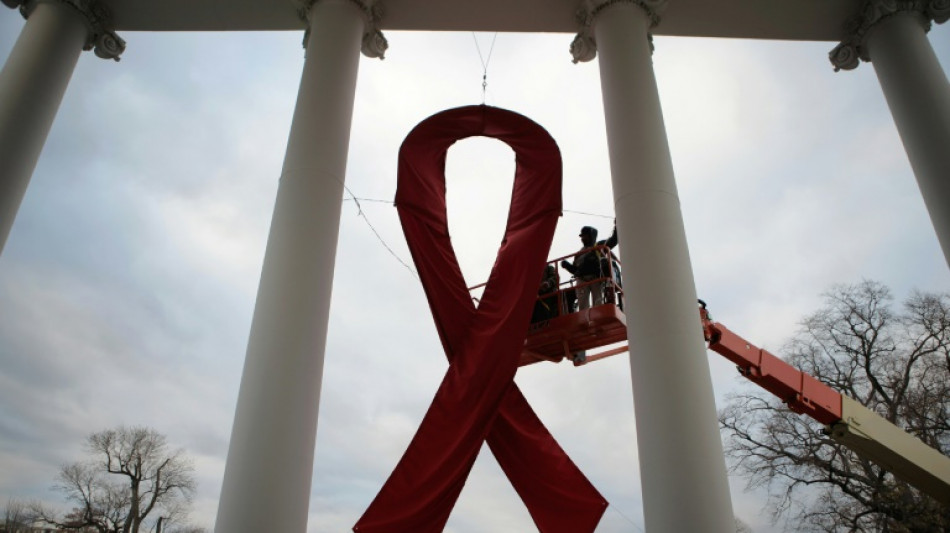
Norwegian effectively cured of HIV after transplant from brother / Photo: © GETTY IMAGES NORTH AMERICA/AFP/File

 Argentina seek glorious World Cup finale for Messi against Spain

 Tsitsipas ends title drought in Gstaad
 MyoGlow Reviews: In-Depth Look at MyoGlow’s Benefits, and Real Results

 SlimSculpt MD Reviews: In-Depth Look at Slim Sculpt MD’s Benefits, and Real Results
 Starbucks Korea staff form union after 'Tank Day' campaign fiasco

 Black Wood Tea Reviews & Complaints 2026: The Truth About the Vietnamese Brew for Men's Performance Support

 Wife says India illegally detaining hunger strike activist

 Russia pounds Kyiv with ballistic missiles in escalating air war
 Pocket-size AI: Powerful phones star at China show

 Sao Tome president faces party rival in polls

 US launches strikes to 'punish' Iran after troops killed

 World Cup moments: Viking row and minnows sparkle

 Trump to bask in World Cup final spotlight

 Italy confident they can bounce back at Nations Championship
 Burnham likely to steer steady ship on UK foreign policy

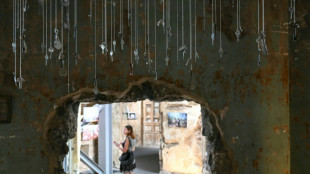 In a Lebanon museum, 'keys without homes' evoke destruction in south

 Influencer Andrew Tate and brother arrested in Miami

 FIFA toasts World Cup triumph as tournament draws to close

 All Blacks make strides under Rennie as Springboks loom

 Japan's young guns excite Jones in Nations Championship
 Cuban dissident artist Otero Alcantara lands in US exile

 Earl double guides England past Argentina after dramatic ending

 Burns rides new dad bounce to brink of British Open breakthrough

 Burns leads British Open by two as McIlroy unleashes on 'performative' DeChambeau

 Back-to-back World Cup winners: Argentina seek to join elite group

A Norwegian man has been effectively cured of HIV after receiving a stem cell transplant from his brother, doctors announced on Monday.
The patient's brother happened to carry a rare, virus-blocking genetic mutation.
The 63-year-old man, dubbed the "Oslo patient", is the latest in around 10 people worldwide who have gone into long-term remission from HIV after receiving a transplant to treat unrelated blood cancer.
The high-risk procedure normally requires a donor to have a specific mutation of their CCR5 gene, which blocks HIV from entering the body's cells.
Only around one percent of people in northern Europe have the necessary mutation.
The Oslo patient, who had been living with HIV since 2006, was diagnosed with a fatal blood cancer called myelodysplastic syndrome in 2017.
His doctors searched for a donor who would help treat both. When they couldn't find one, they chose the man's elder brother.
However, on the day of the transplant in 2020, the doctors were stunned to discover that the brother carried the CCR5 mutation.
"We had no idea... That was amazing," doctor Anders Eivind Myhre of the Oslo University Hospital told AFP.
- 'Winning the lottery twice' -
The patient said "it was like winning the lottery twice", added Myhre, who was also the lead author of a study describing the case in Nature Microbiology.
Two years after the transplant, the patient stopped taking the anti-retroviral drugs which had been reducing the level of HIV in his body.
The researchers found no trace of the virus in samples of the man's blood, gut and bone marrow.
"For all practical purposes, we are quite certain that he is cured," Myhre said.
Now the Oslo patient, whose name was not revealed, is "having a great time" and has more energy than he knows what to do with, Myhre said.
The painful and potentially dangerous transplant procedure is for people who have both HIV and deadly blood cancer so is not a feasible option for the millions of people living with the virus across the world.
However, researchers believe that studying these rare cases will reveal more about how HIV works in the hope of finding a cure for all patients.
- 'No longer a patient' -
The Oslo patient is the first person to receive a transplant from a family member.
The patient's immune system had been "completely replaced" by the donor's, sqaid study co-author Marius Troseid of the University of Oslo.
It was the first time this had been observed in a cured patient's bone marrow and gut, he told AFP.
Even before the researchers found out the brother had a CCR5 mutation, they had some hope that the Oslo patient's HIV could be cured.
That is because in 2024 it was revealed that the so-called "next Berlin patient" entered long-term remission despite receiving a transplant that did not have two copies of the mutated gene.
The original Berlin patient, Timothy Ray Brown, was the first person declared cured of HIV back in 2008. Patients in London, New York, Geneva, Duesseldorf and elsewhere followed.
Given the Oslo patient's robust health, Troseid suggested that his nickname was no longer suitable.
"The Oslo patient is perhaps no longer a patient. At least he doesn't feel like it," Troseid said.
E.Gasser--VB