Huge crowd in Buenos Aires marks 50 years since Argentina's coup / Photo: © AFP

 Brazil's Bolsonaros: between power, prison, and exile
 Israel president urges against new vote despite inconclusive result

 Eala recovers to move into Tokyo quarter-finals

 COPs 'bunch of baloney' says Panama as it vies to host nature summit
 Denmark mulls banning turbo chickens
 Nintendo producer 'all nervous' as Zelda classic remake hits shelves
 Israeli Arab parties hold key as Netanyahu falls short of majority
 UK comedian Brand tells rape trial 'consent is fundamental'
 Shadman guides Bangladesh to 213-3 in West Indies Test
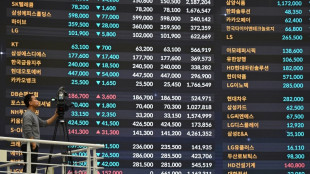 Tech optimism lifts stocks ahead of Fed update on rates

 No penalty practice for Fleetwood hero Haughey before he downs Arsenal

 Billionaire Ambani's Jio soars in market debut after India's biggest IPO

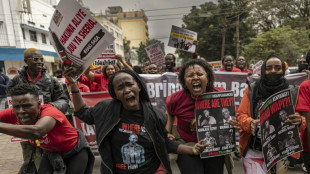 Cross-border abductions threaten Kenya's status as dissident refuge
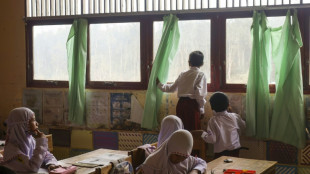 'Eat the rich': Indonesians protest against graft, wildfires
 Netanyahu bloc leads as Israeli votes counted, but no majority
 Cyclone eases after lashing India coast, no deaths reported

 AI chip giant SK hynix posts seven-fold surge in quarterly operating profit
 Two hundred 'Cruise for life' passengers stranded in Cambodia
 Pierce Brosnan and Helen Mirren on the joys of filming 'MobLand'
 S.African activists push back on data centre rush
 Judges set to rule on Australian mushroom killer's appeal

 Syria reopens Jordan border crossing after mending ties

 Cyclone Arnab lashes India coast, no deaths reported

 Trump tamed after US midterms? Europe doubts it

 Tech stocks soar as SK hynix adds to rising AI confidence

A crowd into the tens of thousands gathered in Buenos Aires on Tuesday to mark 50 years since Argentina's military ushered in years of dictatorship with a coup on March 24, 1976.
AFP journalists saw one of the biggest rallies in the capital in years converge on Plaza de Mayo, the city's traditional focal point and home to the Casa Rosada presidential complex.
Other cities also drew crowds after social and political groups called for countrywide demonstrations under the slogans "Memory, Truth and Justice" and "Never again" in memory of the victims.
Valeria Coronel, a 43-year-old teacher, was holding her eight-year-old daughter's hand as they joined the rally.
"Memory gets passed down from generation to generation so that the struggle continues," she told AFP. "That's the legacy I want to leave her."
Some people released white balloons into the sky while others bore banners with slogans including "They didn't defeat us."
Others carried photographs of relatives who never emerged from detention, with some carrying placards saying "We are still looking for you."
The Mothers and Grandmothers of Plaza de Mayo headed up the march as they continued a tradition that began during the dictatorship, when they started gathering in the square to demand information on the whereabouts of their abducted children.
The group has recovered the identities of 140 grandchildren taken from their families as infants or born in captivity. It is estimated that more than 300 remain to be found.
"What do you think -- 140 resolved cases?" said 95-year-old Estela De Carlotto, president of the association.
"Every return of a grandchild is evidence of the atrocities committed by sinister state terrorism: disappearances, murders, theft, abduction of minors and forgery of official documents," added Carlotto, whose own grandson was the 114th to be found.
The 1976 coup overthrew president Isabel Peron, who had replaced her husband Juan Peron after he died in office.
- Memory and political dispute -
Current far-right President Javier Milei's government disputes claims by rights groups that around 30,000 people died or disappeared under the dictatorship, one of Latin America's bloodiest, which ended in 1983.
The government estimates the number of disappeared at officially fewer than 9,000, maintaining that there were excesses committed on both sides in the dictatorship years, and playing down the role of military violence.
On Tuesday, the presidential office released a video denouncing a "biased and revanchist perspective" as a prism through which history of that time has been studied, claiming that the left has used it as an "instrument of manipulation."
The military regime brutally clamped down on resistance from dissidents including a left-wing guerrilla movement, students and labor activists, detaining thousands in camps such as Buenos Aires' infamous ESMA naval school.
Argentine officials last week published almost 500 pages of intelligence documents dating from 1973-1983, including the seven-year period of the military dictatorship.
The long-classified documents range from shopping lists to surveillance records of universities, unions, businesses and political organizations.
"The publication of historical archives strengthens institutional credibility, helps debunk conspiracy theories and demonstrates a commitment to the truth," according to a guide published with the documents.
K.Sutter--VB