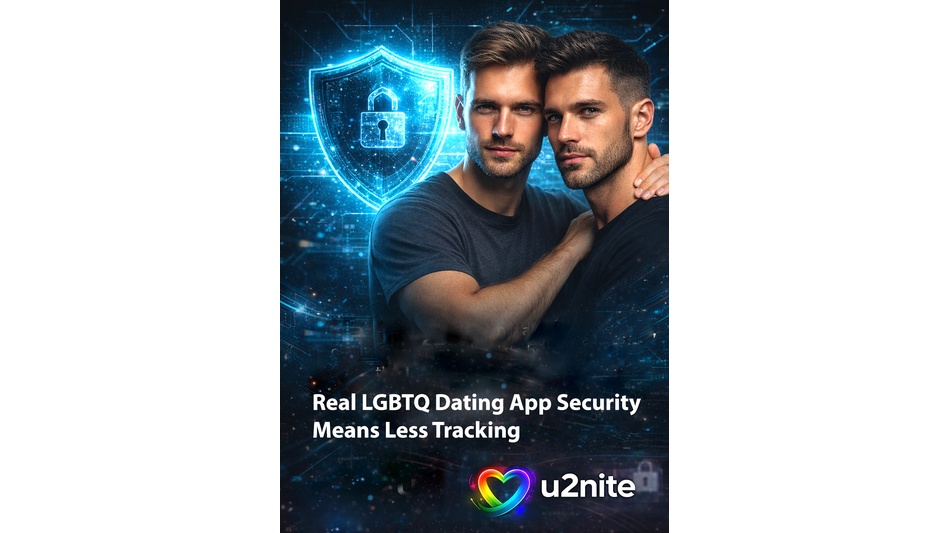
Are Major LGBTQ Dating Apps a Hidden Privacy Risk? / Photo: © Freedom to connect. Freedom from data exploitation. (The image rights are held by the author of the message.)

 Cavs agree on Mitchell deal as LeBron watches: report

 Turkish delight: Trump revels in Erdogan's lavish welcome

 Nigeria's Dangote confirms Lamu, Kenya for east Africa mega-refinery

 Study points to likely route for Hannibal's legendary Alpine crossing

 Australia's Mooney back at No 1 in batting rankings after World Cup heroics

 Traeen takes yellow, Pedersen wins Tour de France 4th stage

 UK hard-right leader Farage resigns as MP to force snap vote in finances row

 Harry Kane calls for calm after England's World Cup epic against Mexico

 Beleaguered Prince Harry loses lawsuit against UK tabloid

 Sinner eyes Djokovic showdown after moving into Wimbledon semis

 Sinner conquers heat, sets up potential Djokovic clash at Wimbledon

 'Veteran' Gauff completes Slam semi-final set with Wimbledon fightback

 UK hard-right leader resigns as MP to force snap vote in finances row

 US trade gap in May widens to biggest in over a year

 France's Le Pen cleared to run for president but with ankle tag

 This year's El Nino likely to become record-breaker: top expert

 Kenya, Tanzania shut down protest anniversaries

 Women pushed back to Afghanistan pin hopes on rare private sector jobs

 Bomb attacks wound 18 in Damascus as Macron visits

 Cuba slowly gets power back after third nationwide blackout in six months

 NATO summit showcases arms deals in push to win over Trump

 Seoul dives on tough day for Asia as Samsung fails to ease tech woes

 Democrats push key US Senate candidate to quit over sex assault claim

 As South Korean Buddhism woos Gen Z, how hip is too hip?

 'Disappointed' Pochettino says Balogun row no excuse for US World Cup exit

Real protection begins with one question: what identity data is collected, how long it is retained, and whether it needs to exist at all?
For years, the so-called free dating app economy relied on something more valuable than subscriptions: intimate behavioral data. Identity. Location. Connections. Click patterns. Online presence.
This data does not simply enhance user experience. It feeds advertising systems, tracking networks, and AI-driven profiling engines designed to extract commercial value from identity patterns.
For LGBTQ+ dating app users, the risk is not theoretical. In more than 70 countries, sexual orientation remains criminalized or socially dangerous. Even in open societies, digital traces enable harassment, blackmail, doxxing, and targeted discrimination. When identity data is widely collected and centrally stored, it represents exposure for LGBTQ+ communities worldwide. Secure LGBTQ+ dating services must be evaluated within that context.
Major dating apps highlight visible safety features: blurred photos, incognito modes, distance masking, screenshot alerts, private albums. These tools manage visibility between users. The issue is not that these platforms ignore security. It is how they define it.
Most providers of LGBTQ dating apps frame security at the interface level. Real protection begins earlier - at the architectural level. It is determined by what data is collected, whether it is centralized, how long it is retained, and who ultimately has access to it.
Feature-based security manages perception. Structural security determines exposure.
When identity-linked data - phone numbers, emails, location histories, behavioral patterns - is stored inside centralized infrastructures, it becomes part of a commercial data ecosystem. For LGBTQ+ users, that layer is not abstract. It defines the real-world risk.
2025 Made the Data Economy Visible - Why This Matters Beyond Silicon Valley
In 2025, scrutiny around digital dating data practices intensified.
Reuters reported allegations that TikTok could potentially infer Grindr usage through third-party tracking relationships involving AppsFlyer - illustrating how activity in one platform can surface across unrelated systems. Grindr also faced regulatory pressure in Europe over sensitive data-sharing practices, including a 2024 London lawsuit alleging the sharing of highly sensitive user data with advertising companies. Investigations into major dating app platforms owned by Match Group - including Tinder, Hinge, OkCupid, and Plenty of Fish - raised broader concerns about abuse handling, systemic safety gaps, and oversight across mainstream and gay dating apps.
These cases made visible a structural reality: when identity data becomes a commercial asset, incentives shape how much is collected, how long it is retained, and how widely it circulates.
This dynamic extends far beyond regulatory fines or corporate oversight.
For LGBTQ+ communities, centralized identity data intersects with law enforcement, political pressure, and social stigma. In 2025, Human Rights Watch documented digital entrapment cases in Uganda. Amnesty reported arrests targeting LGBTI individuals in Tunisia. The Guardian covered blackmail linked to queer dating platforms in Ghana. AP News reported the removal of major gay platforms from China"s App Store. Human Rights Watch detailed the consequences of Russia"s "LGBT extremism" designation.
Political climates shift. Legal protections change. Digital traces remain.
When laws change, databases do not reset. When pressure rises, stored identity data does not disappear.
Architecture determines what stays exposed.
u2nite redefines LGBTQ+ dating app security by changing the architecture - not the interface.
Wildtrolls built u2nite on a different premise: if identity data can be monetized, correlated, or weaponized, limit how much of it exists in centralized systems.
"We built u2nite against the prevailing extraction model," says Ivar M. M. Våge, CEO of Wildtrolls. "Most platforms are designed to generate value from identity data. We designed u2nite to reduce exposure at the architectural level."
This is not an interface adjustment. It is a structural shift.
What that means in practice
u2nite minimizes reliance on direct identity hooks such as phone numbers, email addresses, social logins, and comparable personal identifiers as a structural default. This limits the systemic connection between a profile and a real-world identity.
Centralized storage is restricted to what is technically necessary for functionality - not for monetization or business model purposes. Behavioral profiling is not the revenue model, and advertising trackers are not embedded.
Communication between user devices and platform services is secured through end-to-end encryption, designed to prevent interception and unauthorized access.
Rather than collecting broadly and managing risk afterward, u2nite reduces exposure at the design level.
If highly sensitive identity data is not centrally retained, it does not become a large-scale asset - or a large-scale vulnerability. That is structural security.
Privacy is no longer a niche. It is the next platform shift.
For years, digital dating optimized for engagement velocity and data extraction. The fastest-growing gay dating platforms scaled by collecting behavioral signals and converting identity into monetizable infrastructure.
But regulatory scrutiny is increasing. Political climates are shifting. Trust is becoming structural. In this environment, architecture matters more than features ever did. Platforms built on minimal-data design and limited retention are inherently more resilient. Reduced centralization lowers systemic exposure, strengthens regulatory positioning, and creates long-term differentiation in an oversaturated market.
Wildtrolls calls this approach "Premium Safety" - not as a slogan, but as an operating philosophy. For LGBTQ+ communities, privacy is not a lifestyle preference. It is a prerequisite for connection.
And in a world where identity data can become a liability, the platforms that endure will be the ones users trust by design.
About Wildtrolls & u2nite
LGBTQ Dating App Built for Privacy and Security - u2nite
Wildtrolls Ltd. & Co. KG develops u2nite, an LGBTQ+ dating platform engineered around minimal-data architecture and user-controlled visibility.
u2nite was built on a different premise: identity data should not be treated as a growth asset. Instead of maximizing collection and retention, the platform reduces centralized exposure by design and limits the structural linkage between digital profiles and real-world identities.
In regions where digital traces can carry social, political, or legal consequences, architecture determines safety. Wildtrolls positions u2nite as a structurally secure LGBTQ+ platform built for resilience, long-term trust, and responsible technology infrastructure.
Company description
Wildtrolls Ltd. & Co. KG is a technology company focused on building privacy-driven digital infrastructure. With u2nite, the company develops an LGBTQ dating platform engineered on minimal-data architecture, reducing tracking and limiting identity-linked exposure. Wildtrolls positions security as a structural design principle - supporting digital connection without treating personal identity as a commercial asset.
Contact
Wildtrolls Ltd & Co. KG
M. Moritzoy
Kolosseumstr. 1
80469 München
089210288390
http://www.wildtrolls.com
S.Leonhard--VB