-
 World Cup: Eight teams remain in the hunt for glory
-
Former Real Madrid coach Arbeloa named Fulham manager

-
 'A nice surprise': Marathon man Djokovic revels in Wimbledon epic
-
Messi inspires Argentina great escape over Egypt, Swiss advance

-
 Switzerland beat Colombia on penalties to reach World Cup quarter-finals
-
US strikes Iran after Hormuz attacks, Tehran threatens response

-
 Djokovic survives Wimbledon's longest quarter-final to book Sinner blockbuster
-
Djokovic wins five-hour epic to earn Sinner showdown at Wimbledon

-
 'Flunked': US soccer seeks answers as World Cup dream shattered
-
US strikes Iran after Hormuz tanker attacks: military

-
 Mbappe revels in captain's role for France at World Cup
-
Messi 'didn't want to go home' as Argentina comeback stuns Egypt

-
 Iyer's India 'atrocious' in record 125-run T20 defeat by England
-
Netflix strikes deals in short-form video push
-
 Rain hands West Indies series win over Sri Lanka
-
The height factor: how a small building survived Venezuela's quakes

-
 World Cup exit puts another nail in America's summer of fun
-
Egypt 'cheated' in controversial World Cup exit to Messi's Argentina, says Hassan

-
 US revokes Iran oil waiver after Hormuz tanker attacks
-
Global AI industry falls short on safety, think tank warns
-
 England quicks star as India suffer record 125-run T20 defeat
-
'History made': Egyptian pride despite World Cup heartbreak

-
 Cardinal tipped to be pope accused of molesting several women
-
How rescuers carried out 180-hour 'miracle' amid Venezuela's ruins

-
 How rescuers carried out 180-hour 'miracle' amid Venzuela's ruins
-
Victorious Belgian footballers troll Trump with YMCA dance

-
 I can still win another Grand Slam, says Osaka after Wimbledon exit
-
Scotland boss Townsend expects Russell will face Springboks
-
 France's Le Pen says still running for president
-
Messi inspires Argentina great escape over Egypt

-
 Argentina produce epic World Cup fightback to beat Egypt, reach quarters
-
Zverev, Cobolli targeting rematch at Wimbledon

-
 Canada province preparing lawsuit against OpenAI over school shooting
-
Colombia president-elect accuses outgoing leader of 'coup' plotting
-
 Lidl-Trek celebrate 'perfect' day at Tour de France
-
IOC eases restrictions on Russians before 2028 LA Games as anthem, flag ban remains

-
 Cavs agree on Mitchell deal as LeBron watches: report
-
Muchova ends Osaka run to reach Wimbledon semis

-
 Turkish delight: Trump revels in Erdogan's lavish welcome
-
Mexico probing if US violated sovereignty in 2024 drug lord capture
-
 Nigeria's Dangote confirms Lamu, Kenya for east Africa mega-refinery
-
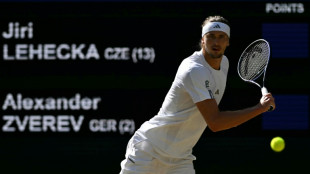
Zverev reaches first Wimbledon quarter-final
-
 Study points to likely route for Hannibal's legendary Alpine crossing
-
Nordic joy as Traeen takes yellow, Pedersen wins Tour de France 4th stage

-
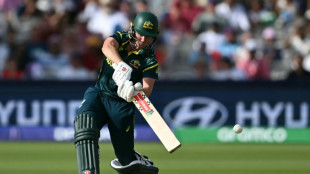 Australia's Mooney back at No 1 in batting rankings after World Cup heroics
-
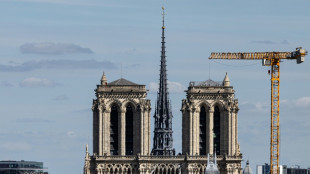
Electric Our Lady land: guitar made from burned Notre Dame wood
-
 Traeen takes yellow, Pedersen wins Tour de France 4th stage
-
Tanker attacks send oil higher, stocks hit by AI jitters

-
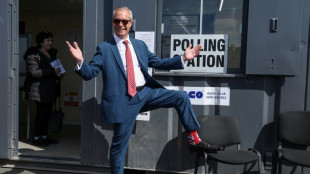 UK hard-right leader Farage resigns as MP to force snap vote in finances row
-
IOC shuffle 2030 Winter Games events and promise gender parity
India chases 'DeepSeek moment' with homegrown AI
Fledgling Indian artificial intelligence companies showcased homegrown technologies this week at a major summit in New Delhi, underpinning big dreams of becoming a global AI power.
But analysts said the country was unlikely to have a "DeepSeek moment" -- the sort of boom China had last year with a high-performance, low-cost chatbot -- any time soon.
Still, building custom AI tools could bring benefits to the world's most populous nation.
At the AI Impact Summit, Prime Minister Narendra Modi lauded new Indian AI models, along with other examples of the country's rising profile in the field.
"All the solutions that have been presented here demonstrate the power of 'Made in India' and India's innovative qualities," Modi said Thursday.
One of the startups making a buzz at the five-day summit was Sarvam AI, which this week released two large language models it says were trained from scratch in India.
Its models are optimised to work across 22 Indian languages, says the company, which received government-subsidised access to advanced computer processors.
The five-day summit, which wraps up Friday, is the fourth annual international meeting to discuss the risks and rewards of the fast-growing AI sector.
It is the largest yet and the first in a developing country, with Indian businesses striking deals with US tech giants to build large-scale data centre infrastructure to help train and run AI systems.
On Friday, Abu Dhabi-based tech group G42 said the United Arab Emirates would deploy an AI supercomputer system in India, in a project "designed to lower barriers to AI innovation".
- 'Realistic trajectory' -
So-called sovereign AI has become a priority for many countries hoping to reduce dependence on US and Chinese platforms while ensuring that systems respect local regulations, including on data privacy.
AI models that succeed in India "can be deployed all over the world", Modi said on Thursday.
But experts said the sheer computational might of the United States would be hard to match.
"Despite the headline pledges, we don't expect India to emerge as a frontier AI innovation hub in the near term," said Reema Bhattacharya, head of Asia research at risk intelligence company Verisk Maplecroft.
"Its more realistic trajectory is to become the world's largest AI adoption market, embedding AI at scale through digital public infrastructure and cost-efficient applications," she said.
Another Indian company that drew attention with product debuts this week was the Bengaluru-based Gnani.ai, which introduced its Vachana speech models at the summit.
Trained on more than a million hours of audio, Vachana models generate natural-sounding voices in Indian languages that can process customer interactions and allow people to interact with digital services out loud.
Job disruption and redundancies, including in India's huge call centre industry, have been one key focus of discussions at the Delhi summit.
- 'Biggest market' -
Prihesh Ratnayake, head of AI initiatives at think-tank Factum, told AFP that the new Indian AI models were "not really meant to be global".
"They're India-specific models, and hopefully we'll see their impact over the coming year," he said.
"Why does India need to build for the global scale? India itself is the biggest market."
And Nanubala Gnana Sai at the Cambridge AI Safety Hub said that homegrown models could bring other benefits.
Existing models, even those developed in China, "have intrinsic bias towards Western values, culture and ethos -- as a product of being trained heavily on that consensus", Sai told AFP.
India already has some major strengths, including "technology diffusion, eager talent pool and cheap labour", and dedicated efforts can help startups pivot to artificial intelligence, he said.
"The end-product may not 'rival' ChatGPT or DeepSeek on benchmarks, but will provide leverage for the Global South to have its own stand in an increasingly polarised world."
T.Egger--VB