
GA-ASI Achieves New Milestone With Semi-Autonomous CCA Flight

 Democrat accused of rape exits key US Senate race

 Japan student Ito keeps place against Ireland as Jones returns

 Belgium bid to crack Spain's ironclad defence in World Cup quarter-final

 US man sentenced after swapping 17th century manuscript

 US launches new strikes on Iran after Trump vows to hit 'hard'

 Taylor Swift fans pay $25 for garbage from outside wedding

 After quakes, Venezuelans fear losing damaged homes

 PSG's Lee set to join Athletico

 Erdogan gave pistols to NATO leaders, Starmer says

 Nocera Expands Diversified Technology Strategy With Binding Agreement to Acquire an Equity Interest in INERGX, an Integrated Energy Storage and Power Platform for AI, Defense and Mission-Critical Demand

 China sends nuclear missile message as US looks elsewhere

 Justin Bieber added to 11-minute World Cup final halftime show

 Fery targets Wimbledon final birthday present after royal seal of approval

 Egypt file complaint against referee after World Cup exit

 Women's semi-finalists in uncharted territory at Wimbledon

 US man jailed after swapping 17th century manuscript

 UN maritime head urges halt to Hormuz transit to protect seafarers

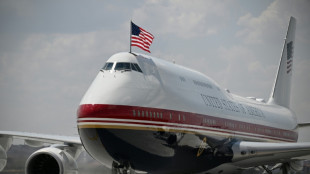 Trump skips new Air Force One on return from Turkey NATO summit

 New York building that buckled now 'stable,' says mayor

 UN says pledges for global connectivity project pass $100 bn

 McIlroy hoping for 'home' comforts at Scottish, British Opens

 Noskova aims to emulate Kvitova after reaching first Wimbledon semi

 Britain's Fery becomes first wildcard to reach Wimbledon semis in 25 years

 Korda chases third major as Kim revisits Evian-winning chip

 Kooij wins Tour de France 5th stage in chaotic sprint finish

YFQ-42A Uncrewed Fighter Jet Executes Mission Autonomy Test
SAN DIEGO, CA / ACCESS Newswire / February 12, 2026 / General Atomics Aeronautical Systems, Inc. (GA-ASI) passed a new milestone this month, successfully integrating 3rd-party mission autonomy into the YFQ-42A Collaborative Combat Aircraft to conduct its first semi-autonomous airborne mission.
For this test, GA-ASI used mission autonomy software supplied by Collins Aerospace, an RTX business, to fly the new YFQ-42A CCA, designed and developed by GA-ASI for the U.S. Air Force. The Sidekick Collaborative Mission Autonomy software was seamlessly integrated with the YFQ-42A's flight control system, utilizing the Autonomy Government Reference Architecture (A-GRA). The integration enabled robust and reliable data exchange between the autonomy software and the aircraft's mission systems, ensuring precise execution of mission autonomy commands.
During the recent testing, autonomy mode was activated via the Ground Station Console (GSC). Once enabled, a human autonomy operator on the ground transmitted various commands directly to the YFQ-42A, which executed the instructions with high accuracy for more than four hours. This test highlights the effectiveness of Sidekick's advanced mission autonomy capabilities and the flexibility of the A-GRA standard in supporting complex operational requirements.
"We are excited to collaborate with Collins to deliver enhanced autonomous mission solutions," said David R. Alexander, president of GA-ASI. "The integration of Sidekick with our YFQ-42A demonstrates our commitment to innovation and operational excellence in unmanned aircraft technology."
This achievement underscores GA-ASI's dedication to advancing autonomous systems for defense applications. The combination of Sidekick autonomy software and YFQ-42A mission systems, connected through A-GRA, sets new benchmarks for combat autonomy, mission flexibility, operator control, and system reliability.
"The autonomy capabilities showcased in this flight highlight our dedicated investment to advance collaborative mission autonomy," said Ryan Bunge, vice president and general manager for Strategic Defense Solutions, Collins Aerospace, an RTX business. "The rapid integration of Sidekick onto this General Atomics platform and its immediate ability to support a broad spectrum of combat-relevant behaviors underscores the strength and flexibility of our open systems approach."
This first mission autonomy flight continues a robust YFQ-42A development schedule for GA-ASI that began in August 2025 with initial flights of YFQ-42A Tail One. In less than six months, GA-ASI has built and flown multiple YFQ-42A aircraft, including push-button autonomous takeoffs and landings.
GA-ASI has been building and flying uncrewed jets for nearly two decades, beginning with the company-funded, weaponized MQ-20 Avenger® in 2008. Ongoing company investment in Avenger continues to yield results, as the aircraft routinely serves as a CCA surrogate for advanced autonomy development and testing in both government programs and company-funded research and development.
As a family-owned, privately held defense company for more than 30 years, GA-ASI is known as one of the original disruptors in the U.S defense industry, pioneering and inventing many of the technologies now considered ubiquitous in uncrewed aircraft operations around the world. The company re-invests more than 35 percent of annual revenue into internal research and design projects, building ahead of need and designing capabilities ahead of requirements.
In 2025, for example, an internally funded Avenger demo featured both GA-ASI's TacACE autonomy software and Shield AI's Hivemind software on the same flight, with the MQ-20 seamlessly switching between AI pilots while still airborne. Later in the year, GA-ASI teamed with Lockheed Martin and L3 Harris for another Avenger flight demo, connecting the MQ-20 with an F-22 Raptor for an advanced manned-unmanned teaming mission that allowed the human fighter pilot to command the Avenger as an autonomous CCA surrogate via tablet control from the cockpit.
In 2024, GA-ASI first flew its XQ-67A Off-Board Sensing Station (OBSS) jet, developed in collaboration with Air Force Research Laboratory (AFRL). This early CCA prototype validated the "genus/species" concept pioneered with AFRL as part of the Low-Cost Attritable Aircraft Platform Sharing (LCAAPS) program, focused on building several aircraft variants from a common core chassis.
GA-ASI's Gambit Series envisions multiple missionized variants from this common core concept, with XQ-67A already showcasing airborne sensing and YFQ-42A illustrating air-to-air combat. Using this novel manufacturing approach to drive overall customer value, GA-ASI can quickly pivot to diverse missions with less time and cost investment than building a clean-sheet aircraft.
About GA-ASI
General Atomics Aeronautical Systems, Inc., is the world's foremost builder of Unmanned Aircraft Systems (UAS). Logging more than 9 million flight hours, the Predator® line of UAS has flown for over 30 years and includes MQ-9A Reaper®, MQ-1C Gray Eagle®, MQ-20 Avenger®, and MQ-9B SkyGuardian®/SeaGuardian®. The company is dedicated to providing long-endurance, multi-mission solutions that deliver persistent situational awareness and rapid strike.
For more information, visit www.ga-asi.com.
Avenger, EagleEye, Gray Eagle, Lynx, Predator, Reaper, SeaGuardian, and SkyGuardian are trademarks of General Atomics Aeronautical Systems, Inc., registered in the United States and/or other countries.
# # #
GA-ASI Media Relations
General Atomics Aeronautical Systems, Inc.
[email protected]
(858) 524-8101
SOURCE: General Atomics Aeronautical Systems, Inc.
View the original press release on ACCESS Newswire
P.Vogel--VB