Whack-a-mole: US academic fights to purge his AI deepfakes / Photo: © AFP

 Airbus aims for record deliveries despite disappointing quarter
 Cuba wins UN vote against US embargo with weakest backing in 30 years

 Real Madrid, La Liga apology over Mbappe shows power of Chinese market

 From Gaza to Ramallah, Palestinians see little hope in Israeli vote
 US labor leader Dolores Huerta dead: family

 Investors turn cautious ahead of tech results, Fed update on rates

 'Cruise for life' strands passengers in Cambodia as operator goes bust

 Bolsonaro flees Brazil for US after election defeat

 A throne on wheels, popemobiles star in new Vatican show

 Spain high-speed train crash kills 68, injures over 100

 UK woman drugged by husband tells rape trial she woke up bound

 Clean-up starts as Serbian students movement prepares to govern

 Flavio Bolsonaro: right-wing heir falls from presidential hopeful to exile

 UK budget lifts bank tax to offset surging energy bills
 Spain high-speed train collision kills 64, injures over 100

 Brazil's Bolsonaro lands in Florida after election defeat: AFP

 Russia woos African leaders at Moscow summit
 Local ceasefire in Russia-occupied Ukrainian city holds for second day

 Odegaard urges Arsenal to move on after Fleetwood upset

 Japan, Germany leaders target closer ties on critical minerals

 Spain high-speed train collision kills 31, injures 80
 Turkey hosted Libya east-west reunification talks last week

 Spain high-speed train collision kills 30

 Plane reportedly carrying Brazil's Bolsonaro departs Ecuador

 Springboks pick six uncapped players for Nations Championship

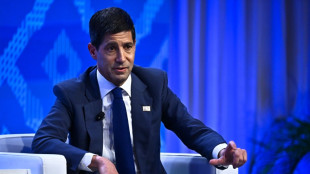
As deepfake videos of John Mearsheimer multiplied across YouTube, the American academic rushed to have them taken down, embarking on a grueling fight that laid bare the challenges of combating AI-driven impersonation.
The international relations scholar spent months pressing the Google-owned platform to remove hundreds of deepfakes, an uphill battle that stands as a cautionary tale for professionals vulnerable to disinformation and identity theft in the age of AI.
In recent months, Mearsheimer's office at the University of Chicago identified 43 YouTube channels pushing AI fabrications using his likeness, some depicted him making contentious remarks about heated geopolitical rivalries.
One fabricated clip, which also surfaced on TikTok, purported to show the academic commenting on Japan's strained relations with China after Prime Minister Sanae Takaichi expressed support for Taiwan in November.
Another lifelike AI clip, featuring a Mandarin voiceover aimed at a Chinese audience, purported to show Mearsheimer claiming that American credibility and influence were weakening in Asia as Beijing surged ahead.
"This is a terribly disturbing situation, as these videos are fake, and they are designed to give viewers the sense that they are real," Mearsheimer told AFP.
"It undermines the notion of an open and honest discourse, which we need so much and which YouTube is supposed to facilitate."
Central to the struggle was what Mearsheimer's office described as a slow, cumbersome process that prevents channels from being reported for infringement unless the targeted individual's name or image featured in its title, description, or avatar.
As a result, his office was forced to submit individual takedown requests for every deepfake video, a laborious process that required a dedicated employee.
- 'AI scales fabrication' -
Even then, the system failed to stem the spread. New AI channels continued sprouting, some slightly altering their names -- such as calling themselves "Jhon Mearsheimer" -- to evade scrutiny and removal.
"The biggest problem is that they (YouTube) are not preventing new channels dedicated to posting AI-generated videos of me from emerging," Mearsheimer said.
After months of back and forth -- and what Mearsheimer described as a "herculean" effort -- YouTube shut down 41 of the 43 identified channels.
But the takedowns came only after many deepfake clips gained significant traction, and the risk of their reappearance still lingers.
"AI scales fabrication itself. When anyone can generate a convincing image of you in seconds, the harm isn't just the image. It's the collapse of deniability. The burden of proof shifts to the victim," Vered Horesh, from the AI startup Bria, told AFP.
"Safety can't be a takedown process -- it has to be a product requirement."
In its response, a YouTube spokesperson said it was committed to building "AI technology that empowers human creativity responsibly" and that it enforced its policies "consistently" for all creators, regardless of their use of AI.
In his recent annual letter outlining YouTube's priorities for 2026, CEO Neal Mohan wrote the platform is "actively building" on its systems to reduce the spread of "AI slop" -- low-quality visual content -- while it plans to dramatically expand AI tools for its creators.
- 'Major headache' -
Mearsheimer's experience underscores a new, deception-filled internet, where rapid advancements in generative AI distort shared realities and empower anonymous scammers to target professionals with public-facing profiles.
Hoaxes produced with inexpensive AI tools can often slip past detection, deceiving unsuspecting viewers.
In recent months, doctors have been impersonated to sell bogus medical products, CEOs to peddle fraudulent financial advice, and academics to fabricate opinions for agenda-driven actors in geopolitical rivalries.
Mearsheimer said he planned to launch his own YouTube channel to help shield users from deepfakes impersonating him.
Mirroring that approach, Jeffrey Sachs, a US economist and Columbia University professor, recently announced the launch of his own channel in response to "the extraordinary proliferation of fake, AI-generated videos of me" on the platform.
"The YouTube process is difficult to navigate and generally is completely whack-a-mole," Sachs told AFP.
"There remains a proliferation of fakes, and it's not simple for my office to track them down, or even to notice them until they’ve been around for a while. This is a major, continuing headache," he added.
burs-ac/dw
F.Mueller--VB