Spain opens doors to descendants of Franco-era exiles / Photo: © FRANCE PRESSE VOIR/AFP

 Chelsea win as Bayern and Madrid draw in Women's Champions League
 Made with munitions from the Falklands War, a 'Chalice of Peace' for the pope
 Pioneering US labor leader Dolores Huerta dies at 96

 Italian PM slams 'shameful' release of alleged protest organiser

 Hollywood producer Kennedy to head LA28 Olympic ceremony plans

 Djokovic wins Basel opener to boost ATP Finals bid

 US Fed holds interest rates steady despite surging inflation

 Chiefs sign ex-Ravens kicker suspended over sex allegations

 Inglis and Carey put Australia in command of South Africa decider
 92-year-old US judge handling Maduro case dies
 Perez extends Cadillac deal to 2029

 Arab Israelis proud of high election turnout, uncertain for future

 Inglis, Carey put Australia in command of South Africa decider
 French firm Safran helps build aircraft wings of the future in UK factory

 Ceasefire in Russia-occupied Ukrainian city holds for second day

 Canada hikes rates to contain oil price surge caused by Iran war

 World Bank warns of worsening food insecurity as commodity prices soar

 Mona Lisa scrubbed from Syrian textbooks as critics slam conservative drift

 Bolsonaro flees Brazil for US after election defeat: AFP

 Brazil's Bolsonaros: between power, prison, and exile

 Israel president urges against new vote despite inconclusive result

 Eala recovers to move into Tokyo quarter-finals

 COPs 'bunch of baloney' says Panama as it vies to host nature summit
 Denmark mulls banning turbo chickens

 Nintendo producer 'all nervous' as Zelda classic remake hits shelves
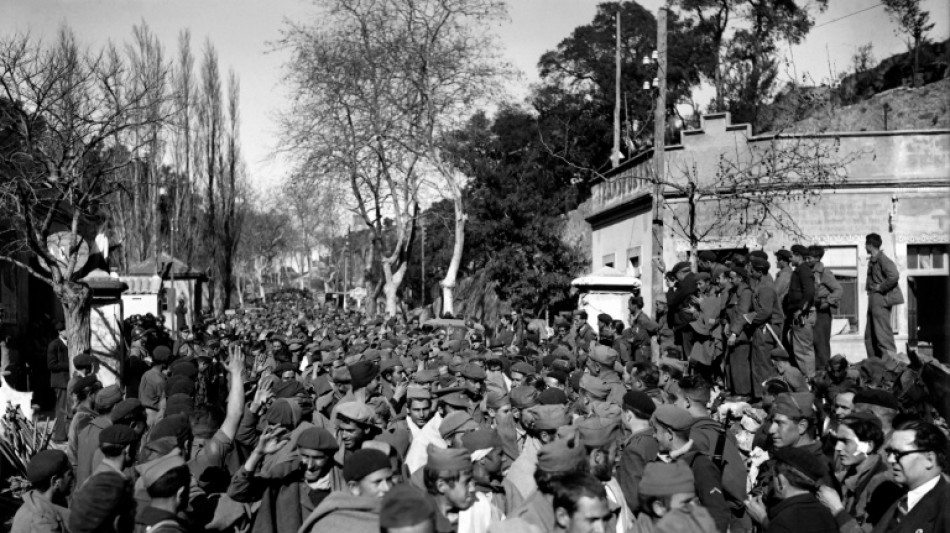
Spain has received a surge of citizenship applications from descendants of emigrants who fled the country's 1930s civil war and Francisco Franco's dictatorship under a scheme aimed at addressing historical injustices.
The so-called "grandchildren's law" allows children and grandchildren of Spaniards who lost or renounced their nationality after leaving for "political, ideological or belief-related reasons" to reclaim citizenship.
The measure also covers those who fled persecution based on sexual orientation or gender identity.
The initiative is part of a 2022 law introduced by Socialist Prime Minister Pedro Sanchez aimed at righting the wrongs of the 1936-1939 civil war and the brutal dictatorship that followed until General Franco's death in 1975.
Spain has received 2.3 million citizenship applications under the scheme, according to the General Council of Spanish Citizenship Abroad, a government advisory body. The deadline closed on October 22.
Argentina alone accounted for about one million applications, amid economic turmoil in the country.
Large numbers also came from Brazil, Cuba, Mexico, and Venezuela.
The advisory body estimates processing the applications could take up to four years and that the size of Spain's overseas population could dramatically expand.
If approval rates follow historical patterns -- with rejections typically limited to just one or two percent -- the number of Spanish citizens living abroad "could double", the head of the body, Violeta Alonso, told daily newspaper La Nueva Espana.
The surge in applications could also boost Spain's domestic population of around 49 million if many new citizens choose to move to the country.
- 'For my daughters' -
Historians estimate that half a million people fled Spain during the civil war, which began with a military rebellion led by Franco against the Second Republic's elected leftist Popular Front government.
Most went to France, Mexico and other Latin American countries to avoid repression.
But a notable number went to the Soviet Union, which had been one of the main supporters of the Republican side during the conflict.
After the war, Franco's government persecuted opponents and their families, relying on executions and repression to maintain control, prompting further emigration.
While the law aims to "settle a debt" with Spain's Francoist past, it also applies in some cases to descendants of people who left the country for political reasons in the turbulent period before the civil war.
Juan Pablo Ferreira, a 66-year-old anthropologist in northern Argentina's Jujuy province, is one.
His grandfather left Galicia in northwestern Spain to avoid being drafted into the country's colonial wars in Morocco in the early 20th century.
"I consider myself a Galician from the diaspora," he told AFP.
"I want to stay connected to it, especially with Galicia, but I'm also doing it for my daughters, so they have one more tool to get by in life."
Beyond emotional ties, a Spanish passport offers tangible benefits: the right to live and work in Spain and elsewhere in the European Union, and easier travel.
According to the Henley Passport Index, Spain's passport allows visa-free access to 187 countries.
Long lines were reported at Spanish consulates across Latin America in the final months before the application window closed.
Now Spain faces the challenge of processing more than two million citizenship files.
During a meeting this month, Alonso and Foreign Minister Jose Manuel Albares discussed the possibility of opening new consulates and boosting staffing levels to process the requests.
T.Suter--VB