'Food for the soul': Germany's Yiddish revival / Photo: © AFP

 Trump family project in Albania has already caused 'irreparable' damage: NGOs

 Bollywood blast master keeps it real with fire and fury
 Tearful fights, edible offerings: A glimpse into the Maradona trial
 What's the deal with peptides? The hyped market under US review
 Tesla shares fall as Musk touts ambitious -- and costly -- plans
 Houthis claim Red Sea tanker strikes as US hits Iran again

 Wildfires ravage parts of southern France, Italy and Spain
 Alphabet beats expectations in second quarter, cloud revenue nearly doubles
 Trump threatens Iran infrastructure, Tehran vows 'eye for eye'

 US teen withdraws lawsuit against Meta over social media addiction
 Lebanon PM says Beirut working for 'complete Israeli withdrawal'
 EU conditionally clears Paramount bid for Warner Bros.

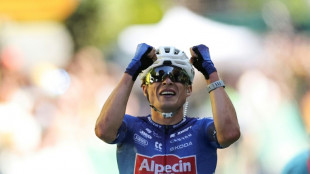 Philipsen snaps 'horrible' drought with Tour de France stage 17 victory

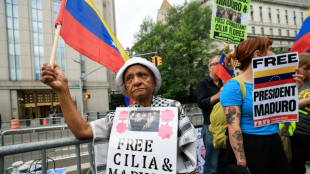 US trial of Venezuela's Maduro set for June 2027
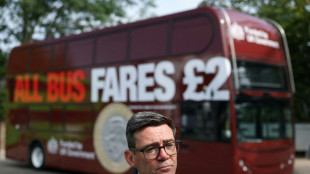 New UK PM Burnham gets early boost as inflation dips
 Samsung launches new, more expensive foldable smartphones
 Philipsen ends 'horrible' drought with Tour de France 17th stage victory
 Hungary's Orban says graft case is 'pretext' to target his party
 South African tycoon Motsepe rules out presidential bid
 Trump threatens Iran bridges, power as payback for Hormuz attacks
 Germany's Merz replaces leader ousted over surrogacy row
 CAF chief Motsepe backs Infantino despite criticism

 Evacuees from Spain's wildfire struggle with scale of devastation

 Ancient Lebanese city of Tyre added to heritage danger list
 Extreme heatwave grips Tunisia as wide power cuts fuel frustration
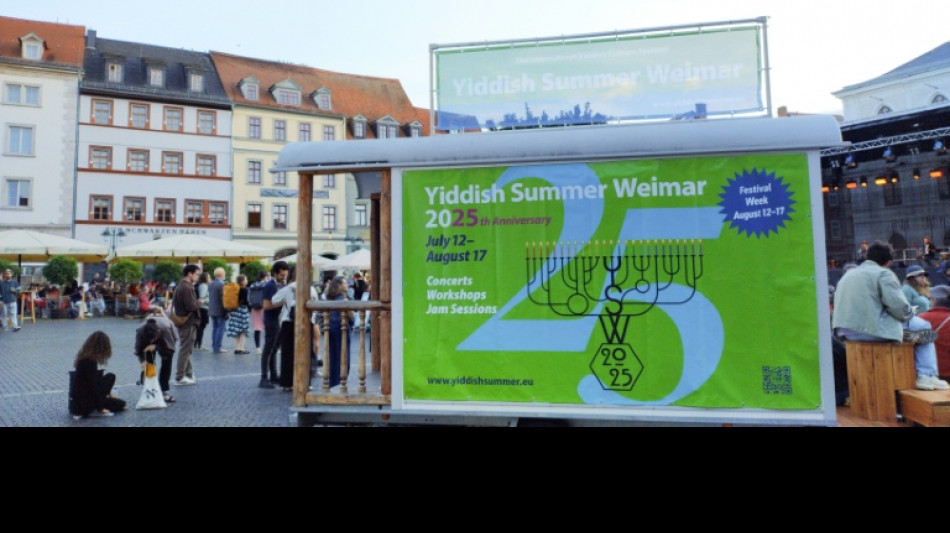
A push to revitalise Yiddish and its cultural traditions has gained momentum in Germany, the very place where the Nazi regime's Holocaust sought to eradicate the Jewish communities who spoke it.
Thousands flocked to the city of Weimar for a recent festival that celebrated the linguistic tradition with workshops, cabaret performances and even heart-stopping circus acrobatics.
Musical offerings ranged from traditional klezmer performances on violin and accordion evoking the Central Europe of old to more modern shows, including psychedelic Yiddish rock.
Yiddish, the language spoken by Ashkenazi Jews across Europe before the Holocaust, is now perhaps best known to many English speakers through words such as "schlep", "klutz" and "chutzpah".
Over the past decade Weimar has become the heartland of the far-right and anti-immigration Alternative for Germany (AfD) party.
But the festivities, which drew visitors and artists from as far as the United States, Ukraine and Australia, ended with a call from the event's artistic director Alan Bern to protect a "diverse society" spanning many parts of the world.
At a concert performance in Weimar's Marktplatz square, Bern reminded the audience that "we are standing on a square where fascism was once celebrated".
"Here we are -- and, until now, they're not here!" Bern said to enthusiastic applause from the crowd.
After an open-air Yiddish singalong Jana Wagner, a 55-year-old teacher, said the community get-together was "food for the soul".
Other festival-goers joined hands in a circle for a folk dance.
- Loss and assimilation -
Before World War II there were estimated to be more than 10 million speakers of Yiddish globally.
Huge numbers perished in the Holocaust, yet even immediately after the war Yiddish was the pre-eminent language among the world's Jews.
Over the second half of the 20th century the number of speakers dwindled further.
That was due in part to assimilation of the Ashkenazi population -- forced and otherwise -- in the Soviet Union, the United States and Israel, where Hebrew is the official language.
Today between 500,000 and a million people are estimated to speak Yiddish in their daily lives, overwhelmingly in ultra-Orthodox Jewish communities.
UNESCO classifies it as an endangered language in Germany and throughout its former sphere of influence in Europe -- from the United Kingdom to Russia and from Scandinavia to Italy -- as well as in Israel.
Many of those drawn to learning the language have Yiddish-related family heritage -- but by no means all.
Some expressive Yiddish words are widely used in English, often in a humorous way -- from "klutz" (a clumsy person) to "schlep" (to carry something burdensome) and "chutzpah" (a term for audacity, or sheer gall).
Yiddish emerged around 1,000 years ago from the German spoken in that period, and the two languages still share many words in common.
Even today, "for people who have German as a first language, it's fairly easy to understand," said 66-year-old retiree and festival attendee Sabine Lioy.
- 'Danger of nostalgia' -
Berlin, for a time in the early 20th century, was a honeypot for Yiddish writers and artists, said poet and activist Jake Schneider.
"It was absolutely essential to go to Berlin if you wanted to see and be seen," said Schneider, part of Berlin's contemporary Yiddish cultural scene.
Today, the city has once again become one of the most important centres of secular Yiddish life.
Its longstanding arts scene and anarchic energy feed into avant-garde pop-up art exhibitions, Yiddish open mic nights and dance parties.
Schneider said he and many of those active in the Yiddish scene are alive to the "danger of becoming really wrapped in a ball of nostalgia and wistfulness".
Instead, the language has become a way for them to discuss Jewish identity and politics today.
In Weimar, one of the best-known musicians working in Yiddish, Daniel Kahn, addressed the painful topic of militant group Hamas' October 7 attacks on Israel, and the devastating military response in the Palestinian territory of Gaza.
"Their deaths will not revive the dead," he sang, performing a work by Yiddish poet Zackary Sholem Berger written about the Gaza war.
"Their hunger is not our bread."
As Kahn told the audience, Yiddish language and culture, with their centuries-old tradition, are also a way of "confronting the present and even the future".
J.Marty--VB