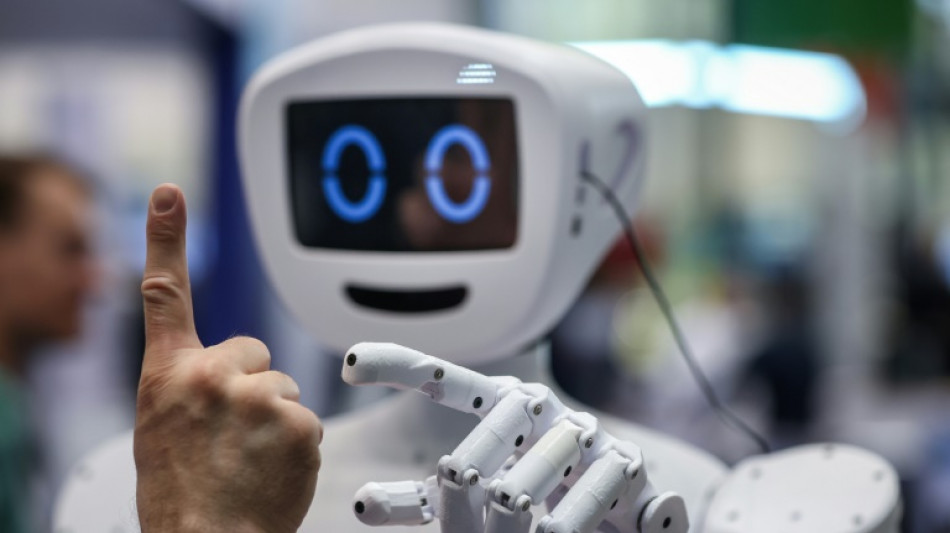
German industry grapples with AI at trade fair / Photo: © AFP/File

 ECB opens door to September rate-hike as Iran war flares up
 World Bank estimates Venezuela quakes caused $19.6 bn in damage
 Italy's far-right line up to defend jeweller who killed robbers

 AI-led boom in IPOs raises concerns about a bust

 Klopp expected to be named new Germany coach on Friday
 ECB holds rates as Iran war flare-up threatens to drive prices higher
 MEXC's "Kickoff Fest" Trading Event Concludes with Top Individual Reward of 27,352 USDT
 Oil soars close to $100 on fresh Mideast attacks
 India's angry Gen Z protesters say Modi must fix accountability
 Barca sign Adeyemi from Borussia Dortmund

 EasyJet profits nosedive on Mideast war

 EU fines Google 890 mn euros, risking US fury

 France evacuates thousands of tourists as fire rages in pine forest

 French Jewish DJ sues after activists disrupt stage show: lawyer

 Nokia says AI, cloud boosted sales in second quarter

 Repsol says profit more than triples on higher oil prices
 TotalEnergies says profit doubled on Mideast war
 Giant swing on Swiss peak aims to boost summer tourism as Alps warm

 ASEAN to call for open straits as US-Iran war casts shadow

 AI catches up with humans to score 100% at top maths contest

 South Korea election office raided in fake turnout figures probe: investigators

 Killer whales: orcas blow fish to bits 'for fun', study finds
 Deadly wildfires force thousands from homes in parts of Europe

 Tech bounce lifts Asia stocks, oil extends gains on US-Iran fears

 Surrounded by militias, Sudanese fear endless cycle of war

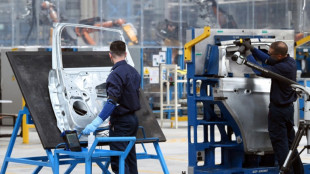
Artificial intelligence is set to bring sweeping change to modern life, but at an industrial fair in Germany many companies wonder how they fit into the tech revolution.
"We use ChatGPT a bit," shrugged one business representative, from a metals processor based in southern Germany, at this week's Hannover Messe.
The expo grouping 4,000 firms promised visitors ways to "experience the future" and explore AI's "practical applications in areas such as production, robotics and energy, all at their own pace".
One eye-catching display -- a gigantic Rolls-Royce aircraft engine whose production was optimised by AI from Microsoft and German company Siemens -- drew many curious onlookers.
But on the sidelines, the small and medium enterprises (SMEs) that are the backbone of Germany's economy -- the so-called Mittelstand -- often had less to say on the subject.
Andrea Raaf of Herz Aetztechnik, which uses lasers to make vehicle and electronics parts, said AI was not up to the job.
"The parts we manufacture are very individual, so we can't really see the point of AI," she told AFP.
Others have been more engaged, including family-owned Koerner Electric, which said it has been using AI for the past three years.
Standing in front of custom-built circuit boards, its technical director Dennis Koerner said AI had helped with the manufacturing process and to analyse optical and electrical measurements.
"We have written a small AI with which we can generate programming much faster," said Koerner.
"It was necessary to get faster and more stable results without needing several employees for the job."
- Lagging behind -
Once a byword for high technology, German industry knows that it is lagging behind US and Chinese competition when it comes to the digital technologies that will dominate the next century.
Many German firms remain unsure how to use the rapidly evolving technology in the kind of high-end engineering they specialise in.
"It's important not to shy away from introducing AI," said Agnes Heftberger, managing director of Microsoft Germany. "Otherwise Germany will find itself lagging behind in the face of international competition."
Also featured at the fair were so-called "AI agents", systems which autonomously perform tasks from writing code to assisting with conversations.
Microsoft offers systems to put machine data into simple language and identify maintenance needs in advance.
But Loke Olsen, an automation engineer at Confirm A/S, a Danish subcontractor to the pharmaceutical industry, was somewhat sceptical about AI's potential errors and ability to correct itself.
"We have to be sure that AI works 100 percent because we have to comply with very strict health regulations," he told AFP.
For some, cost is an issue. Koerner said that it seems like "we can hardly afford" some of the AI products being showcased at the fair.
- 'Game changer' -
Almost half of German industrial firms use AI for some business functions, a Microsoft survey found, but most are far more reluctant to use it to develop their products.
Only seven percent of machine builders plan to adopt generative AI to help with product design, said a study by the machinists' association VDMA.
"There are some initial attempts, but investment is still too low," said Guido Reimann, VDMA's deputy managing director of software and digitalisation.
The study found that GenAI, by optimising efficiency and boosting sales, could raise the sector's annual profits by many billions of euros.
But although 52 percent of managers saw AI as a potential "game changer", it said, "its use has so far often been limited to experimental or proof-of-concept projects".
The top concerns listed were a lack of data quality, shortages of AI specialists and technical challenges.
Germany's Fraunhofer research institute has been touring Germany since 2023, showing manufacturers concrete AI applications from carpentry to healthcare.
"It often helps to network smaller companies with each other because AI always works with data," said institute spokeswoman Juliane Segedi.
"The more data you have, the better an AI can become. And if you have a similar problem that needs to be solved, you can pool the data to come up with a solution that is good for everyone."
Other challenges remain. Many people fear AI will one day steal their job.
An important step, Segedi said, will be convincing labour unions to not "see AI as a threat but as something that can contribute to their ideas".
T.Zimmermann--VB