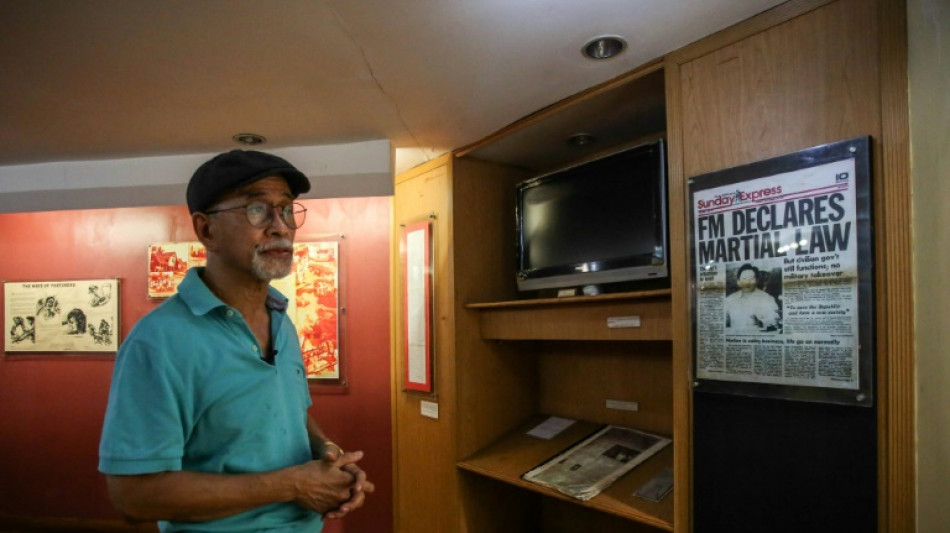
Victims voice disbelief, anger as Philippine dictator's son nears power / Photo: © AFP

 Colombian judge bans strikes on guerrillas if minors are present

 Khachanov shocks ailing Auger-Aliassime, Swiatek and Osaka advance at US Open

 Lone juror blocking verdict in US mother's child murder trial: defense
 'Kinda chic' - Williams sisters set to launch US Open doubles bid

 Volkswagen says cutting 100,000 jobs by end of decade

 Russia slaps curfew on charity director over army criticism
 Ailing Auger-Aliassime upset by Khachanov at US Open

 Richarlison omitted from Tottenham's Premier League squad

 How El Nino is choking the Panama Canal

 Hamilton drives his Ferrari dream at Monza

 Senegal has an IMF loan, now what?

 Auger-Aliassime upset by Khachanov at US Open
 Hugging Face, the French start-up that became AI's warehouse
 World Cup winner Llorente retires from Spain team at 31

 Osaka squeezes into US Open third round

 Apple faces £2 bn lawsuit in UK over app privacy feature

 Former champ Swiatek eases into US Open third round
 DR Congo latest to promise moving Israel embassy to Jerusalem

 War criminal Mladic's body returns to Serbia with military honours

 Pierre Cardin museum brings designer's futurist style to Venice

 Slovenian rookie Omrzel triumphs as Mas extends Vuelta lead
 British, French leaders talk migrants, EU relations
 Heading for Ferrari's home race, Leclerc still dreams of world title
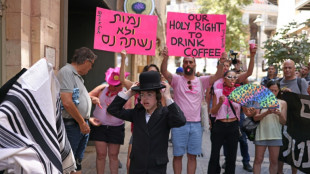 Cafe at centre of Israel culture clash agrees to shut on Sabbath

 Spacecraft bound for Mercury begins 'tricky' arrival
On the eve of elections that look set to return the son of late Philippine dictator Ferdinand Marcos to the presidential palace, the regime's victims are hurt and dismayed -- but determined to renew their struggle.
"In other countries, dictators were lined up against the wall. That never happened to them," said 70-year-old Bonifacio Ilagan.
A former political prisoner, Ilagan was captured during a raid on a dissident safehouse in 1974.
As chairman of the communist youth organisation Kabataang Makabayan, he was a significant catch.
He was held for two years in the elder Marcos's jails and tortured repeatedly to give up fellow opponents of the regime.
Ilagan remembers the long nightmare clearly.
He recalls the beatings, his screams as hot irons seared the soles of his feet, and when captors tried to force a stick into his penis to force him to talk.
Through tears, he remembers when "they inserted bullets between the fingers of both hands and squeezed my hand so tightly that I was screaming."
"I felt that my bones would crack," the playwright and filmmaker told AFP at a memorial museum in the capital Manila.
He remembers too the aching loss brought by his sister Rizalina's abduction and her presumed extrajudicial execution by Marcos's agents. Her remains have never been found.
But for a large number of Ilagan's 110 million fellow citizens, memories of Marcos's power-crazed era of brutality have faded or blurred.
Ferdinand Marcos ruled the Philippines for two decades, becoming increasingly dictatorial and kleptocratic as his rule came under threat.
Amnesty International estimates his security forces either killed, tortured, sexually abused, mutilated or arbitrarily detained about 70,000 opponents.
Marcos and his wife Imelda would eventually become international bywords for dictatorial excess.
While cracking down on dissent and dishing out contracts to cronies, they looted an estimated $10 billion from the state, created an island reserve for African wildlife and -- infamously -- amassed a collection of 3,000 shoes.
In Manila, people still recall audacious palace parties that raged into the early morning, and when Imelda decided to requisition a plane and fly guests to Hong Kong for an impromptu shopping trip.
The party finally ended in 1986 when they were ousted in a "People Power" revolution and sent into exile.
But three decades after Marcos died disgraced in Hawaii, his image and political dynasty are being resurrected.
On Monday, his only son, Ferdinand Marcos Junior, popularly known as "Bongbong", is expected to win the presidential election in a landslide.
- 'What has become of us?' -
For Ilagan, the Marcos renaissance is as painful as it is unfathomable.
"What has become of us?" he asked, his eyes looking around for answers among relics of the dictatorship in the now Covid-shuttered museum.
"Our culture, our psyche has been perverted, to the point where many of us do not see reality, even when faced with fact."
"The son of the dictator becoming president, 50 years after Marcos senior declared martial law, it is really unthinkable," he said.
"The (polling) figures say he's going to be president, but I cannot for the life of me grasp how real that could be."
But in some ways, he and other victims admit, the Marcos revival is explainable.
After the regime was ousted, trials for tax fraud and corruption dragged on for decades. No one in the family was jailed.
There were no Argentine-style junta trials for rights abuses or even a South African-style Truth and Reconciliation Commission.
Efforts to recover plundered state assets are incomplete, leaving the family a vast war chest to restore their networks of patronage.
Today, Imelda is on bail for a 2018 conviction over embezzled funds and lives freely in Manila, her husband's remains have been moved to the national heroes' cemetery, and several family members hold political office.
"They were welcomed back as if nothing has happened," said Judy Taguiwalo, another anti-Marcos activist who was twice arrested and tortured.
Taguiwalo believes impunity following the revolution and the failures of successive post-Marcos governments to improve Filipinos' lives provided fertile ground for a rewriting of history.
"There's a lot of reflection going on right now," she said. "It is not enough to change the person in the presidential palace. The important thing is to have substantive changes for the majority of the people."
The current election campaign has seen innumerable misleading Facebook posts that convinced millions -- many too young to remember the regime directly -- that the Marcoses presided over a "golden age" of peace and economic growth.
"The time when his father was president was a very successful era," first-time voter Alma Lisa Ecat, 20, told AFP.
"The Philippines was on top, not like today," she said, adding that well-documented instances of extrajudicial killings, torture and disappearances were, at minimum, exaggerated.
"I think those stories are made up by some people who don't like the Marcos family" she claimed.
- Sins of the father -
Ferdinand Marcos Jr's unwillingness to admit to his family's controversial history has left many fearing he may repeat it.
"Marcos junior has not publicly acknowledged the crimes of his father and his family's role as direct beneficiaries of such crime," said Cristina Palabay, secretary-general of the human rights group Karapatan.
His campaign spread "countless historical lies" about what happened in the Philippines between 1965 and 1986, she alleged.
For Bonifacio Ilagan, the swirl of misinformation and the Marcos resurgence mean a reluctant return to the activism that already consumed the best years of his life.
"I think there's no other path for me. I've spent the best years of my life in this movement for a meaningful transformation of our society."
"There's no way I could go back, if only for the memory of my sister, in memory of my friends who have sacrificed their lives."
K.Brown--BTB