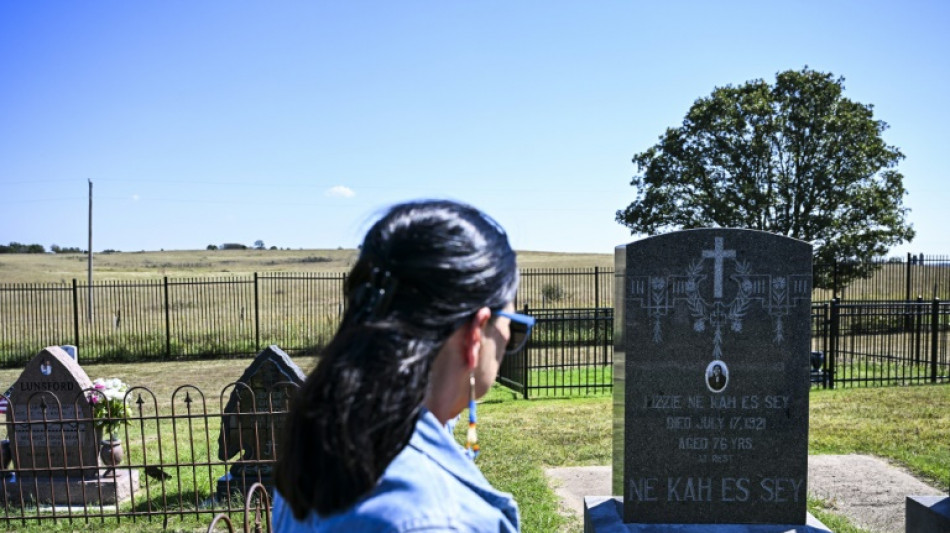
'Flower Moon' descendants feel pain of murdered Osage ancestors / Photo: © AFP

 US imposes new tariffs on 60 partners as Trump rebuilds trade agenda

 Stocks suffer fresh blow as markets hit by perfect storm

 Trump under pressure from all sides over Chinese AI surge

 ICC member states decide fate of embattled prosecutor Karim Khan
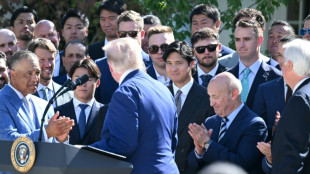 Dodgers return to Trump White House despite fan anger

 Lyles, Richardson ease into 100m semis at US athletics championships

 Salman Rushdie testifies at knife attacker's US terror trial

 World Bank confirms plan to phase out China lending by 2031

 US panel backs trendy peptides despite safety concerns

 Justice Dept withdraws NY Times subpoenas over Trump plane report

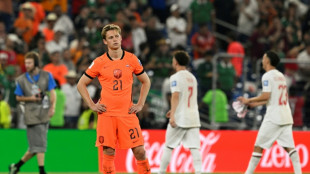 Barcelona's De Jong returns from World Cup with torn ligament
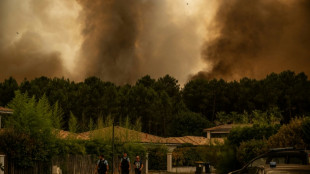
 Albania police teargas protesters against Trump-linked resort

 US panel says to loosen restrictions on popular peptide despite safety concerns

 Verstappen swerves around future questions

 EU renews online child sex abuse detection powers

 Airbus, Boeing fly in different directions at Farnborough

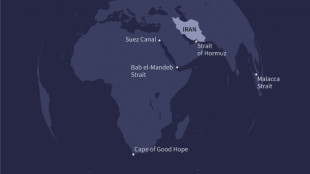 Bab al-Mandeb Strait: another key oil shipping route under threat
 Deadly wildfires in Europe force thousands to flee

 NATO to overhaul European fuel pipeline network
 US trade envoy to make tariff announcement as 10% duty soon expires

 Trump stuns Saudis by pinning nuclear deal to Israel ties

 Tough day for Ubisoft stock topped with weaker revenues

 Swelling jet fuel costs hit American Airlines outlook

 Carapaz climbs unopposed to Tour de France 18th stage win
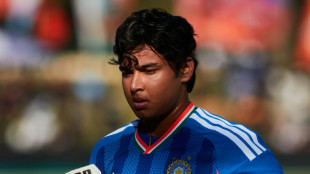 Sooryavanshi hits maiden 50 as India thump Zimbabwe in T20

As eagles swoop overhead and a cool autumnal wind blows through the cemetery in Gray Horse, on the ancient lands of the Osage people in northern Oklahoma, Margie Burkhart points to the tombs of ancestors murdered a century ago.
The tragedy that struck her family is at the heart of the new Martin Scorsese film "Killers of the Flower Moon," taken from the best-selling book of the same name.
In the 1920s, Mollie Burkhart, Margie's grandmother -- played in the film by Native American actress Lily Gladstone -- saw her mother, her sisters and her brother-in-law murdered.
The killings came one after another -- in a poisoning, in a bombing, by a bullet to the head.
"I think they systematically chose which ones to die," 61-year-old Margie Burkhart told AFP.
Intensifying the ordeal even further: The killings were orchestrated by Mollie's own husband, Ernest Burkhart, played by Leonardo DiCaprio, and his uncle William Hale (Robert De Niro) -- two white settlers intent on getting their hands on the Osage family's rights to their oil-rich property.
- 'Just for greed' -
Today, the yellowing fields around Gray Horse are dotted with the occasional oil rig -- but this is nothing compared to the huge boom at the turn of the 20th century, when the huge machinery covered the prairies for miles around.
That's when one of the most prolific oil fields in the US at the time was discovered on the Osage reservation.
The Osage people held the exclusive rights to exploiting this underground wealth -- rights that legally could only be transferred to or inherited by an Osage member's legal heir.
"The Osages were considered the wealthiest people in the world," said Kathryn Red Corn, who is Osage, speaking in a house built by her great-grandfather in Pawhuska, the seat of the Osage nation's current government.
That wealth drew the attention of some nefarious white settlers.
People came to the area and wooed and married members of the Osage nation for their money, said the 82-year-old Red Corn.
"They would have them murdered, and then they would inherit what they had," she said. The walls of her living room are decorated with Osage art and black-and-white photos of her ancestors.
In all, at least 60 members of the Osage nation -- many more by some estimates -- were believed murdered during a period that became known as the Reign of Terror.
- Suspicious poisoning -
Red Corn's grandfather, Raymond Red Corn Senior, who was also Osage, suspected his second wife, a white woman, of poisoning him.
He died suddenly in his 40s and in otherwise good health, Kathryn Red Corn said. His death, in the early 1920s, was never investigated.
For Margie Burkhart, the sense of anger and suffering around these murders are still palpable -- feelings reawakened this summer when she attended a private screening of Scorsese's film.
"They took away my (great-)aunties, and I could have had a big family," she said, almost choking on the words. "I could have had a lot of cousins, nieces, nephews -- and I grew up without them."
She added: "William Hale didn't have to do that," she said of one of the masterminds of the killings. "He was one of the richest people in Osage County."
"It was just for greed. He wanted more money."
- 'No justice' -
"Simply because they were Indian, their life had lesser value," lamented 62-year-old Jim Gray, a former principal chief of the Osage nation.
He said his great-grandfather Henry Roan was murdered in 1923, also in a plot organized by Hale, who had taken out a life insurance policy in Roan's name.
Both Ernest Burkhart and Hale were eventually convicted of murder -- despite their efforts at a cover-up -- and received life sentences.
Gray said only a small percentage of the Osage murders in this period were investigated by federal authorities.
"These stories have not been told," he said in the small town of Skiatook, north of Tulsa. "There's been no justice for those families."
Gray was deeply concerned when he heard that Hollywood had taken an interest in this painful chapter of Osage history.
"Were we just going to be second-tier characters in our own story?" he wondered.
Instead, Gray said, "Imagine our surprise when Scorsese reached out and met with us, and listened to us, and effectively rewrote big portions of the script."
Having originally focused on the federal investigation, writers reworked the script to center on the story of Mollie and Ernest Burkhart.
"You're going to watch this film and the Osage influence, you're going to be able to feel it," Gray said.
He hopes the film's October 20 US release will spark debate about "the people that were stepped on" to make the country "what it is today."
Gray added: "People may not want to talk about it. It's not in our history books."
But, he went on, "We need to know our past, especially the mistakes... so that we won't repeat them."
Margie Burkhart also hopes the film keeps memories of the Osage's searing trauma from dimming into oblivion.
"In two, three years from now, when the movie fades away, I hope people are still talking about it," she said.
J.Sauter--VB