Argentine castle evokes enigmatic visit by 'Little Prince' author / Photo: © AFP

 Trump under pressure from all sides over Chinese AI surge

 ICC member states decide fate of embattled prosecutor Karim Khan
 Dodgers return to Trump White House despite fan anger

 Lyles, Richardson ease into 100m semis at US athletics championships
 Salman Rushdie testifies at knife attacker's US terror trial

 World Bank confirms plan to phase out China lending by 2031

 US panel backs trendy peptides despite safety concerns

 Justice Dept withdraws NY Times subpoenas over Trump plane report

 Barcelona's De Jong returns from World Cup with torn ligament
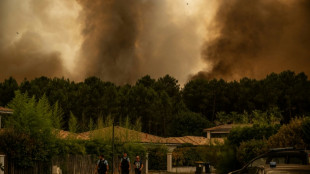
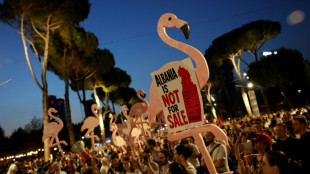 Albania police teargas protesters against Trump-linked resort

 US panel says to loosen restrictions on popular peptide despite safety concerns

 Verstappen swerves around future questions

 EU renews online child sex abuse detection powers

 Airbus, Boeing fly in different directions at Farnborough

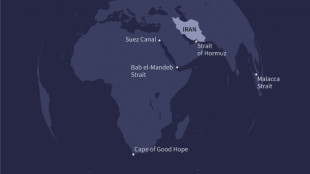 Bab al-Mandeb Strait: another key oil shipping route under threat
 Deadly wildfires in Europe force thousands to flee

 NATO to overhaul European fuel pipeline network

 US trade envoy to make tariff announcement as 10% duty soon expires

 Trump stuns Saudis by pinning nuclear deal to Israel ties

 Tough day for Ubisoft stock topped with weaker revenues
 Swelling jet fuel costs hit American Airlines outlook
 Carapaz climbs unopposed to Tour de France 18th stage win

 Sooryavanshi hits maiden 50 as India thump Zimbabwe in T20

 ECB opens door to September rate-hike as Iran war flares up
 World Bank estimates Venezuela quakes caused $19.6 bn in damage

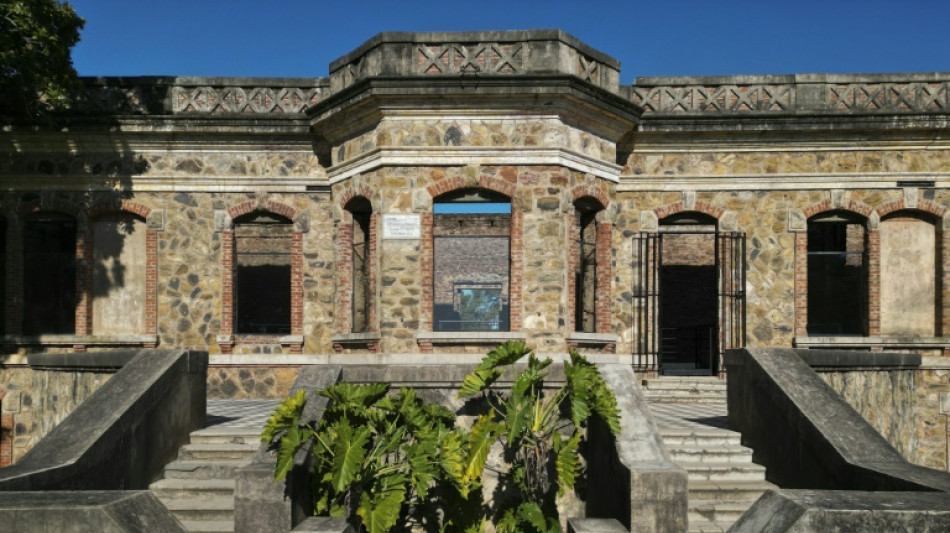
Deep in northern Argentina, a crumbling castle holds memories of a visit almost a century ago by "Little Prince" author Antoine de Saint-Exupery, who was captivated by the "strange" building and its quirky inhabitants.
A statue of the "Little Prince" -- the main character of the whimsical tale -- stands in the vast park outside the castle, where many Argentines believe Saint-Exupery drew inspiration for his classic novella which has been translated into more than 300 languages.
The French pilot and writer described in his memoir how he made an emergency landing on the banks of the Uruguay River, 400 kilometers (250 miles) from Argentina's capital.
"I landed in a field and I didn't know the extent to which I was about to live a fairytale," he wrote in "Wind, Sand and Stars," published in 1939.
Saint-Exupery recounts coming across the "strange" San Carlos castle, built in 1888 by a wealthy Frenchman, and which he described as "adorably" dilapidated but immaculate.
He waxes lyrical about the French family living there, whose two "wild" blonde daughters had a menagerie that included dogs and birds, a pet iguana, a mongoose, a fox, a monkey and bees.
One night at dinner, upon hearing a rustling and a hissing, one of the girls remarked nonchalantly that the sound was just "the snakes" that had a nest in a hole under the table.
It was in 1929 that Saint-Exupery -- an airmail pilot who spent a little over a year in Argentina -- happened upon the San Carlos castle, six years before he crash landed and became stranded in the Sahara desert.
It is this later experience that became the main inspiration for "The Little Prince," about an aviator who crashes in the desert where he meets an alien prince who recounts his unusual encounters on different planets.
Among the characters the prince meets are a snake and a fox. While there is no evidence of it, many in Argentina -- such as Paulo Tisocco, the director of the San Carlos park -- are convinced his stay there inspired elements of the 1943 book.
"This is a magical place," Tisocco told AFP of the 70-hectare site, where a corner of the castle ruins serves as a basic museum evoking Saint-Exupery's visit, with photos of him and the Fuchs Valon family.
- Mystery and legend -
Argentine author Nicolas Herzog and Colombian Lina Vargas in 2019 wrote a book called "The Little Princesses," recounting the "legend" of how Saint-Exupery was inspired by the Fuchs Valon family and their daughters Edda and Susana.
Herzog also produced a film -- part documentary, part fiction -- called "Night Flight," about the events.
The statue of the "Little Prince," standing upon his asteroid, was erected in the park in 1997.
As for the San Carlos castle, it was abandoned after a fire in 1938, and in 2014 was taken under the control of the Concordia municipality.
Saint-Exupery disappeared over the Mediterranean on July 31, 1944 shortly after taking off on a wartime mission.
O.Schlaepfer--VB