Study quantifies link between greenhouse gases, polar bear survival / Photo: © AFP/File

 Trump under pressure from all sides over Chinese AI surge

 ICC member states decide fate of embattled prosecutor Karim Khan

 Dodgers return to Trump White House despite fan anger

 Lyles, Richardson ease into 100m semis at US athletics championships
 Salman Rushdie testifies at knife attacker's US terror trial

 World Bank confirms plan to phase out China lending by 2031

 US panel backs trendy peptides despite safety concerns

 Justice Dept withdraws NY Times subpoenas over Trump plane report

 Barcelona's De Jong returns from World Cup with torn ligament
 Albania police teargas protesters against Trump-linked resort
 US panel says to loosen restrictions on popular peptide despite safety concerns

 Verstappen swerves around future questions
 EU renews online child sex abuse detection powers

 Airbus, Boeing fly in different directions at Farnborough

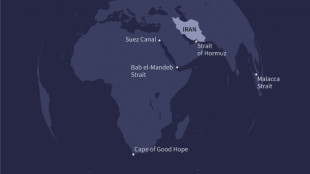 Bab al-Mandeb Strait: another key oil shipping route under threat

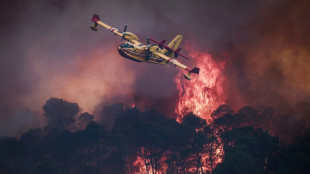 Deadly wildfires in Europe force thousands to flee

 NATO to overhaul European fuel pipeline network

 US trade envoy to make tariff announcement as 10% duty soon expires

 Trump stuns Saudis by pinning nuclear deal to Israel ties

 Tough day for Ubisoft stock topped with weaker revenues
 Swelling jet fuel costs hit American Airlines outlook
 Carapaz climbs unopposed to Tour de France 18th stage win

 Sooryavanshi hits maiden 50 as India thump Zimbabwe in T20
 ECB opens door to September rate-hike as Iran war flares up
 World Bank estimates Venezuela quakes caused $19.6 bn in damage
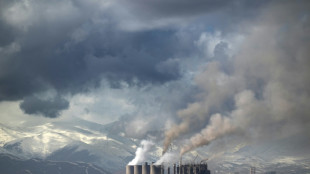
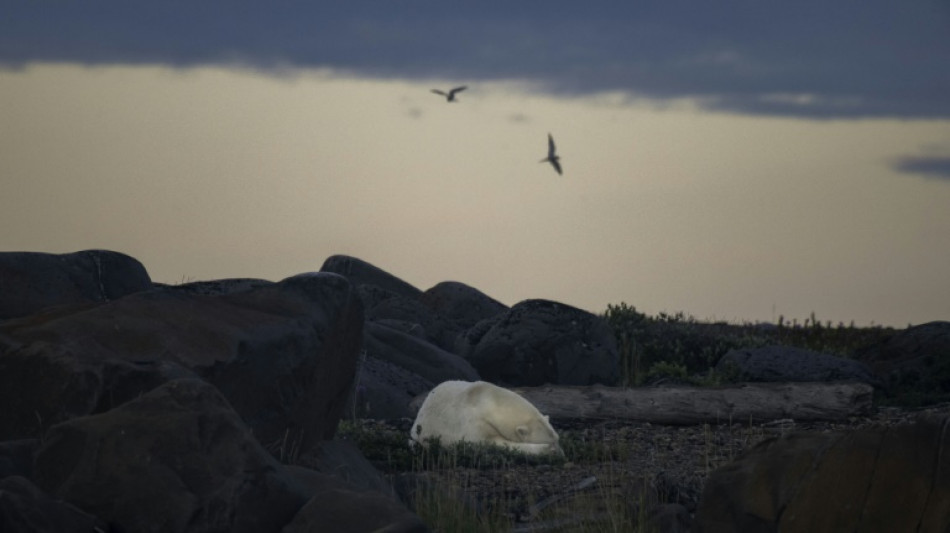
Polar bears have long symbolized the dangers posed by climate change, as rising temperatures melt away the Arctic sea ice which they depend upon for survival.
But quantifying the impact of a single oil well or coal power plant on the tundra predators had eluded scientists, until now.
A new report published in the journal Science on Thursday shows it is possible to calculate how much new greenhouse gas emissions will increase the number of ice-free days in the bears' habitats, and how that in turn will affect the percentage of cubs that reach adulthood.
By achieving this level of granularity, the two authors hope to close a loophole in US law.
Although the apex carnivores have had endangered species protections since 2008, a long-standing legal opinion prevents climate considerations from affecting decisions on whether to grant permits to new fossil fuel projects.
"We have presented the information necessary to rescind the Bernhardt Memo," first co-author Steven Amstrup, a zoologist with Polar Bears International and the University of Wyoming, told AFP, referring to the legal caveat which was named after an attorney in former president George W. Bush's administration.
The memo stated it was beyond the scope of existing science to distinguish the impacts of a specific source of carbon emissions from the impacts of all greenhouse gasses since the beginning of the industrial age.
- Cub survival imperiled -
Polar bears rely heavily on the sea ice environment for hunting seals, traveling, mating and more.
When sea ice melts in summer, the apex carnivores retreat onto land or unproductive ice far from the shore, where they endure long stretches of fasting. These periods are growing longer as global temperatures rise.
A landmark paper published in Nature in 2020 was the first to calculate links between changes in the sea ice caused by climate and polar bear demographics.
Building on this work, Amstrup and Bitz established the mathematical relationships between greenhouse emissions and fasting days as well as cub survival, in 15 out of 19 of the polar bears' subpopulations, between 1979 and 2020.
For example, the world currently emits 50 billion metric tons of carbon dioxide or equivalent gasses into the atmosphere annually, and that is reducing the rate of cub survival by over three percentage points per year in the South Beaufort Sea subpopulation.
In healthy populations, cub survival during the first year of life is around 65 percent.
"You don't have to knock that down very far before you don't have enough cubs entering the next generation," said Amstrup.
In addition, the paper provides US policy makers the tools they need to quantify the impact of new fossil fuel projects slated to occur on public lands in the coming decades.
- Implications for other species -
Joel Berger, university chair of wildlife conservation at Colorado State University, praised the paper.
"Amstrup and Bitz render an incontrovertible quantitative link among (greenhouse gas) emissions, sea ice decline, fasting duration -- a physiological response to lost hunting opportunities for seals -- and subsequent polar bear demographics -- declining recruitment of young," said Berger, who was not involved in the research.
Beyond providing a potential policy solution to the legal loophole, the new research could have implications that reach far beyond polar bears, second co-author Cecilia Bitz, a climatologist at the University of Washington, told AFP.
Methods laid out in the paper can be adapted for other species and habitats, such as coral reefs, or Florida's Key deer.
"I really hope this stimulates a lot of research," Bitz said, adding she was already reaching out to new collaborators.
K.Brown--BTB